
If a cap light appears on your dash, it often signals a small issue that you can fix fast. Many drivers see a check engine alert tied to the fuel system and worry it means a big repair. In most cases, a loose gas cap or a worn fuel cap is the culprit.
Don’t panic. Pull over when safe, tighten the cap, and drive for a short time. The check engine code may clear on its own after a few trips. This simple step saves time and keeps you from paying for unnecessary work.
The following sections explain why the cap light comes on, how to inspect the fuel cap, and when to seek professional repair. With a little know-how, you can diagnose this issue in minutes and return to your week without stress.
Key Takeaways
- Tighten the fuel cap first—many check engine lights clear after driving.
- A worn or faulty cap can set a code without other symptoms.
- Try a short drive after securing the cap before visiting a shop.
- If the alert returns, seek a technician to scan the vehicle for codes.
- Simple checks often prevent unnecessary repair costs and stress.
Understanding the EVAP System and Your Jeep Dashboard
The evaporative emissions (EVAP) system stops fuel vapors from escaping and keeps emissions low. It links the tank to a charcoal storage unit and the engine intake so vapors are burned rather than released.
The role of the charcoal canister
The charcoal canister collects evaporated gas while the vehicle sits. When the engine runs, vapors are routed into the intake and burned. This process helps preserve fuel efficiency and meets emissions rules.
How the computer monitors leaks
The vehicle computer continuously checks system pressure and seals. If it senses a drop in tank pressure, it treats that as a leak and triggers the dashboard check engine lights. A failed rubber O-ring on the fuel cap often causes this fault.
- The canister stores vapors until the engine can purge them.
- The computer runs tests to confirm the system is sealed.
- Seal failure or a loose cap lets pressure escape, setting a code.
Gas Cap Light Warning On Jeep: Common Causes and Fixes
A single drop in tank pressure can prompt the vehicle computer to flag a system fault. When that happens, the most frequent culprit is a worn or loose fuel cap seal. A bad seal lets vapors escape and sets a check engine code tied to EVAP testing.
Real owner experience helps explain the timeline and options. One owner waited five weeks at a dealership for a diagnostic. Nearby, a local shop reset the check engine code for $42 in minutes. That contrast shows why selecting a capable repair shop matters.
After buying an 80K-mile vehicle, some drivers notice recurring fuel cap trouble that triggers both high and low EVAP codes. If tightening the cap or replacing the fuel cap doesn’t stop the dash code, other parts of the system may need inspection.
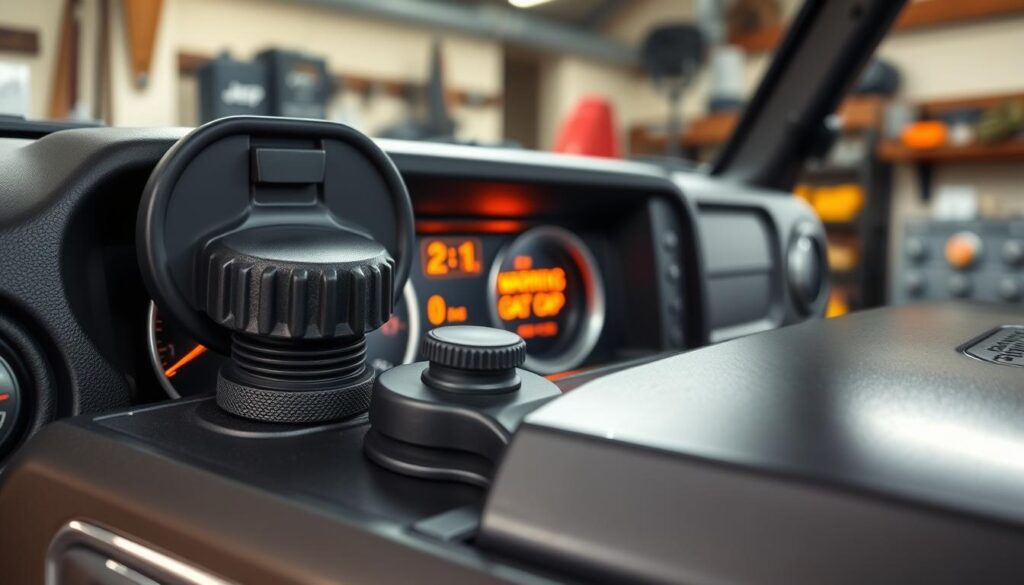
- Maintain the fuel cap and O-ring over the years to avoid repeat warnings.
- Get a scan for the exact code before paying for major repair work.
- For capless systems, see the guide on capless gas tank check engine troubleshooting.
Immediate Steps to Take When the Warning Light Appears
If a dashboard indicator appears while you’re driving, quick checks can stop small problems from growing.
Verifying the Fuel Cap Seal
Pull over safely as soon as traffic and road conditions allow. First, confirm the fuel cap is seated and turned until it clicks. This simple step often clears a check engine message after a short drive.
Next, inspect the seal for cracks or hardened rubber. A damaged seal lets pressure escape from the tank and will trigger the engine control system to record a code.
- Try tightening the cap twice; if the check engine alert returns, replace the fuel cap.
- Fill the tank to normal level before rechecking, since a partly full tank can affect system tests.
- Replacing worn parts like the fuel cap saves time and avoids repeat lights.
If the indicator persists after these steps, get a diagnostic scan. For more detail on related codes, see the P0457 EVAP code guide.
When to Seek Professional Repair for Fuel System Leaks
If a dashboard alert stays after you tighten or replace the fuel cap, seek professional diagnostics.
Expect labor and parts costs to range roughly from $145.99 to $170.00 for standard repairs, depending on vehicle make and the complexity of the repair.
A technician will connect a scan tool to read stored codes and run pressure tests on the EVAP system. This step lets the tech find leaks in hoses, valves, or the charcoal canister that simple cap checks miss.
- Certified shops can identify damaged parts and replace hoses or seals that cause a persistent code.
- Ignoring a persistent check engine alert may hurt engine performance and lower gas mileage over time.
- Ask the shop to clear the code and confirm the system seals before you pay to ensure the issue is fixed.
Quick advice: document the code number and repair estimate. That saves time during follow-up visits and helps avoid repeat trouble in later years.
Conclusion
Act quickly when a dashboard indicator appears to keep your vehicle efficient and compliant.
Most alerts stem from simple fuel system issues that you can fix fast. Start by tightening the cap and inspecting the seal for damage. If the light stays after a few drives, replace the part or get a scan tool check.
When a manual check does not clear the message, seek a professional repair shop. A technician will run EVAP tests and locate leaks in hoses or valves.
Regular maintenance of fuel system components prevents repeat visits and helps your Jeep run smoothly for years.
FAQ
Why is the fuel cap warning showing on my Jeep dashboard?
The vehicle’s evaporative emissions (EVAP) system detects pressure or vacuum leaks in the fuel tank circuit. A loose or damaged fuel cap, a degraded seal, a cracked filler neck, or a faulty purge valve can trigger the alert. The onboard computer stores a diagnostic trouble code (DTC) that points to an evap leak, which often starts with a simple cap-related issue.
How can I check the fuel cap seal myself?
Park on level ground and allow the car to cool. Remove the fuel filler cover, then unscrew and inspect the fuel cap gasket for cracks, hardening, or dirt. Wipe any debris away and reseat the cap until it clicks or tightens fully. If the seal looks worn or the cap won’t tighten, replace it with an OEM or quality aftermarket cap rated for your model year.
Will tightening the cap turn the light off immediately?
Not always. Some models clear the error after several drive cycles as the computer reruns EVAP tests. If the cap was loose and you tightened it, the light may reset after 10–50 miles of mixed driving. If it stays on, retrieve the stored DTCs with an OBD-II scanner to confirm the cause.
Can a bad purge valve or charcoal canister cause the alert?
Yes. The charcoal canister stores fuel vapors and the purge valve controls vapor flow to the engine. A stuck purge valve, a ruptured canister, or clogged vent lines can create leaks or fail EVAP tests, producing the same dashboard message as a faulty cap.
Is it safe to keep driving if the warning remains lit?
Short trips are usually safe, but extended driving with an unresolved EVAP leak can increase emissions and reduce fuel economy. In rare cases, a severe fuel system leak can risk fuel odors or driveability problems. Have the system diagnosed if the indicator won’t clear after basic checks.
How do mechanics diagnose an EVAP leak?
Technicians use an OBD-II scanner to read codes, then perform a smoke test or pressure test on the EVAP system to locate leaks. They inspect hoses, the filler neck, the fuel tank, the purge valve, and the charcoal canister. Repairs follow based on the failing component.
Can bad wiring or sensors trigger the message?
Yes. Faulty wiring, a bad vent solenoid, or a defective fuel tank pressure sensor can give false leak readings. Diagnosis requires electrical checks and code verification to rule out sensor or circuit failures before replacing major parts.
How much does it typically cost to fix an EVAP leak?
Costs vary. Replacing a fuel cap runs under . Common repairs like a purge valve or vent solenoid often cost 0–0 installed. Charcoal canister or fuel tank repairs are pricier, sometimes 0–
FAQ
Why is the fuel cap warning showing on my Jeep dashboard?
The vehicle’s evaporative emissions (EVAP) system detects pressure or vacuum leaks in the fuel tank circuit. A loose or damaged fuel cap, a degraded seal, a cracked filler neck, or a faulty purge valve can trigger the alert. The onboard computer stores a diagnostic trouble code (DTC) that points to an evap leak, which often starts with a simple cap-related issue.
How can I check the fuel cap seal myself?
Park on level ground and allow the car to cool. Remove the fuel filler cover, then unscrew and inspect the fuel cap gasket for cracks, hardening, or dirt. Wipe any debris away and reseat the cap until it clicks or tightens fully. If the seal looks worn or the cap won’t tighten, replace it with an OEM or quality aftermarket cap rated for your model year.
Will tightening the cap turn the light off immediately?
Not always. Some models clear the error after several drive cycles as the computer reruns EVAP tests. If the cap was loose and you tightened it, the light may reset after 10–50 miles of mixed driving. If it stays on, retrieve the stored DTCs with an OBD-II scanner to confirm the cause.
Can a bad purge valve or charcoal canister cause the alert?
Yes. The charcoal canister stores fuel vapors and the purge valve controls vapor flow to the engine. A stuck purge valve, a ruptured canister, or clogged vent lines can create leaks or fail EVAP tests, producing the same dashboard message as a faulty cap.
Is it safe to keep driving if the warning remains lit?
Short trips are usually safe, but extended driving with an unresolved EVAP leak can increase emissions and reduce fuel economy. In rare cases, a severe fuel system leak can risk fuel odors or driveability problems. Have the system diagnosed if the indicator won’t clear after basic checks.
How do mechanics diagnose an EVAP leak?
Technicians use an OBD-II scanner to read codes, then perform a smoke test or pressure test on the EVAP system to locate leaks. They inspect hoses, the filler neck, the fuel tank, the purge valve, and the charcoal canister. Repairs follow based on the failing component.
Can bad wiring or sensors trigger the message?
Yes. Faulty wiring, a bad vent solenoid, or a defective fuel tank pressure sensor can give false leak readings. Diagnosis requires electrical checks and code verification to rule out sensor or circuit failures before replacing major parts.
How much does it typically cost to fix an EVAP leak?
Costs vary. Replacing a fuel cap runs under $30. Common repairs like a purge valve or vent solenoid often cost $100–$300 installed. Charcoal canister or fuel tank repairs are pricier, sometimes $400–$1,200 depending on parts and labor for your Jeep model and year.
Will clearing the diagnostic codes stop the light if the issue is still present?
Clearing codes without fixing the root cause will extinguish the indicator temporarily, but the computer will rerun tests and the light will return. Proper repair prevents repeated alerts and avoids emission test failures.
Are there model years or trims that have known EVAP issues?
Some Jeep models and years have higher reported EVAP complaints, often tied to aging seals, chassis flex, or design changes. Check Technical Service Bulletins (TSBs) and owner forums for your specific model and year. A dealer can confirm any manufacturer recall or warranty coverage for EVAP components.
What should I tell my mechanic to speed up diagnosis?
Describe when the message first appeared, any recent refuels, service history, presence of fuel odor, driving symptoms, and whether you tried tightening or replacing the cap. Provide the exact model year and trim so the tech can reference common issues and TSBs quickly.
,200 depending on parts and labor for your Jeep model and year.
Will clearing the diagnostic codes stop the light if the issue is still present?
Clearing codes without fixing the root cause will extinguish the indicator temporarily, but the computer will rerun tests and the light will return. Proper repair prevents repeated alerts and avoids emission test failures.
Are there model years or trims that have known EVAP issues?
Some Jeep models and years have higher reported EVAP complaints, often tied to aging seals, chassis flex, or design changes. Check Technical Service Bulletins (TSBs) and owner forums for your specific model and year. A dealer can confirm any manufacturer recall or warranty coverage for EVAP components.
What should I tell my mechanic to speed up diagnosis?
Describe when the message first appeared, any recent refuels, service history, presence of fuel odor, driving symptoms, and whether you tried tightening or replacing the cap. Provide the exact model year and trim so the tech can reference common issues and TSBs quickly.