
Goal: Help U.S. owners confirm the correct 19 HP Kawasaki oil capacity and the proper oil choice before any service. This brief guide points you to the exact specs you need and shows how to avoid common mistakes when topping off or changing fluids.
The article explains that “19 HP” can cover several models, so the true specs depend on the exact model number and layout. Our reference example is the Kawasaki FH580V-S01, a vertical-shaft 585cc V-twin with pressurized lubrication and a spin-on filter. The published oil capacity for that model is 1.9 quarts.
You will learn how to identify the correct model, pick viscosity by expected operating temperature, perform a safe oil change, and choose a filter that seals correctly. Proper fluid level and the right lubricant matter for performance and long-term reliability in both residential and commercial mowing. Follow the factory manual and use quality parts for best results.
Key Takeaways
- Confirm the exact model before using published specs.
- The FH580V-S01 lists a 1.9-quart oil capacity as a reference.
- Pick viscosity based on ambient temperature and load.
- Use a proper spin-on filter and correct sealing practices.
- Proper level and clean lubricant extend mower life.
Identify Your 19 HP Kawasaki Engine Before You Add Oil
Start every service by locating the engine model and serial plate; that number determines the correct parts and specs for your mower.
Common vertical-shaft example: FH580V-S01 (585cc V-twin)
The FH580V-S01 is a common vertical-shaft 585cc V-twin used across many brands. It has pressurized lubrication and a spin-on oil filter, so model confirmation matters.
Where to find the model and serial number
Look on or near the blower housing, the valve-cover area, or a tag on the engine shroud. Read the number carefully; dirt or paint can hide characters.
Why confirming the number matters
Parts like the oil filter, sealing surface, and clearances vary by family and chassis. Using the wrong part can cause leaks or service issues.
Document the model and serial in your maintenance log. Keep that info when ordering parts or checking the manual.
If the tag is missing or unclear, a dealer or service shop can cross-reference records and protect warranty coverage.
Once the model is verified, you can confidently select the correct viscosity and refill amount in the next step.
19 HP Kawasaki Engine Oil Capacity & Oil Type
This reference shows the FH580V-S01 published fill and gives practical guidance on picking lubricant for typical U.S. mowing.
Oil capacity reference for FH580V-S01
The FH580V-S01 lists a published refill of 1.9 quarts. Use this as a starting target, but confirm your model before adding fluid.
Recommended viscosity and when to use it
Many owners in warmer regions prefer SAE 20W-50 because it holds film strength under high heat and heavy load. That grade helps keep pressure steady during long run times and dusty work.
Choosing viscosity by temperature and conditions
Match viscosity to expected ambient temperature and mowing patterns. High-heat areas and stop-and-go trimming favor thicker grades. Cooler climates may need a lower-viscosity option—always verify with the factory manual.
What “4-cycle” oil means
Four-cycle lubricants are made for four-stroke small motors where oil stays in the crankcase. This design supports reliable protection and steady performance when filters and service intervals are followed.
Note: oil condition degrades with hours, heat, and contamination. After refilling, let the machine sit and then check the dipstick to reach the final correct level.
What You’ll Need for a Clean Oil Change
Gather the right supplies and set up a tidy workspace before you start. A short prep step keeps dirt out and reduces the chance of spills while you service the machine.
Core supplies for a neat job
- Correct engine oil and a drain pan sized to catch the full volume.
- Funnel, shop towels, and gloves for safe handling and cleanup.
- Replacement oil filter and basic hand tools to access the canister or mounting boss.
Practical setup and staging
Work on a stable, level surface so the dipstick reads accurately. Staging tools and parts close by limits the time the fill port is open to dust or wind.
Oil filter considerations
Models with pressurized lubrication use a spin-on filter. Choose a quality oil filter that matches the motor and has the correct gasket sealing surface.
Check clearance—frame rails, mufflers, and guards can limit filter size. Buy from a trusted dealer or reputable brand to avoid fit and thread issues.
Keep cooling fins and air passages clean to lower heat load and help keep the oil healthier between services.
How to Change Oil on a 19 HP Kawasaki Lawn Mower Engine
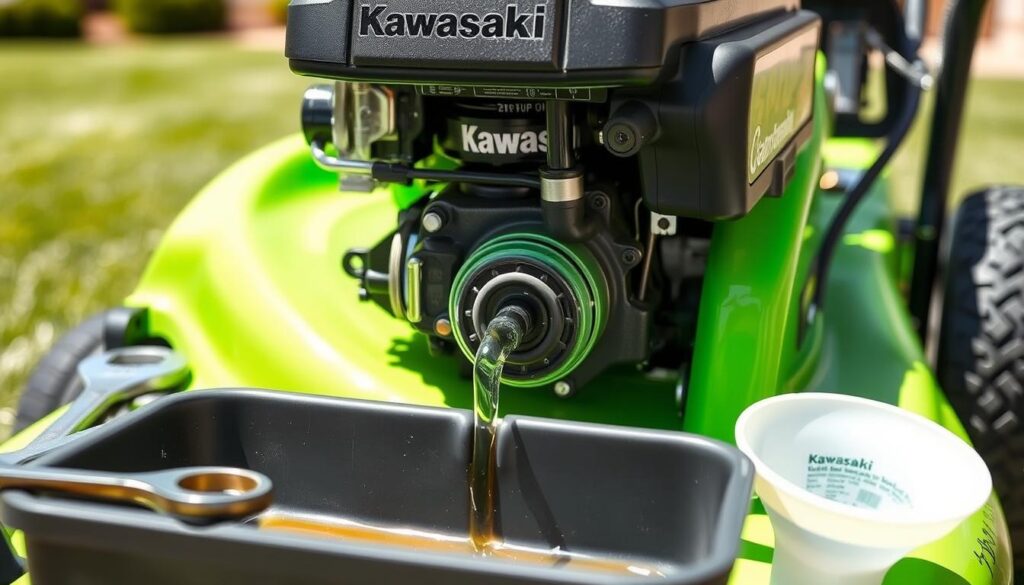
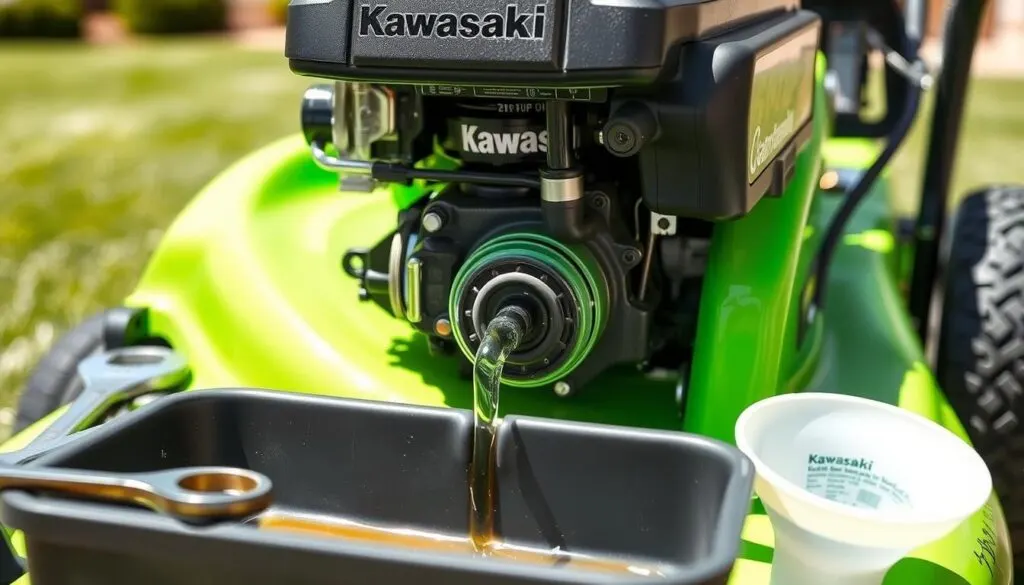
Begin with a safe warm-up. Run the motor just long enough to bring the lubricant to operating temperature. Warm fluid drains faster and carries more contaminants out of the crankcase.
Shutdown and safety steps
Turn off the machine, remove the key, and disconnect the spark-plug lead. Park on level ground and engage the brake or chock the wheels.
Drain the old fluid
Position a drain pan and open the drain or remove the plug. Let the sump empty fully so the next refill starts clean.
Replace the spin-on filter
On pressurized-lubrication models use a spin-on filter. Remove the old filter, check the sealing surface for the old gasket, lightly oil the new gasket, and tighten to the manual’s spec.
Refill, check, and test
Add fluid slowly toward the published amount, then pause and recheck the dipstick. Start the motor briefly and inspect around the filter and drain for leaks. Correct any seepage immediately.
Proper disposal and help
Take used fluid and filters to a local recycling center. If access is tight or the correct filter is unclear, a dealer can assist.
Oil Filter Selection and Fitment Tips for Kawasaki Engines
Filter fit often matters more than brand when space is tight on a mower. Measure clearance around the mounting boss before ordering a replacement. Frames, guards, and exhaust pipes commonly limit usable filter body size.
Why size and clearance determine the best fit
Thread pitch is only part of the story. The filter body must clear surrounding parts so you can install and remove it without bending or rubbing.
Pick a filter that matches both threads and overall diameter for a trouble-free service.
How poor aftermarket tolerances cause leaks
Poor tolerances lead to gasket mismatch, thin sealing surfaces, or can deformation. Those faults can let oil leak or cause the filter to unseat under pressure.
When to replace the filter
Best practice: replace the oil filter at every oil change. That reduces contamination and prevents old gaskets from failing later.
- Checklist: correct thread pitch, gasket diameter, bypass/anti-drainback features, and verified cross-reference to your kawasaki engine model.
- Use a trusted brand or OEM-equivalent for high-hour or commercial equipment.
- Buy through a dealer when unsure; they can confirm fitment and save repeat work.
A properly sealing filter supports stable lubrication and better performance under load. Replace the filter each change and verify fit to keep the engine protected and running right.
Oil Change Intervals for 19 HP Kawasaki Engines
Setting an hours-based plan reduces the guesswork and keeps lubrication consistent through heavy use.
Baseline guideline: many owners follow an oil change interval of about 50 hours of run time. That schedule works well for typical home use and light commercial tasks. Replace the filter at every service to remove trapped contaminants.
When to shorten intervals
Increase frequency under extreme conditions: sustained high heat, thick or wet grass, steep hills, towing, dusty lots, or long idle periods. These duties break down lubricant faster and raise wear risk.
Practical schedules by hours and season
Homeowners: service at spring startup and again mid-season, or roughly every 50 hours. Commercial operators: track weekly hours and plan changes every 40–50 hours depending on load.
Track hours and consult a dealer
- Document run time so maintenance is based on actual hours, not guesswork.
- Shorter intervals are cheap insurance: changing sooner prevents sludge and costly wear.
- Always check the factory manual and ask a dealer for model-specific exceptions, especially for warranty or pro use.
Consistent changes improve reliability and help the motor run cooler and cleaner across the year. A simple log and steady schedule protect performance and extend service life.
Keep Performance High Between Oil Changes
Routine checks catch small faults early. A brief weekly inspection helps prevent low-fluid damage and keeps the motor reliable during busy months.
Checking oil level routinely to prevent low-oil damage
Check the dipstick before each mowing day or on a weekly cadence for high-hours use. Fill to the mark slowly and recheck after a short run. Sudden drops in level indicate leaks or consumption that need quick attention.
How cooling and airflow support oil life on forced-air-cooled engines
The FH580V-S01 uses forced-air cooling and an oil cooler to manage temperature during long runs. Keep shrouds, fins, and intake screens clear of debris so air flows freely. Good airflow reduces heat and extends oil life.
Recognizing common issues: oil consumption, dark oil, leaks, or burning smell
Watch for these symptoms:
- Dark oil quickly: heavy contamination or need for shorter intervals.
- Burning smell: overheating or fluid on hot parts.
- Visible leaks: around the filter or drain plug.
- Rising consumption under load: worn rings or seals.
Action steps: confirm correct fill level, inspect gaskets and filter tightness, and consult a dealer if problems persist. Using reputable oils and parts reduces variation and helps preserve performance year after year.
Conclusion
Confirm the exact model before you add fluid so parts match and service errors are avoided. If your tag matches the FH580V-S01, use the published fill of 1.9 quarts; many owners in warm, heavy-use conditions run SAE 20W-50.
Follow the factory manual, fill slowly, and verify level on the dipstick. Start the motor briefly and inspect around the filter and drain for any leaks.
Replace the oil filter at every service, track run hours, and shorten intervals for heat or hard duty. When the model tag is unclear, consult a dealer to protect warranty and fit the correct parts.
With the right fill, a sealing filter, and steady maintenance, your Kawasaki engine can deliver reliable service season after season.
FAQ
How do I identify a 19 HP Kawasaki engine model before adding oil?
Locate the model and serial number on the engine tag or stamped on the blower housing. Check your mower owner’s manual and the deck or frame for a model plate. Confirming the model ensures you use the correct oil volume, filter part, and maintenance specs.
Where is the model number on a Kawasaki FH580V-S01 (585cc V-twin)?
The FH580V-S01 model tag is usually near the recoil starter or on the valve cover. Look for a stamped plate or sticker that lists the model and serial. If needed, consult the mower manual or dealer to verify the exact engine code.
Why does model confirmation matter for oil capacity and filter fit?
Different models have different sump sizes and filter locations. Using the exact model avoids under- or overfilling, ensures the correct spin-on filter size and seal, and keeps warranty and maintenance records accurate.
What is the oil capacity for the FH580V-S01 engine?
The oil sump for the FH580V-S01 takes about 1.9 quarts. Always fill gradually and check the dipstick to reach the proper mark—avoid relying solely on the listed capacity to prevent overfill.
What oil viscosity do many Kawasaki owners use for this engine?
Many owners choose SAE 20W-50 for warm-weather mowing and heavier-duty use. Select viscosity based on your typical operating temperatures and the mower’s load conditions to maintain protection and performance.
How should I choose oil viscosity by temperature and mowing conditions in the U.S.?
Use higher-viscosity oil like 20W-50 in hot southern climates or heavy-duty work. Choose 10W-30 or 10W-40 for cooler regions. Refer to Kawasaki guidance and local temperature ranges to match viscosity to seasonal conditions.
What does “4-cycle” oil mean for small engine protection?
Four-cycle oil is formulated for engines with separate oil and fuel systems. It provides anti-wear additives, detergents, and heat stability needed for crankcase lubrication in small mower motors, improving longevity and performance.
What tools and supplies do I need for a clean oil change?
Have the correct oil, a drain pan, funnel, shop towels, gloves, and a new oil filter if required. Use a clean work surface and a safe place to warm, level, and secure the mower before draining.
How do I choose the right oil filter for Kawasaki engines?
Match the filter to the exact engine model or use the OEM part number. Check surrounding clearance and thread size—some aftermarket filters are taller or wider and can interfere with shrouds or cause sealing issues.
What are the steps to change oil on a 19 HP Kawasaki lawn mower engine?
Warm the engine briefly to thin the oil, shut off and disable ignition, level the mower, then drain the oil completely. Replace the spin-on filter on pressurized-lubrication models, refill to the recommended level, run the engine briefly, and check for leaks.
How long should I run the engine before draining the oil?
Run it just long enough to warm the oil—about two to five minutes. Warm oil flows easier and carries contaminants out, but avoid extended idling to prevent heat soak or hot-surface hazards.
When should I replace the oil filter during service?
Best practice is to replace the oil filter at every oil change. A fresh filter ensures proper filtration, prevents bypass, and maintains pressure in pressurized-lubrication systems.
How often should I change oil on a 19 HP Kawasaki engine?
Standard guidance is about every 50 hours of operation. Increase frequency for severe use, heavy loads, dusty conditions, or high ambient temperatures to protect the motor and extend component life.
How should I adjust oil-change intervals for extreme conditions?
Shorten intervals if you operate in sandy, dusty, or hot environments, or under heavy towing and commercial loads. Inspect oil color and level more often and service sooner if oil darkens quickly or the engine runs hotter.
How can I keep performance high between oil changes?
Check oil level regularly, maintain clean air intake and cooling fins, and ensure proper airflow around the engine. Promptly address leaks, oil consumption, or unusual smells to prevent bigger problems.
What are signs of oil problems like consumption or leaks?
Watch for low oil on the dipstick, bluish exhaust smoke, burning oil smell, or visible drips under the mower. Dark, gritty oil indicates contamination and calls for a change and filter inspection.
How should I dispose of used oil and filters?
Collect used oil and filters in sealed containers and take them to a local recycling center or approved drop-off. Most auto parts stores and municipal facilities accept used oil and filters per local regulations.