
Jeep ducking refers to the playful act of leaving a small rubber figure on a vehicle as a friendly note. It became a visible trend after a 2020 moment when Allison Parliament placed a duck with a kind message on a Wrangler. The gesture spread fast through social sharing and a growing Duck Duck Jeep culture.
The practice signals membership in a wider jeep community tradition rooted in positivity, not status. Many jeep owners saw dashboard or hood ducks as a simple way to make someone smile. While not every owner took part, the idea was widely recognized across the United States.
This article will trace what jeep ducking was, how it began, what it meant, and how to participate respectfully. Terms like ducking, Duck Duck Jeep, and duck pond will be used consistently so readers can follow the guide.
Key Takeaways
- Jeep ducking is a small act meant to spread kindness within a friendly community.
- The trend gained momentum after Allison Parliament’s 2020 gesture and social sharing.
- Dashboard ducks act as a visible symbol of participation in jeep culture, not exclusivity.
- Not all owners joined, but the practice became a common topic among jeep owners nationwide.
- Later sections will explain origins, meaning, and respectful ways to join ducking.
Why Do Jeeps Have Rubber Duckies on the Dashboard? Fun Insight
A single plastic duck can turn a parking spot into a tiny moment of shared cheer.
jeep ducking started as a lighthearted gesture: one driver leaves a small duck with a friendly note on another vehicle to spark a smile. Recipients often kept that token and moved it inside, adding it to a dashboard display.
Jeep ducking explained
At its core, this was an act kindness. A duck was usually a compliment about style, build, or vibe rather than a prank.
Why the dashboard becomes a “trophy case”
- One duck appears on the exterior, then graduates to a dashboard when an owner decides to keep it.
- Owners enjoy collecting ducks, remembering where each came from and sharing stories with passengers.
- Short, upbeat messages reinforce positivity and avoid making anyone uncomfortable.
Seeing ducks on another jeep often inspired more participation, spreading the tradition among jeep owners. A modern origin story helped this small ritual become widely recognizable.
The Origin Story of Jeep Ducking and Allison Parliament’s 2020 Moment
A single July 2020 moment in an Ontario parking lot set a global habit in motion. Allison Parliament stopped at a store, bought a small rubber duck, and wrote a brief, friendly note before placing it on a Jeep Wrangler.
After a rough day, she chose a positive act instead of escalating anger. That simple decision — a rubber duck with a message like “Nice Jeep” — made the gesture clear to anyone who found it.
She photographed the scene and shared it online. The post used a catchy label that people quickly repeated: “Duck, Duck, Jeep.” Hashtags helped the idea travel from one parking lot to many.
- Spur-of-the-moment purchase: a store stop, a playful token.
- Note on the duck: instant clarity for recipients.
- Social share: rapid spread across people around the world.
Allison Parliament’s action turned a small parking act into a kindness-first tradition that others embraced.
What a Rubber Duck on a Jeep Means in Jeep Culture
In Jeep culture, a duck gesture reads like a quick, friendly nod across a parking lot.
Interpretation as a compliment: A duck is an easy, nonverbal way to say “nice ride.” It applies to many jeep models, from a modified jeep wrangler to a standout grand cherokee. The act labels a vehicle with approval without words.
A compliment for your Jeep Wrangler, Grand Cherokee, or other models
Many owners view a duck as a short, upbeat salute. For a new jeep, the first duck often feels like a rite of passage. For longtime owners, a cluster of ducks on a dash shows years of shared moments and road trips.
Community-first values: positivity, connection, and small acts of kindness
The gesture fits neatly into jeep community norms. It emphasizes kindness and positivity over competition. Collecting ducks became a social way to build belonging among jeep owners.
From new jeep excitement to longtime owner pride
- New owners: a memorable milestone that makes ownership social.
- Longtime owners: a visible record of participation and shared trips.
- Community angle: the focus stays on connection, not status.
Meaning depends on respect: the tradition stayed positive because duckers followed basic etiquette and avoided anything that might upset an owner.
Jeep Ducking Rules and Etiquette for Jeep Owners
A few basic rules make ducking an easy way to spread kindness without creating problems.
Keep messages G-rated
Short compliments work best: “Nice ride,” “Have a great day,” or “Love the build.” Keep notes clean and upbeat. Avoid swearing, personal comments, or anything that might embarrass an owner.
Where to place a duck safely
Place a duck where it is clearly visible on the exterior so an owner sees it right away. Common spots are the hood edge, windshield wiper base, or a mirror fold. Keep the duck outside even if windows are open.
Respect the vehicle
Check for custom paint, wraps, or fragile parts. Don’t force a duck into tight gaps or lean it against accessories. Respect prevents scratches and keeps owners comfortable with this act.
When not to duck and how non-owners can join
Skip private property, gated lots, or tense situations. If approaching feels unsafe, don’t place a duck. Non-owners may leave a duck on another jeep as a friendly nod, but remember this tradition centers around jeep vehicles and among jeep owners.
- Start small: keep a few ducks in your car and a marker for short notes.
- Choose another jeep that looks cared-for and accessible.
- Dealership pages (Chrysler Dodge Jeep / Dodge Jeep Ram) often list simple etiquette tips for new owners.
Duck Ponds, Dashboard Displays, and Collecting Rubber Ducks
Collectors often call a dash full of small toys a “duck pond” because it looks like a tiny habitat of keepsakes.
How a pond forms and collections grow
Duck pond describes a growing lineup that riders and drivers can spot at a glance. One gifted duck often stays on the dash and attracts more over time.
Owners kept extras, re-ducked duplicates, or bought themed toys to add variety. That steady cycle turned single gestures into visible collections across many vehicles.
Practical display ideas
Arrange ducks in neat rows or group by color and theme. Use non-slip pads or clips so figures stay put and do not distract while driving.
Windshield displays are common because they are highly visible in lots and parking areas, but keep sightlines clear and prioritize safe driving over aesthetics.
Trading, re-ducking, and parking lot culture
Drivers often trade themed pieces, swap duplicates, or leave extras in a parking lot as a simple pay-it-forward act. This keeps the tradition moving and builds community ties.
While mostly rooted in Jeep traditions, you may see ducks on rugged truck-style builds too, especially Gladiator-type owners who share a similar culture. Next, we’ll explore what made this behavior stick with that brand community.
Why Jeeps, Specifically? Brand Personality, Jeep Models, and Built-In Community
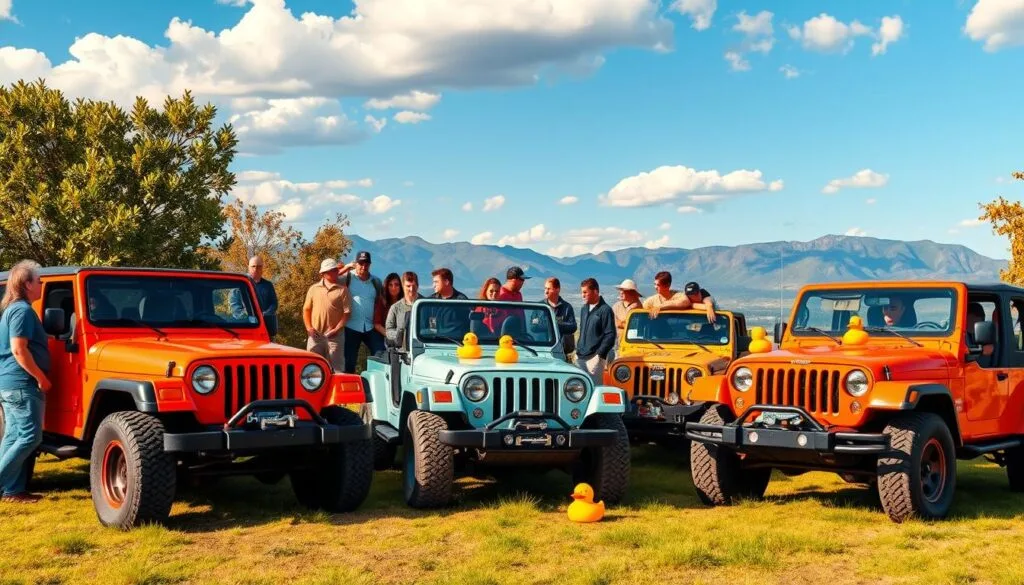
A shared sense of adventure made placing a small toy a natural greeting among owners. Jeep vehicles attract people who value rugged travel, open-air freedom, and friendly camaraderie. That mix turned simple acts into community rituals.

How vehicles inspire camaraderie
Open designs and trail-ready gear encourage conversation at trailheads and parking lots. Owners trade waves, tips, and stories, so leaving a duck felt like a low-pressure way to connect.
Model recognition and participation
Spotting a Jeep Wrangler or a Jeep Grand Cherokee made it easy to join in. Familiar jeep models acted like shorthand: many jeep owners understood the signal and welcomed it as part of shared culture.
Traditions, Easter eggs, and emotional payoff
Jeep traditions—meetups, wave culture, and playful Easter eggs built into vehicles—primed owners for small surprises. Finding a duck matched that playful brand personality.
- Community fit: rituals grew from existing social norms among drivers.
- Shared models: recognition of jeep models sped adoption.
- Simple goal: at its heart, the trend aimed to make someone smile.
Duck Duck Jeep became a clear label that helped posts and photos spread worldwide. The practice stuck because it matched the brand: rugged yet welcoming, distinctive yet warm.
Conclusion
Small tokens left on parked vehicles became a quick way to share a smile. This simple act aims to make someone feel noticed and brighten their day.
Jeep ducking grew from a 2020 moment into a friendly cultural cue. A single rubber duck and a short note spread across the world, and many drivers began to keep those toys as keepsakes.
Collections of ducks act as a visible story for a jeep owner. For owners, a dash display signals participation and starts light conversation with passengers.
Keep etiquette in mind: be respectful, leave items visibly outside, and use clean messages. While you might spot a duck on a Dodge Durango now and then, the tradition stays centered on jeep culture. Give or receive thoughtfully to help this small kindness last and brighten someone’s day.
FAQ
What is the story behind Jeep rubber duckies on dashboards?
The practice began as a lighthearted way for Jeep drivers to surprise one another with small rubber ducks. It started gaining traction in 2020 after a viral parking-lot moment that turned a single duck into a social tradition. Today it symbolizes friendly recognition within the Jeep community and often sparks smiles during everyday driving.
How did the parking-lot incident help launch this trend?
In a crowded parking lot, a driver left a duck with a note on another Jeep as a compliment. That simple gesture was shared widely online and inspired others to copy the act. The idea spread quickly through social media and Jeep owner groups, turning a one-off moment into an organized, playful ritual.
What does a duck on a Jeep mean to other owners?
A duck often reads as a compliment or a nod of approval. For owners of Jeep Wrangler, Grand Cherokee, or other models, it signals community recognition, shared enthusiasm for the vehicle, and a small act of kindness that connects drivers across parking lots and trailheads.
Are there unwritten rules for leaving ducks on Jeeps?
Yes. Keep messages friendly and family-friendly, place ducks where they won’t damage paint or block visibility, and avoid private or restricted areas. Always use common sense—if leaving a duck could create liability or upset the owner, don’t do it.
Where is a safe place to put a duck on a vehicle?
Popular spots include the windshield wiper, side mirror area, or a visible spot on the dash when parked. Avoid placing ducks inside moving parts, on hoods while driving, or in locations that could scratch paint or impair safety equipment.
Can non-Jeep drivers join in the tradition?
Non-owners can participate thoughtfully by gifting ducks to Jeep owners they know or leaving them in community spaces where they’re welcome. The tradition is community-focused, so offering ducks in a respectful, transparent way keeps it Jeep-centric while spreading positivity.
What is a “duck pond” in Jeep culture?
A “duck pond” refers to a collection of ducks owned by a single driver or group, often displayed on a dashboard or rear cargo area. It grows over time as other drivers leave ducks or owners collect different styles—creating a playful, visible sign of community participation.
How do owners creatively display ducks on dashboards or windshields?
Owners use small mounts, adhesive pads, or secure dash spots to show off ducks without causing damage. Some arrange themed displays, trade ducks at meetups, or use waterproof, UV-resistant ducks for outdoor exposure. Safety and respect for the vehicle remain priorities.
Is there etiquette for trading or re-ducking at events?
Yes. Trading is common and encouraged as a “pay it forward” practice. When re-ducking, leave a friendly note or sticker explaining the tradition. Ask before entering private property and keep interactions polite and low-impact to preserve the spirit of goodwill.
Why does this tradition fit Jeep brand personality?
Jeep models promote camaraderie, adventure, and a playful spirit. The open-air design and active owner community make small, visible gestures like duck gifting a natural fit. The brand’s historic Easter eggs and community culture pair well with a low-cost, high-joy ritual.
Do dealerships or brands like Chrysler, Dodge, Jeep and Ram support or discourage the practice?
Official stances vary by dealership. Many local dealers and owner clubs embrace the trend as positive community engagement. However, dealerships may caution against leaving items that could damage a vehicle or create liability, so they often recommend gentle, respectful participation.