
This guide helps an owner complete a safe, correct service on a modern SUV drivetrain. It lays out a clear, step-by-step path for checking, draining, servicing the pan and filter, refilling, and verifying proper level and operation.
Expect variations by year and gearbox design. Some models need only a top-off. Others require a drain-and-fill. A few demand a pan drop and filter swap. Knowing which job applies prevents wasted effort and costly mistakes.
Use the correct spec and set fluid level precisely. Gearboxes are sensitive to wrong products and overfill. This article focuses on present-day DIY best practices and checkpoint moments where you should pause and consult a shop.
The main milestones are: confirm setup, warm the drivetrain, drain old oil, service the pan and filter, refill, cycle gears, and complete a test drive. Follow each step carefully for a reliable outcome.
Key Takeaways
- Follow a stepwise approach: check, drain, service, refill, verify.
- Confirm model-specific requirements before starting.
- Top-off, drain-and-fill, and pan-drop are different jobs.
- Always use the specified fluid and set the level carefully.
- Know when to stop and contact a professional.
Why transmission fluid service matters for Jeep Grand Cherokee performance
Regular service keeps the gearbox working as designed. The right fluid supports hydraulic pressure, lubricates moving parts, and helps control operating temperatures inside the transmission system.
Fresh fluid yields practical gains: smoother engagement, more consistent shift timing, and less heat-related wear during everyday driving. Those improvements are easy to feel in normal traffic and on longer trips.
What fresh automatic transmission fluid does
Good fluid maintains stable pressure that the valve body and clutch packs need to operate cleanly. That reduces slippage and prevents harsh or erratic shifts.
Common symptoms of low or degraded fluid
- Clunky or delayed shifting
- Hesitation on takeoff and rough engagement
- Shuddering or unusual noises under load
Owners often report that these symptoms mimic bigger failures. A quick inspection or service of the fluid and level is a cost-effective first step guided by real-world experience.
Change vs. top-off: decide what your Grand Cherokee needs right now
A quick level check often separates an easy top-off from a longer service job. Start by checking the dipstick or fill point and note color, smell, and level.
Top-off makes sense when shifting is slightly rough and the reading is low, there is no burnt odor, and the fluid shows no heavy debris. Add small amounts and wait between adds—the capacity is reached quickly and overfill is hard to correct.
When a drain-and-fill is the better move
Choose a drain fill when the fluid looks dark, the service history is unknown, or the vehicle has been used for towing or frequent stop-and-go driving. This removes a significant portion of old fluid and restores hydraulic performance.
When a full service is required
Opt for pan removal, filter change, and a new gasket if you see contamination, recurring shift complaints, or seepage at the pan. That full service addresses trapped debris and worn filter elements.
- Decision steps: check level and condition, then pick top-off, drain fill, or full service based on symptoms and history.
- Amount advice: add fluid slowly during a top-off; small increments avoid overfilling.
- Time estimate: top-offs are quick; drain fill and filter services take longer for cleanup and level setting.
Safety and prep before you work under the vehicle
Prepare deliberately. Set a flat, level workspace and verify clear lighting before you lift the vehicle. This short pause prevents accidents and makes the task go smoother.
Workspace setup, lift points, and stability checks
Use quality jack stands or a shop lift and place them at the manufacturer’s recommended part locations. Make sure wheels are chocked and the parking brake is set.
- Confirm stands contact solid frame points, not body panels.
- Double-check each support before you get under the vehicle.
- If you are unsure where a lift point is, stop and verify—do not guess.
Hot fluid and moving parts precautions
Allow the drivetrain a short cool-down before opening any lines. Hot fluid can burn skin; wear gloves that protect your hand and forearms.
Keep hands, clothing, and tools clear of belts, fans, and shafts if the engine must run for checks. Set aside enough minutes for setup and cleanup, not just the service itself.
Tools, parts, and supplies to have on hand
Gathering the right gear before you start keeps the job quick and clean. Lay out tools and parts on a clean surface so bolts and gaskets stay organized. This saves time and prevents mistakes.
Basic hand tools and transfer gear
Must-have items include a full socket set for pan bolts and a calibrated torque wrench for final tightening.
- Large drain pan to catch old fluid and control spills.
- Hand pump or long funnel for refill through the dipstick tube or side port.
Replacement parts and cleaning materials
Bring a fresh filter and new pan gasket. Add a drain plug washer or sealing ring if your model uses one.
- Brake cleaner, shop towels, and a plastic scraper for gasket residue.
- A sturdy container for used fluid transport and disposal.
Planning quarts and verifying specs
Buy enough quarts of the correct product so you can refill and fine-tune the level without interruptions. Check your owner’s manual for the exact total amount and tool sizes before starting.
For torque values and bolt patterns, consult these transmission pan bolt torque specs and confirm compatibility with your shop tools.
Use the exact transmission fluid type specified in your owner’s manual
The right product is defined by spec and approvals, not marketing claims or bottle color. Before any service, open the owner’s manual and turn to the back section marked Fluid Capacities. That page contains the precise info you need for your transmission case and model year.
Where to find spec and capacity details
Look for a table titled Fluid Capacities or similar. It lists the required product name, total capacity, and any special notes about refill procedure.
Example specs you may see
- Dexron or Mercon – common automatic specs.
- Type‑F or Allison – older or heavy‑duty applications.
- CVT – specific formula for continuously variable gearboxes.
Choosing a different brand while matching the spec
Brand choice is flexible if the bottle states the exact spec and approvals. For example, a Valvoline product is fine when it explicitly meets the listed spec.
Avoid mixing fluids with incompatible additive packages. Picking the correct spec reduces the risk of poor shift quality and costly repairs after a service.
How to check Jeep Grand Cherokee transmission fluid level correctly
Get the basics right. Park on level ground, warm the drivetrain with a short run, and leave the engine idling when you take a reading. These steps make the measurement meaningful.
Why run the engine during the check
The engine drives the pump that circulates ATF through the case and cooler lines. With the motor running and at normal idle, fluid distributes through passages and settles at the correct service height.
Dipstick versus check plug methods
If equipped with a dipstick, wipe it clean, fully reinsert, then pull and read within the marked range. Repeat if needed until readings are consistent.
Sealed designs use a check plug at the case. Only open this plug at the recommended temperature and with the vehicle level. Use care—hot ATF can burn and spill quickly.
- Record level, color, and any smell for service decisions.
- If low, add slowly through the dipstick tube or the check plug port, depending on your model.
- Remember: the correct level is a narrow window; small changes affect shift feel.
Confirm your transmission setup before servicing
A quick underbody check will tell you which service path to take. A visual inspection prevents wrong assumptions and helps you buy the right parts ahead of time.
Automatic variant versus sealed or drain-only designs
Identify the style of gearbox: some use a removable pan and filter, others offer a drain plug only, and some are sealed with a check port. Confirm the design before unbolting anything.
Locating key components
- Find the transmission pan and note its shape and bolt pattern; this helps choose the correct gasket and filter.
- Locate the drain plug if present and trace the cooler lines toward the radiator or cooler assembly.
- Identify the fill point—dipstick tube or a fill port—so you know where fresh oil will be added.
Take a quick photo of the underbody layout for reference during reassembly. Knowing exactly where the case will drain and where you will refill makes the next steps faster and safer.
Warm the drivetrain to help fluid drain and read levels accurately
A short run before service helps the oil thin and the transmission reach normal operating heat. This makes drains more complete and gives a truer reading when you set final levels.
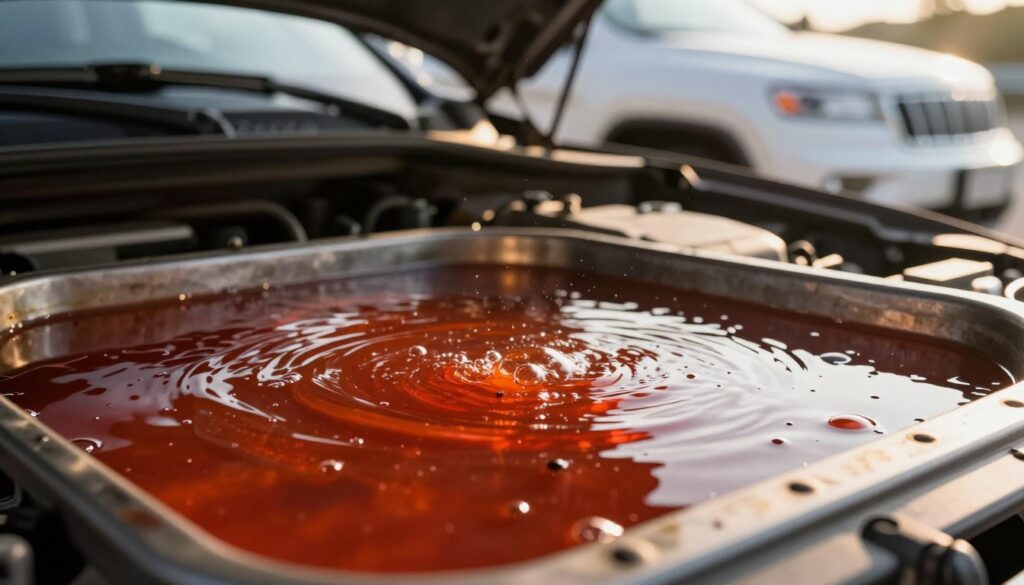
Short drive guidance
Take a brief drive of a few miles at moderate speed. Avoid heavy acceleration or towing if you feel slip or harsh engagement; harsh inputs can mask normal symptoms and stress the gearbox.
Idle and stabilization
After parking, let the engine idle for a couple of minutes so pressure in the lines and passages normalizes. This small bit of time helps oil settle back into the case and gives a consistent starting point for checks.
What to watch for
- Temperature impact: warmer operating temperature increases volume and changes readings.
- Driving experience: note any slip, flare, or harsh shifts during the warm-up as baseline data.
- Safety: expect hot surfaces and higher pressure in cooler lines—wear gloves and work cautiously.
Drain the old transmission fluid cleanly
A controlled drain begins with careful placement of the pan and a plan for the first hot stream. Position a large drain pan beneath the case where the bulk flow and any side splash will land.
Positioning the drain pan and removing the drain plug
Choose a pan that holds the expected volume and set it so splashes hit the center. Use the correct socket for the plug, apply steady force, and crack it slowly.
Hold the plug as it releases so it does not drop into the pan. If the design requires, thread the plug back in finger-tight while you reposition tools for pan removal.
Inspecting the fluid for color, odor, and debris
Measure the amount drained in a graduated container to estimate the initial refill. Check the fluid color and smell: healthy fluid is translucent with a neutral odor.
- If the liquid is very dark or has a burnt smell, plan for a deeper service.
- Fine, dark particles can be normal wear; large metallic pieces or clutch chunks signal serious internal wear and need diagnosis.
- Keep samples for shop inspection if you find heavy contamination.
Drop the transmission pan and service the filter
Work methodically when lowering the pan; a crisscross loosen sequence keeps the rail flat and the mess controlled.
Removing bolts without warping the rail
Loosen bolts a few turns in a crisscross pattern. Use a proper socket and steady force. This prevents the pan from bending and reduces the chance of a ripped gasket pan surface.
Replace the filter and check the pickup seal
Once the pan drops, let remaining fluid drain from the edge into your catch pan. Move the drain container as the flow shifts so the work area stays clean.
Remove the old filter and inspect the pickup neck. Pull out the old pickup seal if it comes free; one stuck seal is a common cause of air ingestion and leaks. Fit the new filter firmly as the part snaps into place.
Clean the pan and magnet before reinstalling
Thoroughly clean the pan, wipe out sludge, and clean the magnet so future debris trends are visible. Scrape old gasket material from the pan rail until the surface is flat and dry.
Inspect each removed part—bolts, pan edge, and filter neck—for damage that could stop a proper seal. Replace any suspect bolt or part before the final assembly.
Install the new gasket and torque the pan bolts properly
Seat the new gasket carefully on the cleaned rail before bringing the pan up for final fitment. A correct start avoids leaks and speeds rework.
Gasket alignment and leak-prevention checks
- Confirm orientation and align all bolt holes so the gasket sits flat without bunching or stretching.
- Clean and dry the pan rail and transmission case so the sealing surfaces are free of old material and oil.
- Hand-start each bolt to avoid cross-threading, then snug in stages before final tightening.
Torque strategy and why overtightening causes problems
Use a calibrated torque wrench and follow a crisscross pattern so the pan compresses evenly. Apply the specified torque in incremental passes rather than full force at once.
- Final torque accuracy prevents warping and avoids squeezing out gasket compound.
- Overtightening can warp the pan, distort the seal, and create new leaks around bolts and the drain plug.
- Before final torque, make sure the drain plug seating area is clean and the plug is properly seated if it was removed.
After torquing, inspect each bolt and the gasket seam for gaps or seepage. If any shows signs of trouble, loosen and re-seat rather than adding more torque.
Refill transmission fluid the right way
Start the refill with a conservative amount, then confirm circulation before topping. Choose your fill path based on the service design: use the dipstick tube with a clean funnel for models that accept top fills, or use the fill/check plug procedure when the case requires it.
Filling through dipstick tube or check plug
When using the dipstick route, a funnel keeps contaminants out. Add small pours and let each settle before checking level.
Add slowly; capacity is reached quickly
Begin with a safe initial amount near what drained, then run the engine briefly for circulation. Pause and check level; add in small steps. Overfilling is hard to correct.
Initial fill versus final level
Track quarts used so you can compare input to output. The initial fill is a conservative start. The final level is set after cycling gears and checking at the specified temperature range.
- Tip: keep the funnel and fill area spotless to avoid contamination.
- Tip: record the quarts added during initial and final stages.
Cycle gears and recheck fluid level for an accurate final fill
The last step before finishing is a controlled gear cycle. Moving the shifter through each position forces fluid into passages and stabilizes the system so you get a true level reading.
Safe procedure: park with the parking brake set, keep your foot on the brake, and shift slowly. Pause two to three seconds in each gear while the engine idles.
Run through PRNDL
Shift smoothly from P to R, then N, D, and L, holding a short pause in each spot. This helps the pump move fluid through cooler lines and the valve body so pressure equalizes.
Final level check and corrections
With the engine running when required by your design, use the dipstick or the case check method and check fluid. If the reading is low, add small amounts and wait one or two minutes between pours, then recheck the dipstick.
If the level is high, remove excess carefully. Overfill can aerate the oil and cause erratic shifts or excess pressure. Avoid topping up beyond the specified range.
- Repeat the cycle once more after a short idle to confirm consistency.
- Record final quarts added and the dipstick reading for future reference.
Test drive and post-service inspection
A staged road check helps spot lingering issues and confirms that service steps worked. Start with a short neighborhood loop at low speed. Only increase pace after shifts feel normal.
What to monitor: note shift timing and how the gearbox responds when you select Drive or Reverse. Watch for any flare, slip, or harsh behavior that suggests a pressure issue.
Compare this ride with the prior vehicle experience. If shifts are smoother and engagement is consistent, the service likely helped. If problems persist, stop and reassess.
Immediate post-drive checks
- Park on a clean surface and look for fresh drips under the pan and around the drain plug.
- Inspect cooler lines and fittings for wet spots or weeps.
- Verify gasket seams at the pan perimeter for slow leaks.
If your procedure calls for it, recheck the level after the run. Circulation can shift fluid slightly and final topping may be needed for a correct service result.
Common mistakes that lead to transmission problems after a fluid change
A small oversight at the pan or fill stage often leads to bigger gearbox trouble. Recognizing the usual missteps helps prevent repeat work and costly repairs.
Using the wrong spec or mixing incompatible fluids
Never substitute generic oil or an unapproved product. Mixing different formulas can alter friction behavior and create new shift problems.
Advice: Always check the owner’s manual and match the exact spec before you add any liquid.
Overfilling and why excess is hard to remove
Too much fluid causes aeration, foaming, and erratic pressure. That leads to inconsistent engagement and noisy operation.
Removing excess is awkward and messy. Measure in quarts and add small amounts, then recheck the level after cycling gears.
Skipping the filter or reusing a damaged gasket, and torque errors
Skipping a filter or reusing a worn gasket often results in leaks and immediate rework. Clean sealing surfaces before fitting a new gasket.
Torque discipline matters: overtightening warps the pan; undertightening allows seepage. Use a calibrated wrench and follow the spec sequence.
Quick troubleshooting advice
- If symptoms worsen after service, stop driving immediately.
- Recheck spec, level in quarts, and look for leaks at the pan and plug.
- Address simple fixes first before assuming internal damage.
Conclusion
Wrap up the job with a careful final check of level, torque, and any signs of seepage.
Confirm the spec used, note the total amount added, and record the time and date. Track drained quarts and the final quarts added so future work and warranty records are clear.
Treat this work as a precision task. Follow bolt torque values, use proper tools, and avoid rushing the level-setting steps. A drain fill is not the same as an oil change; the case, sealing surfaces, and level window demand extra care.
If slipping continues, you see heavy debris, or you are unsure about a sealed design, visit a shop for diagnosis. Keep service intervals regular and log what you did to improve long-term ownership experience.
FAQ
What tools and supplies do I need for a drain-and-fill service?
Have a socket set, torque wrench, drain pan, funnel or hand pump, replacement filter, pan gasket, rags, and the correct ATF quarts specified in the owner’s manual. Also use gloves and jack stands or ramps for a stable workspace.
How do I find the exact fluid specification and capacity for my vehicle?
Check the owner’s manual or Mopar service literature for “fluid capacities” and the required spec. Match the spec (for example, ATF+4, Dexron, or CVT type) and buy a little extra above the stated capacity in quarts.
When is a simple top-off enough versus a full pan service?
A top-off helps if the level is just slightly low and there are no signs of degraded fluid. Choose drain-and-fill if fluid is dark, smells burnt, or shifting is rough. Full service is best for high-mileage vehicles or when contamination exists.
Should the engine be running when I check the level?
Yes. On most Grand Cherokee automatics the correct level is checked with the engine running and the transmission warmed to operating temperature. Consult the manual for the model-specific procedure.
How warm should the drivetrain be before draining or checking levels?
Warm the vehicle with a short drive or idle so fluid reaches normal operating temperature. Warm fluid drains more completely and gives an accurate level reading. Let it cool slightly before handling hot components.
Where is the drain plug and pan located?
The transmission pan and drain plug are under the vehicle, toward the rear of the engine bay area. Some models use a threaded drain plug; others require removing the pan bolts. Locate the pan and lines before lifting the vehicle.
How do I drain old fluid without making a mess?
Position a large drain pan under the drain plug or pan, loosen the plug or several corner bolts slowly, and allow fluid to flow out. Use rags and a splash shield. Replace the drain plug or reinstall the pan promptly after draining.
When should I replace the transmission filter and pan gasket?
Replace the filter and gasket any time you drop the pan for service. A new filter removes debris and the new gasket ensures a proper seal to prevent leaks and maintain correct pressure.
How tight should I torque the pan bolts?
Follow the torque values in the service manual. Tighten bolts in a crisscross pattern to the specified inch-pounds or foot-pounds. Overtightening can warp the pan or crush the gasket and cause leaks.
How much fluid do I add initially and how do I set the final level?
Add an initial amount recommended by the manual—usually a few quarts—then start the engine and cycle through gears to move fluid. Recheck the level with the engine running and add slowly until the dipstick or check plug reads within the correct range.
What signs in the old fluid indicate problems?
Dark brown or black fluid, a strong burnt odor, or metal shavings on the magnet indicate wear or overheating. Clean translucent red fluid is healthy; any contamination suggests a deeper issue.
Can I mix brands if they meet the same spec?
Avoid mixing different fluid chemistries when possible. If both products explicitly meet the required spec for your transmission, short-term mixing is usually acceptable, but a full fluid change to one brand is preferred.
How do I cycle gears properly during the final level check?
With the vehicle on level ground and the engine running, move the shifter through PRNDL slowly and hold each gear briefly. Return to Park, let the fluid settle, then recheck the level and adjust as needed.
What common mistakes lead to post-service issues?
Using the wrong spec, overfilling, skipping the filter or gasket replacement, and improper torque are the most common errors. Each can cause leaks, poor shift quality, or damage to the transmission.
How long does a typical drain-and-fill job take?
For a skilled DIYer with the right tools, plan 60–90 minutes. A full service that includes dropping the pan, replacing the filter, and proper level checks may take longer.
When should I bring the vehicle to a shop instead of doing it myself?
Visit a shop if you lack tools, can’t safely lift the vehicle, if the model uses a sealed unit with a check plug instead of a dipstick, or if inspection reveals metal debris, severe contamination, or shifting problems beyond a fluid change.