
A torn rubber boot near the wheel often starts as grease on the inside of the rim. That mess can mean lost lubrication and dirt letting into the joint. If left unchecked, wear speeds up and a simple repair can turn into an axle or joint replacement.
For drivers in the United States, outer boots on front-wheel drive cars show trouble first, though all-wheel and 4WD rigs can suffer the same fate. Spot grease, hear a click when you turn, or feel vibration? Those are real warning signals.
Catch a leak early and you may get away with a boot-only fix. Wait, and the time factor raises repair costs and drives safety risk. This guide shows quick checks, what to expect for handling and drivability, and next steps to decide if you can keep driving.
Key Takeaways
- Grease on the wheel often signals a compromised boot that needs inspection.
- Loss of lubrication plus contamination speeds joint failure and affects handling.
- Front-wheel drive cars commonly show outer boot damage first.
- Early repair usually costs less and prevents drivetrain stress.
- If you hear clicking or feel vibration, stop and inspect or get professional help.
What a CV Boot Does and Why a Leak Matters for Vehicle Performance
The axle joint plays a crucial role in transferring torque from the transmission to the wheels while allowing steering angles and suspension travel.
The joint’s function in the drivetrain
The joint is built to deliver smooth power at changing angles. It keeps torque steady during turns and when the suspension moves. That prevents jerks and uneven force to the wheels.
Why the boot matters
The boot seals lubricating grease inside and blocks dirt and water from entering. This seal is mission-critical, not cosmetic. When the boot fails, contaminants reach the joint quickly.
What happens when grease escapes
Grease reduces friction, heat, and metal-to-metal contact during rotation. If grease leaks out, rotation becomes rough. Dirt turns into abrasive grit that speeds wear.
Once contamination starts, damage can accelerate fast. The transmission-to-wheels power path feels it as shudder, vibration, or uneven acceleration. Outer boots sit near the wheel; inner boots are closer to the transmission undercarriage — both are inspection points.
How Serious is a Leaking CV Boot: Understanding the Risks and Implications
Even a tiny rip lets grease escape and grit inside, and damage follows fast. Once lubrication leaves, the joint runs dry and abrasive particles speed wear. That turns a simple seal fix into possible axle or joint replacement in a short time.
Small tear, big consequences
When the seal opens, lubrication loss and contamination start immediately. The joint goes on a countdown: grease loss, faster wear, then visible symptoms.
Safety and drivability
Degraded handling, sudden clicking, and rising vibration change how the car responds in turns. A sudden joint failure can cut power to the transmission and leave you stranded.
Cost paths and collateral damage
Early repairs usually mean replacing the seal and fresh grease. Ignore it and you may need a new joint or full axle — far more costly repairs.
Vibration and uneven torque add stress to the transmission, wheel bearings, and tires. That extra wear raises repair bills and creates more safety issues over time.
Quick decision guide
- If you see grease or hear clicking, assume some damage and get an inspection.
- Noisy or vibrating symptoms mean the joint may be compromised — plan for broader repairs.
- Every mile without proper lubrication increases friction and raises the chance of costly repairs.
Signs and Symptoms of a Leaking CV Boot You Shouldn’t Ignore
A few simple signs on your wheel can reveal failing seals long before the joint quits. The most visible sign is dark, sticky grease splattered on the inside of the wheel, the tire sidewall, or inside the wheel well. That mess points directly to a boot that no longer seals and needs attention.
Centrifugal force throws lubricant outward as the axle spins, so grease often appears before drivability changes. The first audible warning is a sharp clicking noise during low-speed, sharp turns. That clicking means the joint is losing lubrication and starting to wear.
If clicking becomes popping or starts while driving straight, the problem has progressed. A worn joint also causes vibration and shaking that grows with speeds and may show up in the steering wheel.
Steering changes follow: heavier feel, reduced responsiveness, and more corrections while turning or parking. Noises during turns usually point to outer joint trouble, while broad vibration can indicate axle or joint wear across the drive system.
- Grease on wheels = early visual sign.
- Clicking noises in turns = common early audible sign.
- Escalating popping, vibration, or steering issues = urgent inspection needed.
These symptoms affect vehicle performance and are not mere annoyances. Treat them as a sign to inspect or get professional service before damage and repair costs rise.
How to Inspect and Pinpoint the Problem Under Your Car
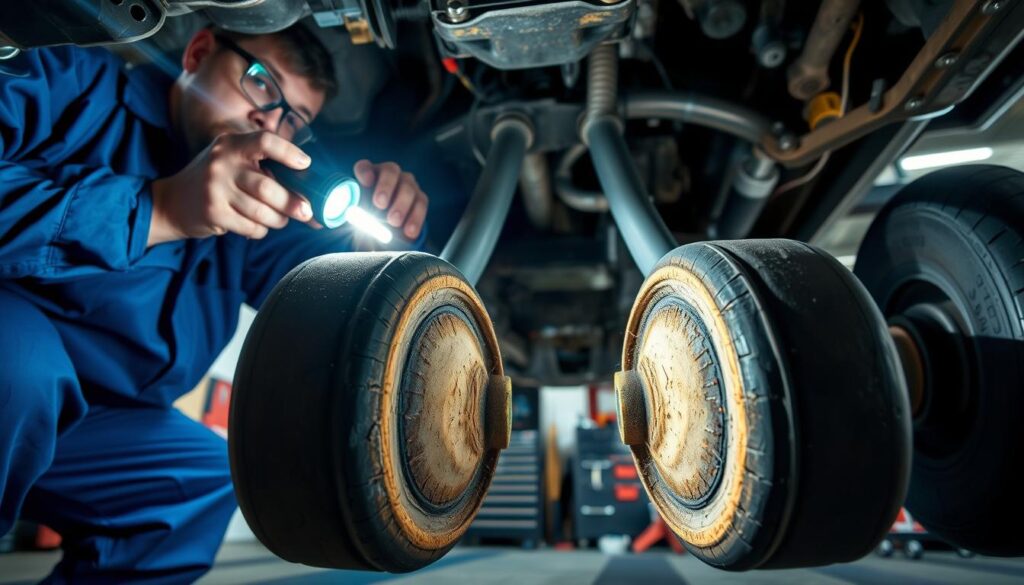
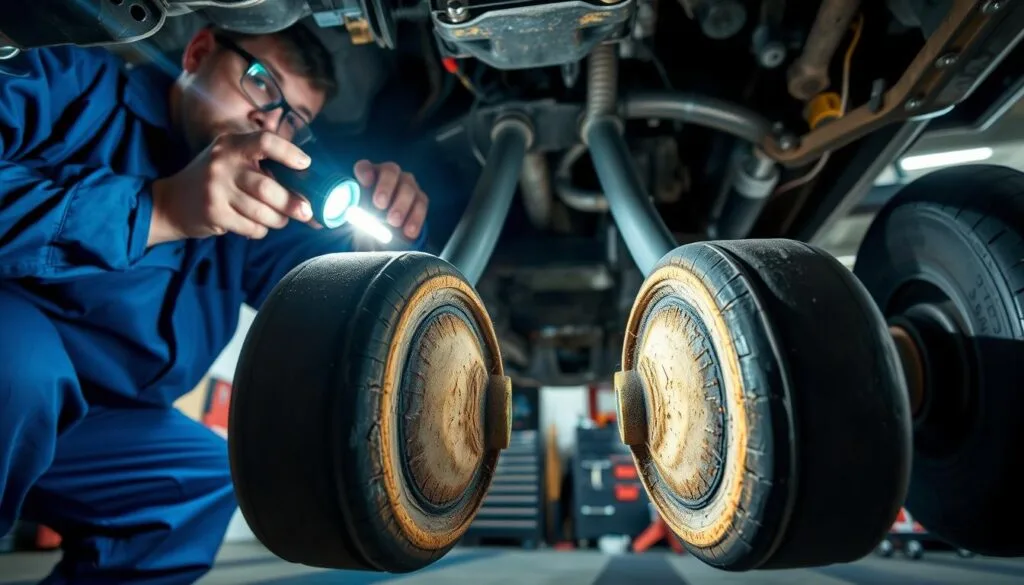
Begin any undercarriage check by safely parking and visually scanning for dark, sticky residue. Use the parking brake and a flashlight. Avoid touching hot parts or moving components.
Quick visual checks
Start at the wheel. Look inside the rim, on the wheel well liner, and around the axle boots for fresh grease or dirt buildup.
Lift the steering or turn the wheel if needed to see the outer boot at different angles. Many maintenance visits spot leaks during tire rotations or oil changes when wheels are off.
Inner vs. outer leak clues
Grease splattered on the inner wheel or wheel well usually points to an outer boot tear. If grime appears near the transmission or center undercarriage, suspect an inner boot issue.
Wear, tear or impact?
Inspect the rubber for cracks, splits, loose clamps, or a visible tear that opens as the suspension moves. Age, heat cycles, and constant flexing cause wear and wear tear over time.
Road debris like rocks, gravel, and salt can cause cuts or punctures. Frequent gravel roads and winter salt accelerate boot deterioration and increase issues.
- Flow: park level, flashlight, visual scan.
- Look: inside rim, wheel well, boot area.
- Next: confirm leak, then check for play, noise, or vibration at the drive to gauge joint damage.
Note: A visual inspection confirms a leak, but assessing joint wear often needs a shop check for safe, reliable repair and long-term maintenance.
What to Do Immediately When You Notice a CV Boot Leak
A smear of grease near the wheel often signals an active leak that needs fast attention. If you see grease but feel no vibration or hear unusual noise, limit how far you drive and book service as soon as possible.
Why a few more miles matter: Lost lubrication plus grit increases friction and heat. Each mile at higher speeds speeds wear and can turn a simple repair into costly repairs quickly.
When to stop driving now
- Any loud clicking during turns.
- Strong vibration or shaking that grows with speeds.
- Noticeable loss of power or strange transmission feel when accelerating or turning.
What to ask the shop to check
Request inspection of boot condition, clamps, and visible tears. Ask them to check joint wear, axle play, and related transmission stress indicators.
Also have them evaluate wheel bearing noise and tire wear patterns. Prompt diagnosis usually keeps the repair focused on the boot instead of replacing the entire axle or joint.
Repair Options and What They Mean for Long-Term Reliability
Choosing the right fix early can save money and preserve drivetrain life. When grease loss is minimal and there is no noise, a targeted repair often restores function without major expense.

Boot replacement when caught early
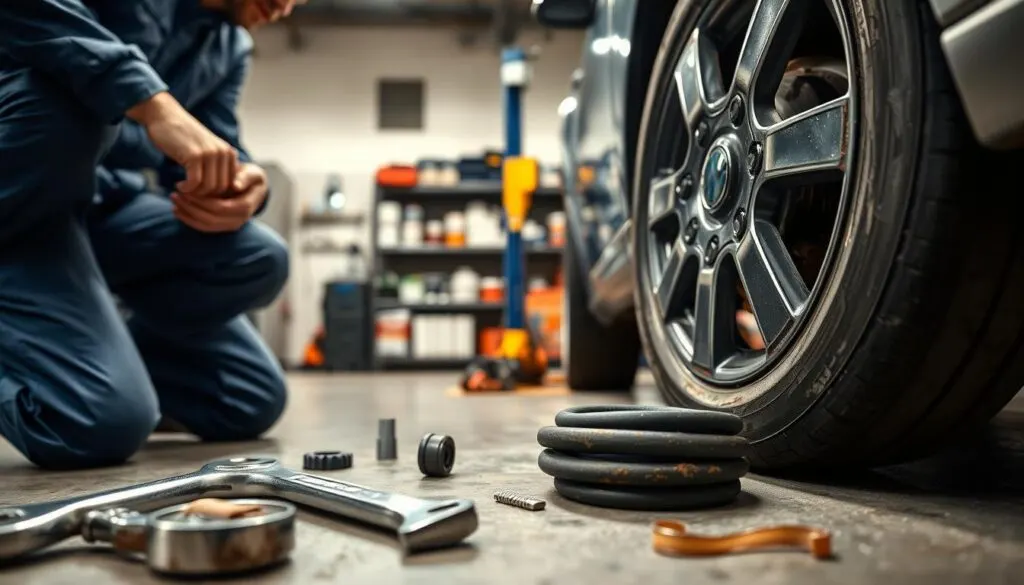
Boot replacement restores the seal and returns fresh grease to the joint. This stops dirt and water from entering and halts further damage when done before clicking or vibration starts.
When joint or axle replacement is required
If you already hear clicking, popping, or feel vibration, internal contamination or wear is likely. In that case, replacing the joint or the entire axle is the more reliable solution.
Long-term reliability and transmission health
Replacing worn components restores smooth rotation, cuts vibration, and reduces abnormal loads on tires, bearings, and the transmission. That lowers risk of downstream damage and costly repairs.
- Best-case: early boot swap keeps the original joint healthy.
- When to replace: noise or play means joint/axle replacement.
- Shopper tip: choose quality parts, correct grease, and secure clamps for lasting results.
For more detail on preventing repeat failures, see boot longevity tips.
Conclusion
Acting early stops a small tear from turning into a costly joint or axle replacement.
Grease on the inside of the wheel or wheels is often the first visible clue and deserves immediate attention. If you hear clicking during turns, feel vibration that grows with speed, or notice steering changes, treat those as urgent warnings.
Do a quick visual check and limit driving until you can get an inspection. A prompt shop diagnosis protects the transmission and related drivetrain parts and lowers the chance of unexpected breakdowns.
If noise or vibration is present, arrange repairs quickly to reduce further wear and long-term costs. For related drive‑noise troubleshooting, see this guide on creaking causes: creaking noise causes.
Regular checks during tire rotations or oil service catch small tears early, preserving vehicle reliability, safe steering, and lower ownership costs.