
This guide helps owners pick the right motor oil for daily driving, towing, off-road use, and higher-mileage service in the United States. It targets drivers who want clear, practical advice rather than brand hype.
“Best” here means matching your owner’s manual first, then choosing the right oil type and viscosity for your climate and use. Start by confirming your engine and required spec. Next, select viscosity for local temperatures and decide between full synthetic, synthetic blend, or conventional based on how you use the truck and your budget.
This approach reduces risk by avoiding wrong viscosity, incorrect specifications, over-extended change intervals, and skipped filter swaps. Later sections list top picks by use case and explain when it makes sense to pay more to protect engine life and maintain performance.
Key Takeaways
- Match the owner’s manual first, then choose viscosity and type.
- Pick oil type by use: commuting, towing, off-road, or high miles.
- Avoid long intervals and forgetful filter changes to protect the engine.
- Climate guides viscosity selection for steady performance.
- Later sections highlight top picks and when to invest more.
What “Best Oil” Means for Jeep Gladiator Performance and Engine Protection
Right-grade fluid circulation manages friction, carries heat away, and carries contaminants to the filter.
How lubrication controls friction, heat, and wear
Engine oil forms a thin protective film between moving components to cut friction under load. This film keeps bearings, pistons, and camshafts from contacting metal-to-metal.
Circulating oil also moves heat away from hot zones during highway runs, towing, and stop-and-go traffic. That helps the motor avoid hot spots that speed wear.
Keeping the engine clean and supporting fuel efficiency
Motor oil suspends soot and tiny particles, then delivers them to the filter so deposits don’t build up on valves or rings. Cleaner internals preserve performance and throttle response.
Reduced internal resistance from good lubrication can translate to steadier fuel efficiency and fewer horsepower losses over time.
Corrosion protection and seal support over time
Many engine oils include additives that slow oxidation and guard against corrosion on critical components. That chemical protection supports longer engine life.
Using the right motor oil also helps maintain seal flexibility. Neglected or degraded oil can speed seal hardening, which raises the risk of leaks and increased oil consumption.
- Protective film: lowers friction and wear.
- Heat transfer: carries heat away from stressed areas.
- Cleanliness: traps contaminants for the filter.
- Corrosion inhibitors: slow oxidation and protect metal.
Start With Your Owner’s Manual: Specs, Viscosity, and Manufacturer Recommendations
Start by confirming the exact model year and engine code before choosing any oil. Locate the manual and note the listed viscosity and specification for your engine. This prevents guesswork and protects performance.
Common viscosities across model years
Many model years list viscosities such as 0W-20, 0W-30, 5W-20, 5W-30, and 10W-30. The correct choice depends on the manual, local climate, and driving habits.
Why the manufacturer specification matters
Manufacturer recommendations reflect test standards and additive chemistry that match modern engines. Meeting the spec helps preserve emissions equipment and cold-start protection.
- Verify: engine type and model year in the manual.
- Common options: 0W-20, 0W-30, 5W-20, 5W-30, 10W-30.
- Note: many 3.6L V6 Gladiator engines specify 0W-20 full synthetic meeting Chrysler MS-6395—always confirm your manual.
- Before you buy: check viscosity, spec, oil capacity, and whether your use counts as severe service.
Best Oil for Jeep Gladiator: Top Picks by Driving Style and Use Case
Pick a lubrication strategy that matches real-world use: commute, haul, trail, or high miles.
Use-case selection narrows choices fast and keeps you focused on what the truck needs, not on marketing claims.
Daily driving and modern intervals
Choice: follow the owner’s spec and favor a quality full synthetic motor oil that supports extended intervals and reliable cold starts.
Look for the correct viscosity and the listed specification on the label before you buy the product.
Towing, hauling, and high-heat duty
Choice: a robust full synthetic or a strong synthetic blend (if the manual allows) helps resist thermal breakdown under sustained load.
Higher RPMs and heavy loads raise oil temperatures, so prioritize products rated for heat and heavy-duty performance.
Off-roading and dusty conditions
Choice: use oils that maintain protection against contamination and change them more often when dust and water ingress are common.
Timely filter swaps and shorter intervals prevent abrasive particles from accelerating wear.
High-mileage Gladiators (75,000+ miles)
Choice: high-mileage motor oil can reduce consumption, help seal condition, and lower smoke and emissions on older engines.
Switch when you see rising consumption or minor leaks; confirm viscosity and spec before changing formulas.
- Quick pick framework: daily driver, towing/hauling, off-road/dust, or 75,000+ miles.
- Avoid this mistake: choosing an oil based on advertising instead of matching the manual spec.
- Avoid this mistake: extending change intervals when operating under severe conditions.
Full Synthetic vs Synthetic Blend vs Conventional Motor Oil
Choosing between full synthetic, synthetic blend, and conventional categories shapes protection, cost, and service rhythm for your vehicle. This short guide compares what you get, what you pay, and who each type suits.
Full synthetic benefits
Full synthetic motor oil (check price on Amazon) delivers superior oxidation resistance and thermal stability. That helps engines resist breakdown during long highway runs, towing, or hot-climate use.
When your manual requires full synthetic, do not downgrade. Under normal conditions, full synthetic supports longer intervals and steadier performance.
Synthetic-blend balance
Synthetic-blend motor oil (check price on Amazon) mixes conventional base stocks with synthetic components. It offers many of the protection advantages of full synthetic at a lower price.
Choose a blend when the manual allows it and you want extra protection without the full synthetic cost premium.
Conventional: where it still fits
Conventional oils cost less and still serve older or simple engines where the manual permits them.
Expect shorter change intervals—often 3,000–5,000 miles—while synthetic options commonly extend that under normal use to roughly 7,500–10,000 miles. If you tow or off-road regularly, lean toward stronger formulations and shorter service times.
- If your manual requires full synthetic, don’t downgrade.
- If you tow or off-road, favor higher-stability formulations.
- Cost reality: conventional is cheapest; full synthetic costs more but can reduce risk under severe conditions.
Why Full Synthetic Costs More (and When It’s Worth the Price)
Full synthetic motor fluids cost more because manufacturers refine base stocks to higher purity and engineer additives at a molecular level. This cleaner foundation lets formulators deliver a higher viscosity index and stronger resistance to oxidation and thermal breakdown.
Molecular formulation and fewer impurities
Cleaner base stocks mean fewer deposits. That lowers the risk of sludge and keeps engine passages clearer over time. Less contamination also helps the lubricant keep consistent protection during long runs.
Performance in extreme heat and long-run stability
Full synthetic holds viscosity better under heat. It resists breakdown during towing, long highway drives, or very cold starts. That steady performance is the main reason many drivers accept a higher price.
- Why price is higher: deeper refining and engineered additives.
- When it’s worth it: extreme climates, towing, short-trip city driving, or longer drain intervals.
- Value test: severe driving often makes the extra spend cheaper than repairs from accelerated wear.
If budget is tight and the manual permits, a quality synthetic blend is a good way to reduce cost while keeping solid protection and many synthetic benefits.

Choosing the Right Viscosity Range for Your Jeep Gladiator
Viscosity ratings tell you how quickly motor fluid flows at startup and how thick it stays at operating temperature. Use the owner’s manual first to find approved ranges such as 0W-20, 0W-30, 5W-20, 5W-30, or 10W-30.
What viscosity numbers mean for cold starts and heat protection
The first number (the “W”) shows cold-start flow. Lower W grades flow faster in winter and help reduce wear during brief trips.
The second number indicates how well the oil maintains a protective film at operating temperature. Higher numbers can resist thinning under heat and load.
How climate and driving habits influence viscosity choice in the U.S.
Follow the manual, then match climate and duty cycle. Northern states often benefit from lower W grades to aid cold starts and shorter warm-up times.
Hot climates, frequent towing, or long highway miles demand the correct hot‑temp rating so the motor keeps steady oil pressure and protection.
- Define ratings: 0W-20 = quicker cold flow, lighter hot viscosity.
- Heat role: second number preserves film when temps and loads rise.
- Practical tip: don’t guess—start with approved ranges, then adjust within that window for climate and miles.
- Caution: choosing thicker fluid outside manufacturer approval can harm oil pressure and emissions systems.
For more technical swaps and compatibility questions, see this short guide on gear fluids and specs: can I use 75W-90 instead of.
Oil Change Intervals for Jeep Gladiator in Real-World Driving
Follow clear mileage and time targets so your engine gets steady protection without guesswork. Set a baseline plan, then tighten it when duty gets tougher.
Normal driving baseline
Under normal conditions with full synthetic, aim for about 7,500–10,000 miles or 12 months between oil changes. Verify the owner’s manual to confirm the exact guidance for your jeep gladiator and engine.
When driving counts as severe
Severe means towing or hauling, frequent off-road or dusty trails, lots of short trips, heavy idling, or extreme temperatures. In these cases shorten the interval to roughly 5,000 miles or less because contamination, heat, and stop-start cycles accelerate breakdown.
Maximum thresholds and smart habits
Do not exceed 10,000 miles, 12 months, or ~350 engine hours as a general safety cap. Use the oil life monitor when equipped, especially if your driving swings between normal and severe.
- Interval discipline reduces sludge and long-term wear.
- Plan purchases by the case or bundle oil with filters to lower per-change cost.
- Regular service saves money by preventing major repairs.
Signs It’s Time for an Oil Change (Even Before the Interval)
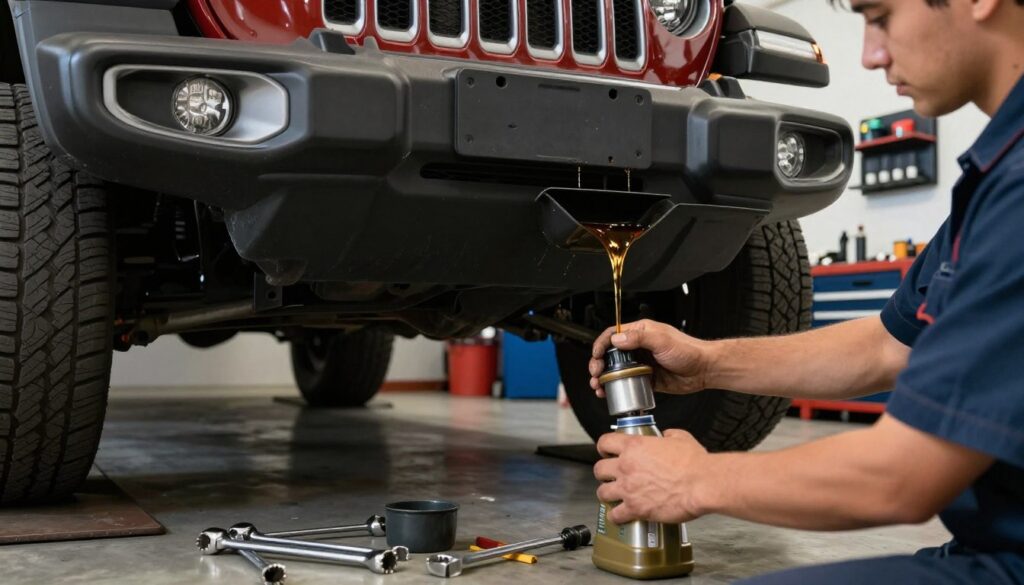
A dashboard alert or a sudden change in how the truck runs often means you should act on oil maintenance sooner than planned. Treat electronic oil-life messages as near-term tasks, not optional reminders.
When the display reads “Oil Change Required,” schedule service as soon as possible. Aim to have the work done within the next few hundred miles—commonly about 500 miles. That timing helps protect the engine and avoids compounding wear.
Dashboard cues and quick checks
Warning lights or oil-life indicators measure usage factors. If a message appears, book service promptly and perform a dipstick check to confirm level and color.
Performance symptoms to watch
- Noisier operation or ticking that grows louder under load.
- A rougher feel or reduced smoothness during acceleration.
- Higher than normal consumption or visible oil low on the dipstick.
These symptoms can show up before the scheduled mileage or time if you tow, trail, or drive many short trips in dust. Keep a simple log of oil level and miles to spot trends.
Practical takeaway: if early warnings recur, consider switching to a higher-grade product and shorter intervals instead of the cheapest choice to protect long-term performance.
What Happens If You Skip Oil Changes
Skipping routine oil service sets off a chain reaction that weakens engine protection fast. Neglect shortens the interval between safe service and real damage.
How degraded fluid starts the mechanical chain
When oil ages, it loses detergents and shear strength. That degraded oil can’t control heat or capture contaminants. As a result, internal components run hotter and face higher stress.
Accelerated wear on critical parts
Low-quality lubrication reduces film strength. Bearings, cam lobes, and pistons then see more direct contact. Over time, this increases wear and shortens the engine’s service life.
Sludge buildup and long-term damage
Irregular changes let varnish and tar-like sludge form. Sludge restricts flow and starves parts of fresh oil. Restricted flow speeds damage and often requires costly cleaning or repairs.
Preventing engine knocking with proper lubrication
Good oil keeps moving parts separated and quiet. Degraded oil raises friction and can trigger knocking or louder operation. That noise often signals imminent mechanical failure.
- Cost case: a missed, low-cost change can lead to repairs far more expensive than routine service.
- Practical tip: match oil type and interval to your driving, not just the maximum miles or time on paper.
High Mileage Engine Oil for Jeep Gladiator: When to Switch
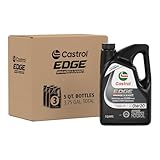
When your truck reaches roughly 75,000 miles, consider a high mileage engine oil designed to address age-related wear. These products target common issues in older powerplants and can be a practical step before major repairs.
How high-mileage formulas help older engines
High-mileage blends often include seal conditioners and extra detergents. That mix can reduce oil consumption, limit minor leaks, and cut visible smoke and emissions on engines with worn seals.
Sludge prevention as miles accumulate
As mileage increases, inconsistent changes and heat cycles raise sludge risk. Choosing a product with stronger detergency helps keep passages clear and lowers deposit buildup that chokes oil flow.
- Trigger point: typically recommended once a vehicle passes 75,000 miles.
- Buyer benefit: may reduce consumption, seepage, smoke, and emissions on older engines.
- Practical tip: try high-mileage formulations if you top off frequently or notice small leaks—always match the required viscosity and manufacturer specification.
- Caution: this is not a cure for major mechanical faults but a useful protection step for normal age-related wear and corrosion control.
Oil Filter Matters: Choosing, Replacing, and Inspecting
A clean filtration system keeps contaminants out of critical oil passages and preserves pump flow. The oil and oil filter work as a single protection system: clean oil is only as effective as the filter’s ability to trap debris.
Replace the filter at every oil change
Standard practice: replace the oil filter with every oil change, not every other one. A new filter (on Amazon) prevents restriction and avoids bypass events that let unfiltered oil circulate.
How a clogged filter harms the engine
A clogged filter reduces oil flow, which raises wear and can hurt performance. Restricted flow stresses the pump and bearings and can increase emissions by letting deposits form.
Choosing and inspecting a filter
Pick a filter that meets OEM specs and matches your interval and driving severity. If you tow or trail frequently, choose higher-capacity designs rated for heavier service.
- DIY tip: inspect the old filter for metal flakes or heavy sludge.
- Gasket check: ensure the old gasket comes off cleanly to avoid double-gasketing on install.
- Budget sense: filters are inexpensive relative to engine repairs—bundle a filter with your oil to simplify routine service.
How Much Oil Does a Jeep Gladiator Take?
Capacity numbers differ widely between engines and model years, so plan purchases around your specific powertrain.
Why it varies: fill volume depends on engine design, whether an oil cooler is fitted, and changes across production years. Different pan sizes and circulation systems mean one fill quantity won’t fit all vehicles.
Typical capacity to plan purchases
As a practical guide, many passenger vehicles take about 5–8 quarts. Many 4-cylinder engines sit near 5 quarts, while many 6-cylinder units need about 6 quarts. Use this range to buy supplies before a service or trip.
Verify and buy smart
Always confirm the exact fill in the owner’s manual or service data for your specific engine. Buy enough for the change plus a quart or two to top off if you monitor consumption.
- Why check: model-year and accessory differences alter capacity.
- Cost tip: knowing quarts helps compare price per quart and avoid waste.
- Good practice: after the first start and a short drive, recheck the motor oil level and top off carefully to prevent overfill.
Can You Mix Synthetic and Conventional Oil?
Mixing different motor oil types is technically possible, but it is not recommended as a routine way to manage service. Synthetics and conventional oils are broadly compatible, yet blending them reduces the distinct additive performance that synthetic fluids deliver.
Why mixing dilutes performance and additive quality
Full synthetic motor oil is engineered with purer base stocks and a tailored additive pack. When you mix it with conventional fluid, those additives become diluted. The result can be less oxidation resistance, weaker shear stability, and reduced overall protection.
When topping off is unavoidable vs planning a proper change
If you must top off to avoid running low, do so to protect the engine immediately. Then schedule a proper oil change as soon as practical to restore a consistent fluid type and chemistry.
- Practical answer: compatible but not ideal—avoid mixing when you can.
- Emergency tip: top off to protect the engine, then arrange an oil change.
- Buying tip: keep a matching quart on hand so you don’t mix while traveling.
DIY Oil Change vs Professional Service for Jeep Gladiator Owners
Deciding whether to do your own oil change comes down to time, cost, and comfort under the vehicle. This choice is personal: DIY gives cost control and learning. Professional service offers speed and added inspection value.
DIY basics and workflow
Access the drain plug and filter from under the truck. If clearance is low, lift with a jack and use jack stands. Locate the fill cap and dipstick under the hood to refill and verify level.
Standard steps: safely lift, drain the oil, replace the oil filter, reinstall the plug, refill through the cap, then check the dipstick.
Safety essentials
Never work under a vehicle supported only by a jack. Use jack stands, wheel chocks, and eye protection to reduce risk. If the oil filter is stuck, an old belt makes a good strap-wrench substitute to break it free carefully.
What professional service adds
Shops handle proper disposal and often include a multipoint inspection. Certified technicians can spot early issues and save time. One-click oil change kits are a middle ground: they bundle oil, a replacement filter, and sometimes a drain plug to simplify the job.
- Pick DIY for lower price and hands-on control.
- Pick pro service for convenience, speed, and inspection value.
- Consider kits to reduce shopping and mistakes when you do the work yourself.
Oil Change Price in the United States: What Impacts Cost and How to Save
Knowing what shapes the final price helps you shop smarter. Oil change costs vary by product grade, engine size, labor rates, and bundled services like inspections or tire rotation.
Cost drivers: oil type, engine type, and included services
Simple factors drive most price differences: conventional versus full synthetic, how many quarts your engine needs, and the local labor rate.
Shops that include a multipoint inspection or a premium filter will show higher ticket prices but more value in many cases.
Why full synthetic can cost more than conventional
Full synthetic and high-quality motor oil use purer base stocks and engineered additives. That raises product cost and often the shop’s service charge.
In some areas a synthetic oil change runs about twice the price of conventional, mainly because of material cost and perceived service level.
Service specials, coupons, and oil-change packages to reduce price
Look for digital coupons, seasonal promotions, and prepaid maintenance plans to lower per-visit price.
Compare offers by checking what’s included—filter brand, oil spec, and labor—so you don’t fall for a loss-leader that skims quarts or skips OEM-equivalent parts.
- Shop tip: evaluate inclusions, not just the headline price.
- Save: bundle services (rotations, inspections) or buy a multi-change package.
- Warning: cheap offers may exclude required spec oils or premium filters.
Ownership lens: regular, correctly specified changes support fuel economy and lower the risk of costly drivetrain repairs. While this guide centers on engine service, remember transmission and scheduled maintenance also affect overall operating cost.
Conclusion
A simple checklist beats guesswork when you pick a motor fluid and set service intervals.
Confirm your owner’s manual first: note viscosity and the manufacturer recommendations, then choose type based on how you drive. For many modern jeep gladiator models, a manufacturer-approved full synthetic product gives the best protection and consistency under towing or trail duty.
Follow the oil-life monitor and shorten intervals for severe use. Never skip the filter—replace it at every oil change to protect flow and stop contaminant recirculation.
Paying a bit more now usually beats repairs later. Identify your gladiator’s engine and model years, buy the correct motor oil and filter today, and schedule your next change on a firm timeline.
FAQ
What does “best oil” mean for Jeep Gladiator performance and engine protection?
The term refers to oil that reduces friction, manages heat, and limits wear while keeping internal parts clean. It should meet Jeep’s recommended viscosity and API/ILSAC specs, protect seals from corrosion, and support fuel efficiency. Matching those factors preserves longevity and performance under varied driving conditions.
How does engine oil reduce friction, heat, and wear?
Oil forms a lubricating film between moving parts to cut metal-to-metal contact, lowering friction that generates heat. Additives maintain film strength at high temperatures, which reduces wear on bearings, camshafts, and pistons over time.
In what ways does oil help keep the engine clean and support fuel efficiency?
Detergents and dispersants suspend soot and deposits, preventing sludge and varnish. Clean internals maintain proper clearances and timing, helping the engine run efficiently and preserve fuel economy.
How does oil protect against corrosion and support seals over time?
Anti-corrosion additives neutralize acids and prevent oxidation. Conditioners keep rubber seals pliable, reducing leaks as the vehicle ages and protecting gaskets from brittle failure.
Where should I start to pick the correct motor oil for my Gladiator?
Begin with your owner’s manual. It lists approved viscosity grades and manufacturer specifications. Follow those recommendations first; they reflect the engine’s design and warranty requirements.
What are common viscosities mentioned for Gladiator model years?
Many model years specify 5W-20 or 5W-30 for gasoline V6 engines, but some turbo or diesel options use different grades. Check your specific year and engine to confirm the right range.
Why does meeting the right specification matter for engines?
Meeting OEM specs ensures proper oil pressure, cold-start protection, and thermal stability. Using the wrong spec can increase wear, void warranties, or reduce performance in extreme conditions.
Which oil type is recommended for daily driving and routine maintenance?
A full synthetic that meets Jeep’s viscosity and API requirements is often ideal for daily use. It offers stable protection, longer intervals, and better cold-start flow than conventional oils.
What’s the best choice when towing, hauling, or running in high-heat conditions?
Choose a heavy-duty full synthetic with strong high-temperature shear stability. Look for products designed for towing and heavy loads to maintain film strength under sustained heat and stress.
What oil should I use for off-roading and dusty environments?
Use a full synthetic with excellent detergent properties and change oil more frequently. Combine that with frequent air-filter and oil-filter checks to prevent abrasive particles from accelerating wear.
What oil is recommended for high-mileage Gladiators over 75,000 miles?
High-mileage formulations include seal conditioners and extra detergents to reduce consumption and leaks. They help control oil burn and clean deposits, which benefits older engines.
What are the benefits of full synthetic compared to a synthetic blend or conventional motor oil?
Full synthetics provide superior oxidation resistance, thermal stability, and consistent viscosity at extreme temperatures. Blends offer a middle ground on price and protection, while conventional oils work but need shorter change intervals.
Why does full synthetic cost more and when is it worth the price?
Full synthetics use advanced base stocks with fewer impurities and optimized additives, improving longevity and protection in extreme heat or cold. It’s worth the extra cost for towing, off-road use, long intervals, or to maximize engine life.
How do viscosity numbers affect cold starts and heat protection?
The lower “W” number (e.g., 5W) indicates better cold-start flow, reducing wear at startup. The second number (e.g., 30) shows film thickness at operating temperature; higher values offer stronger heat protection under load.
How should climate and driving habits influence viscosity choice in the U.S.?
Colder regions benefit from lower W grades for winter starts. Hot climates or heavy-load driving may call for a higher hot-viscosity grade to maintain protective film at operating temperatures.
What are typical oil change intervals for Gladiator owners under normal driving?
For full synthetic, many manufacturers recommend 7,500 to 10,000 miles, or follow the oil life monitor. Check your manual and adjust if you drive in more demanding conditions.
When should I shorten intervals due to severe conditions?
If you tow frequently, off-road, drive in heavy dust, or make many short trips, shorten intervals to 5,000 miles or less. Severe duty accelerates contamination and thermal stress on oil and filters.
Is there a maximum threshold I should never exceed between changes?
Avoid exceeding the manufacturer’s maximum mileage or time limits—commonly 12 months or the stated mile limit—because additives deplete and contaminants accumulate over time.
What dashboard messages or symptoms indicate it’s time for an oil change?
Oil life or service reminders, low-oil warnings, increased oil consumption, warning lights, or a rough idle are signs. Also watch for dark, gritty oil on the dipstick and reduced engine performance.
What performance symptoms tie to dirty or low oil?
Symptoms include knocking, increased engine noise, overheating, reduced fuel economy, and sluggish acceleration. Low oil creates metal contact that accelerates component wear.
What happens if I skip oil changes?
Skipping changes raises overheating risk, speeds wear on bearings and piston rings, and allows sludge to form. Long-term neglect can lead to engine failure and costly repairs.
When should I switch to a high-mileage engine oil?
Consider high-mileage formulations once the truck exceeds 75,000 miles or if you note increased oil consumption, leaks, or blue smoke. These formulas help condition seals and control deposits.
Why is the oil filter important and should it be replaced every change?
The filter traps contaminants and metal particles. Replace it at every oil change to ensure clean flow; a clogged filter reduces lubrication and raises component wear and emissions.
How does a clogged filter impact oil flow and performance?
A clogged filter limits oil flow, can trigger bypass valves that let unfiltered oil circulate, and reduces pressure to critical parts—resulting in accelerated wear and poor engine operation.
How much oil does a Gladiator typically take?
Capacity varies by engine and model year. Most passenger-truck V6 engines range from about 5 to 6.5 quarts. Always confirm the exact capacity for your engine and include the filter when calculating needed volume.
Can I mix synthetic and conventional oil if I need to top off?
While occasional topping off is acceptable, mixing dilutes additive benefits and can reduce overall protection. Plan a complete oil change with the same type to restore full performance.
What are the DIY basics for changing oil on a Gladiator?
Basics include warming the engine, safely lifting the truck, draining oil from the plug, replacing the filter, and refilling to the correct level. Always use the recommended viscosity and dispose of used oil properly.
What safety tips should I follow during a DIY change?
Use jack stands, wheel chocks, and eye protection. Work on a level surface, let the engine cool enough to avoid burns, and follow torque specs on the drain plug and filter.
Why might I choose professional service over DIY?
Professionals provide multipoint inspections, ensure correct oil and filter specifications, and handle disposal. They may also include warranties or free service reminders that support long-term maintenance.
What factors influence oil change price in the United States?
Price depends on oil type (full synthetic costs more), engine size, filter quality, labor rates, and any included services like inspections or fluid top-offs. Coupons and service packages can reduce the out-of-pocket cost.
How can I save on oil changes without sacrificing protection?
Buy oil and filters in value packs, watch for dealership or national shop specials, and follow recommended intervals rather than excessive early changes. Choosing a reputable synthetic that meets specs avoids costly engine issues later.