
Dealing with a stuck door lock feels frustrating for every luxury driver. These precision vehicles provide great comfort, yet mechanical parts eventually fail after years of constant use. Pinpointing why internal mechanisms fail is the initial phase of restoring vehicle functionality.
Executing this specialized repair task shouldn’t demand expensive dealership visits. Frequent issues involve grime or power faults which remain easily fixed via basic automotive equipment. Gaining knowledge about simple hardware inside your vehicle saves cash plus much time.
This guide outlines reliable pathways for resolving these entry failures. Protecting vehicle safety remains essential while parked in urban public spaces. Use these tips for gaining quick cabin access without facing high repair bills.
Key Takeaways
- Identify common mechanical latch failures.
- Clean internal mechanisms using specific sprays.
- Save money by performing DIY fixes.
- Restore vehicle security without dealership help.
- Understand when electronic actuators need replacing.
- Regain entry access using manual overrides.
Understanding Why Your BMW Door Lock Gets Stuck
Understanding the reasons behind a stuck BMW door lock is crucial for effective troubleshooting and repair. A stuck door lock can be more than just an inconvenience; it can compromise the security and overall functionality of your vehicle.
Common Causes of Stuck Door Locks in BMW Vehicles
Several factors can contribute to a stuck door lock in BMW vehicles. These include:
- Dirt and debris accumulation within the lock mechanism
- Wear and tear on mechanical components over time
- Electronic failures due to faulty wiring or software issues
- Weather conditions, such as freezing temperatures or excessive moisture
Table: Common Causes and Symptoms of Stuck Door Locks
| Cause | Symptoms |
|---|---|
| Dirt and Debris | Lock feels stiff, key has difficulty turning |
| Wear and Tear | Lock mechanism feels loose, inconsistent performance |
| Electronic Failures | Lock doesn’t respond to key fob, erratic behavior |
| Weather Conditions | Lock freezes or sticks, particularly in cold or wet conditions |
Electronic vs. Mechanical Lock Failures
BMW door locks can fail due to either electronic or mechanical issues. Electronic failures often relate to the door lock actuator or the central locking system’s electronics. Mechanical failures, on the other hand, involve the physical components of the lock.
Electronic failures might manifest as a lock that doesn’t respond to the key fob or a lock that operates erratically. Mechanical failures can cause the lock to feel stiff or jammed.
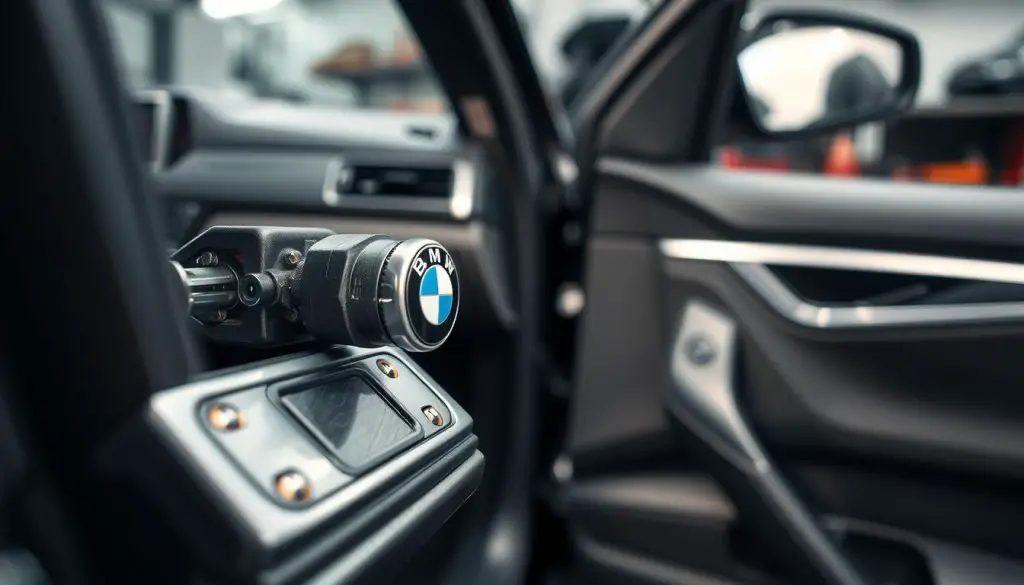
Identifying Symptoms of a Failing Door Lock Actuator
The door lock actuator is a critical component of the locking system. Symptoms of a failing actuator include:
- Unusual noises when operating the lock
- Slow or incomplete locking/unlocking actions
- Inconsistent performance, such as locking/unlocking on its own
Recognizing these symptoms early can help prevent more significant issues and ensure your BMW remains secure.
Essential Tools and Materials for the Repair
Before diving into the repair of a stuck BMW door lock, it’s crucial to gather the necessary tools and materials. Having everything you need at hand will make the process smoother and more efficient.
Basic Tools Required for BMW Lock Repair
To start, you’ll need a set of basic tools that are commonly found in most DIY repair kits. These include screwdrivers (both flathead and Phillips), Torx bits (for certain BMW models), and pliers. A trim removal tool is also essential for safely removing the door panel without causing damage.
For more complex repairs, you might need specialized tools such as a door lock actuator tester. It’s also a good idea to have a multimeter on hand to diagnose any electrical issues related to the lock.
Best Lubricants and Cleaning Products
Choosing the right lubricant is crucial for maintaining the health of your BMW’s door lock mechanism. A high-quality lock lubricant, such as silicone spray or graphite powder, can help keep the lock’s internal components running smoothly. For cleaning, use a soft cloth and a mild detergent to remove dirt and grime without damaging the lock’s finish.
For more detailed information on other BMW repair procedures, you can refer to our guide on how to easily open your BMW hood in 3 simple.
Safety Equipment and Precautions
Safety should always be your top priority when working on your vehicle. Make sure to wear protective gloves to prevent injury from sharp edges or electrical components. Safety glasses are also recommended to protect your eyes from debris or cleaning products.
Additionally, ensure that your workspace is well-ventilated, especially when using lubricants or cleaning products that may emit fumes. By taking these safety precautions, you can minimize the risk of accidents and ensure a successful repair.
How to Fix a Stuck Door Lock on My BMW?
Fixing a stuck door lock on your BMW can be a straightforward process if you follow the right steps. The key is to diagnose the problem accurately and apply the appropriate fix. In this section, we will guide you through a series of steps to resolve the issue.
Step 1: Diagnose the Problem with Your Key Fob
The first step is to diagnose the problem with your key fob. A malfunctioning key fob can often be the culprit behind a stuck door lock.
Testing the Key Fob Battery
Begin by testing the key fob battery. A weak or dead battery can prevent the key fob from sending a strong signal to the car’s locking system. To test the battery, you’ll need a multimeter. If the voltage reading is below the recommended level, replace the battery with a new one.
Verifying Key Fob Signal Transmission
If the battery is not the issue, the next step is to verify if the key fob is transmitting a signal correctly. You can do this by checking if the other functions of the key fob, such as the alarm or remote start, are working. If not, there might be an issue with the key fob’s internal electronics or the car’s receiver.
Step 2: Attempt Manual Lock Operation
If the key fob is functioning correctly, the next step is to attempt manual lock operation. This involves using the physical key and the interior lock button to see if the lock can be operated manually.
Using the Physical Key in the Lock Cylinder
Insert the physical key into the lock cylinder and turn it. If the lock cylinder is clean and well-lubricated, this should operate the lock. If it doesn’t, there might be an issue with the lock cylinder or the internal mechanism.
Operating the Interior Lock Button
Try operating the interior lock button. If the door locks with the button but not with the key fob, it indicates a potential issue with the key fob or the car’s central locking system.
Step 3: Clean and Lubricate the Lock Mechanism
Dirt and lack of lubrication are common causes of stuck door locks. Cleaning and lubricating the lock mechanism can often resolve the issue.
Removing Dirt and Debris from the Lock Cylinder
Use a soft brush or compressed air to remove any dirt or debris from the lock cylinder. This will ensure that the lock operates smoothly.
Applying Appropriate Lubricant
Apply a suitable lubricant, such as graphite powder or silicone spray, to the lock cylinder and mechanism. Avoid using oil-based lubricants as they can attract dirt.
Step 4: Address Frozen or Weather-Damaged Locks
Weather conditions can sometimes cause the lock to freeze or get damaged. Addressing these issues requires careful handling.
Thawing Frozen Lock Components Safely
If the lock is frozen, use a hairdryer or a de-icer spray to thaw the components safely. Avoid using hot water or excessive force, which can damage the lock.
Removing Moisture from the Lock Assembly
After thawing, remove any moisture from the lock assembly. Use a dry cloth to wipe down the lock and its components.
Step 5: Reset the BMW Central Locking System
Sometimes, the issue might be with the central locking system itself. Resetting the system can resolve the problem.
Performing a Soft Reset
A soft reset involves disconnecting the car’s battery for a few minutes and then reconnecting it. This can reset the system’s electronics.
Recalibrating the Door Lock Module
If a soft reset doesn’t work, you might need to recalibrate the door lock module. This may require specialized tools and knowledge, so it’s recommended to consult a professional if you’re not sure.
Replacing a Faulty BMW Door Lock Actuator
Replacing a faulty door lock actuator in your BMW can restore the convenience and security of your vehicle’s locking system. The door lock actuator is a critical component that can sometimes fail due to wear and tear or other issues. Understanding how to replace it can save you time and money.
Confirming the Actuator Is the Problem
Before you start the replacement process, it’s essential to confirm that the actuator is indeed the problem. Faulty actuator symptoms can include doors not locking or unlocking properly, or strange noises coming from the door when you try to lock or unlock it.
- Listen for unusual sounds when operating the door lock.
- Check if the doors lock or unlock inconsistently.
- Inspect the actuator for any visible signs of damage or wear.
Removing the Door Panel to Access the Actuator
To replace the actuator, you first need to remove the door panel. This process involves several steps:
- Remove the screws holding the door panel in place.
- Gently pry the panel away from the door frame.
- Disconnect the electrical connectors linked to the actuator.
Installing a New Door Lock Actuator
Once you have accessed the faulty actuator, you can proceed to install a new one. Ensure that the new actuator is compatible with your BMW model.
- Connect the new actuator to the electrical connectors.
- Secure the actuator in its original position.
- Make sure all connections are tight and secure.
Testing the New Actuator and Reassembling
After installing the new actuator, test it to ensure it’s working correctly. Lock and unlock the doors several times to verify the actuator’s operation.
If everything is functioning as expected, you can reassemble the door panel by reversing the steps you followed to remove it. Ensure all screws are tightened securely, and the panel is properly aligned.
Preventing Future BMW Door Lock Problems
To keep your BMW’s door locks functioning smoothly, it’s essential to adopt a proactive approach to maintenance. By doing so, you can significantly reduce the likelihood of encountering issues that may leave you stranded or locked out of your vehicle. For tips on how to handle a situation where your keys are locked inside your BMW, you can refer to our guide on how to unlock your BMW when keys are locked.
Establishing a Regular Maintenance Schedule
A regular maintenance schedule is vital for the longevity and reliability of your BMW’s door locks. This includes periodic inspections of the lock mechanisms, lubrication of moving parts, and checking the condition of the door lock actuators. By staying on top of these tasks, you can identify and address potential issues before they become major problems.
Lubrication is a critical aspect of door lock maintenance. Using the right type of lubricant can help reduce wear and tear on the lock’s mechanical components. It’s recommended to use a silicone-based lubricant, as it provides effective lubrication without attracting dirt or debris.
Protecting Your Locks from Environmental Damage
Environmental factors such as extreme temperatures, moisture, and exposure to salt or sand can significantly impact the performance and lifespan of your BMW’s door locks. To mitigate these effects, it’s essential to take protective measures. Regularly cleaning the locks and applying a protective coating can help shield them from corrosion and damage.
- Regularly clean the door locks and surrounding areas to prevent dirt buildup.
- Apply a protective coating to the locks to prevent corrosion.
- Avoid exposing your vehicle to extreme temperatures for prolonged periods.
Recognizing Early Warning Signs of Lock Failure
Being aware of the early warning signs of lock failure can help you address issues before they become severe. Common indicators include unusual noises when operating the locks, difficulty in locking or unlocking the doors, and visible signs of wear or damage on the lock components.
Prompt action is necessary when you notice any of these signs. Ignoring these warning signs can lead to more significant problems, potentially leaving you locked out of your vehicle or compromising its security.
Conclusion
Fixing a stuck door lock on your BMW can be a straightforward process when you follow the right steps. This article has outlined the common causes of stuck door locks, essential tools for repair, and a step-by-step guide to resolving the issue.
A stuck door lock can be frustrating, but with the right approach, you can get back to enjoying the security and convenience of your BMW. By understanding the causes of lock failure, whether electronic or mechanical, and taking preventive measures, you can minimize the risk of future lock issues.
Regular maintenance, including cleaning and lubricating the lock mechanism, can help prevent door lock problems. For more complex issues, such as a faulty door lock actuator, replacement may be necessary. By following the steps outlined in this article, you can successfully fix a stuck door lock and ensure your BMW remains secure.
For a comprehensive BMW door lock repair summary, remember to diagnose the problem accurately, use the right tools, and take preventive measures to avoid future issues. With these tips, you’ll be well-equipped to handle a stuck door lock fix and keep your vehicle in top condition.
FAQ
What are the primary symptoms of a failing BMW door lock actuator?
A failing door lock actuator typically manifests as unusual clicking or humming noises when attempting to lock the vehicle. Other common signs include the lock plunger moving slowly, bouncing back up after locking, or failing to respond entirely to the BMW key fob commands or the central locking system button.
How can I determine if the issue is electronic or mechanical?
To diagnose the failure, first attempt to use the physical key in the driver’s side lock cylinder. If the door unlocks manually but not via the remote, the issue is likely an electronic failure related to the key fob signal transmission, a blown fuse, or the door lock module. If the physical key encounters resistance, it points toward a mechanical failure within the latch or cylinder.
Is it necessary to replace the key fob battery if my locks are sticking?
Yes, testing the key fob battery is the first step in troubleshooting. Many BMW models use a CR2032 or VL2020 battery. If the signal is weak, the central locking system may not receive the command to actuate the locks. Verifying the battery strength can save you from unnecessary mechanical repairs.
What products are recommended for cleaning and lubricating a BMW lock mechanism?
For optimal results, use a dedicated graphite lubricant or a high-quality silicone spray like WD-40 Specialist Silicone. Avoid using heavy oils or WD-40 Multi-Use Product inside the lock cylinder, as these can attract dirt and debris over time, leading to further clogging of the lock assembly.
Can I perform a soft reset on the BMW central locking system myself?
Yes, performing a soft reset can often resolve electronic glitches. This can be done by disconnecting the negative battery terminal for 15 minutes or using an OBD-II diagnostic tool such as BimmerCode or Carly to recalibrate the door lock module. This process clears temporary faults in the vehicle’s computer system.
How do I safely remove the door panel to access the actuator?
Accessing the actuator requires a plastic trim removal tool and a Torx screwdriver set (typically T20 and T25). You must carefully pry the interior trim pieces and unscrew the hidden bolts. It is vital to disconnect the battery first to avoid accidentally deploying the side-impact airbags housed within the door panel.
What should I do if my BMW door lock is frozen due to cold weather?
If you encounter a frozen lock, use a specialized lock de-icer or a hair dryer to gently apply heat. Once the ice has melted, it is crucial to remove the moisture from the lock assembly and apply a moisture-displacing lubricant to prevent the components from seizing again during the next temperature drop.
How can I prevent future lock failures on my BMW?
Maintaining a regular maintenance schedule is the best defense. This includes cleaning the door latches of road grime and applying a light coat of lubricant annually. Additionally, pay close attention to early warning signs, such as a lock that requires multiple clicks to engage, and address it before the actuator fails completely.