
Owners and shoppers should know what the phrase Chevy 6.6 gas often signals in daily use: drivability complaints, warning lights, fluid leaks, smoke, and repairs that can get costly if ignored.
These heavy‑duty V8 engines appear in trucks used for towing and hauling. Reported issues range from excessive oil use and strange noises to exhaust leaks, timing chain wear, and sensor‑related check engine alerts. Symptoms often overlap, so oil loss can lead to smoke, misfires, and even engine damage.
That overlap is why early diagnosis matters, even when the truck still runs. This short guide outlines the “6 Common Chevy 6.6 Gas Problems” you’re likely to see, what each issue looks like, common causes, and typical repair costs. For a deeper look at related V6 engine faults, see this resource: engine problem reference.
Key Takeaways
- Know the signs: warning lights, leaks, smoke, and odd noises are red flags.
- Symptoms overlap; prompt checks prevent minor faults from becoming major repairs.
- Oil consumption and engine failure are the costliest risks to watch.
- HD use—towing, heat, heavy loads—exposes weaknesses faster than light use.
- Maintenance and timely fixes keep these engines reliable for work and travel.
Chevy and GM 6.6L gas engine overview for US truck owners
GM introduced the 6.6L V8 L8T as a gasoline alternative for heavy‑duty buyers who want simpler fueling and lower maintenance than diesel in many work settings. This engine aims at drivers who tow, haul, or use their truck for regular heavy tasks but prefer gasoline for service access and uptime.
Where the 6.6 gas engine is used in the United States
The L8T shows up in select 2020–2024 Chevrolet Silverado HD and GMC Sierra HD vehicles. These model years represent the core applications where owners report real‑world mileage, towing loads, and service needs.
Why this engine gets attention for reliability and recalls
Heavy‑duty owners watch reliability closely because downtime affects income and travel. Online forums and owner groups track engine performance, early warnings, and service bulletins that raise search interest.
- Some owners link headline recalls to broader concerns about L8T durability and related system components.
- Reports of oil use, sensors, and drivability generate searches about engine issues and trouble to expect.
- Not every report signals a major failure; many are sensor or software fixes, while others can be expensive.
If you own or are shopping, watch for early symptoms, learn how to read codes, and get a professional diagnosis when symptoms persist.
Warning signs that point to 6.6 gas engine trouble
Small changes in behavior—lights, sounds, or smoke—are the clearest signs that the engine needs attention. Treat these signals as prompts to check codes, fluids, and performance before damage spreads.
Check engine light and what it can signal
The check engine light is an early‑warning system, not a diagnosis. When it illuminates, scan trouble codes instead of guessing. Codes point to sensors, ignition, or emissions faults that affect performance.
Loss of power, rough running, and drivability changes
Watch for sluggish acceleration, loss of power under load, rough idle, or uneven throttle response. These symptoms matter most while towing or climbing grades and often indicate fuel, ignition, or timing issues.
Overheating, smoke color, and what each may mean
Overheating is a red alert: rising gauge, steam, or repeated heat events can warp parts. For smoke, note the color: blue suggests oil burning, white points to coolant entering the combustion chamber, and black often signals overly rich fueling or injector problems.
Oil leaks and rapid oil level drop
Visible puddles are obvious, but consumption can hide without drips. Check the dipstick regularly; rapid oil loss risks bearing damage and performance failure if ignored.
No-start, stalling, and catastrophic noises
Stop driving if you hear severe knocking, grinding, or sudden power loss. Frequent stalls or a no‑start condition may indicate timing or internal mechanical failure and require immediate professional inspection.
- Act fast: scan codes, check coolant and oil, and limit towing until issues are diagnosed.
- Next step: these signs map to the most likely fault categories, making it easier to match symptom → likely cause → repair.
6 Common Chevy 6.6 Gas Problems
Owners should watch six frequent trouble areas that tend to show up in day-to-day use. Spotting the right symptom speeds diagnosis and limits cost.
Excessive oil consumption and low oil damage risk
Excessive oil consumption can start small but leads to low oil → reduced lubrication → heat and friction → internal wear. If unchecked, severe cases may require major repair or engine replacement; expect $3,000–$5,000 in worst cases.
Engine failure and sudden breakdown concerns
Engine failure is usually the end result of ignored overheating, oil starvation, or timing damage rather than a random event. Typical rebuild or replacement ranges from $3,000–$8,000 depending on severity.
Unusual engine noises: knocking, rattling, hissing, grinding
Noise type and when it happens matter: knocking under load differs from startup rattles or idle hissing. Minor fixes run $100–$800; louder or internal sounds often need immediate attention.
Exhaust leaks near the tailpipe and popping sounds
Hissing or popping at the tailpipe often signals an exhaust leak; this affects performance and cabin safety. Typical repair costs fall around $220–$330 for common muffler or joint fixes.
Timing chain issues that cause misfires and rough idle
Timing chain issues disrupt valve timing and cause misfires, rough idle, and inconsistent power. Repairs or tensioner replacement commonly range $500–$1,500 based on parts and labor.
Sensor malfunctions that trigger the engine light
Sensor malfunctions produce bad data that skews fueling and ignition. A diagnostic code read and sensor replacement are the fastest path; costs vary with the sensor but are often lower than major mechanical repairs.
Excessive oil consumption in the 6.6 gas engine
When oil vanishes between changes, the truck can still drive fine while damage silently builds. Tracking level and behavior early can stop small problems from becoming major repairs.
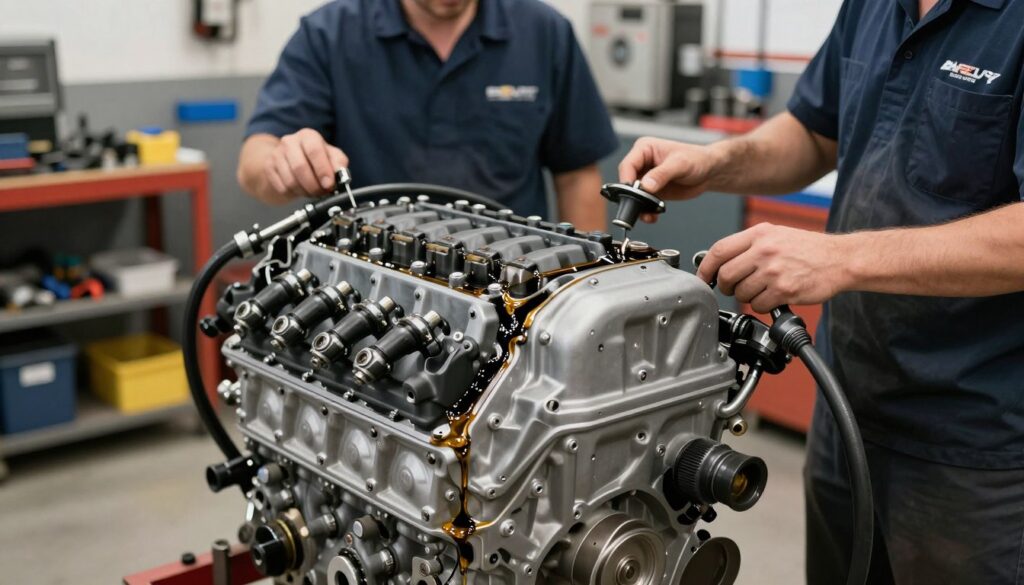
Symptoms to watch: a fast‑dropping dipstick, blue exhaust smoke at startup or under acceleration, reduced acceleration, and rough running. Oil may disappear without visible puddles.
Likely causes include worn piston rings, failing valve seals that let oil into combustion, and external gasket or seal leaks. Each allows oil to enter places it shouldn’t, causing burning or loss.
Owner triage: check oil level weekly, inspect for fresh drips, note oily residue near seals, and log how often you top off. Bring that record to your shop.
Repair outcomes range from a simple gasket fix to internal work. Severe internal damage can require major overhaul or engine replacement, with exposure commonly cited around $3,000–$5,000 when internal parts are involved.
Next step: get a professional diagnosis before replacing parts. Excessive oil consumption is often multi‑causal and fixing the wrong component wastes time and money.
Engine failure risk and what usually happens beforehand
A full engine failure usually follows a chain of smaller, avoidable faults. In practical terms, engine failure means repeated stalling, a no‑start condition, severe knocking, or the inability to maintain power.
Owners report common precursors: overheating episodes, visible smoke, steady loss of performance, persistent warning lights, and growing mechanical noise. These signs usually appear well before a total failure.
Small problems escalate quickly. Overheating can warp heads and gaskets. Low oil will starve bearings. Misfires harm catalysts, and timing faults can lead to internal contact. Left unchecked, a minor fault becomes a major breakdown.
When to stop driving
Stop immediately for overheating, loud knocking, or sudden power loss. Driving on these signs often turns a fixable repair into a full replacement.
Cost expectations and paperwork
Major repair or replacement for a 6.6 engine commonly ranges from about $3,000 to $8,000, plus towing and diagnostics. Keep service records, code printouts, and a symptom timeline. Documentation speeds diagnosis and helps with warranty or complaint paths.
- Prevent: act on warning lights and odd noises.
- Document: log events and repairs for faster, fairer outcomes.
Check engine light causes tied to sensors and spark plugs
A glowing engine warning often hides a simple sensor fault or an aging ignition part. On GM heavy‑duty trucks, sensor malfunctions are a frequent trigger. Reading diagnostic trouble codes (DTCs) narrows the fault to a system or circuit so you can test the right component.
How diagnostic trouble codes help identify the faulty sensor
Scan tools point to specific codes so you avoid replacing parts blindly. A code will flag a circuit, sensor, or range issue and guide targeted tests.
Spark plug failures and symptoms
Worn plugs cause misfires, poor fuel economy, hard starts, and a shaky idle. Under load, misfires reduce performance and can stress the catalyst if left over time.
When replacement parts and professional diagnosis are worth it
Simple code reads and plug swaps are DIY friendly. But intermittent sensor malfunctions, wiring faults, or multiple codes often need a shop’s tools and experience.
- Tip: use quality sensors and OEM or recommended plugs to cut repeat failures.
- Goal: restore stable engine performance and prevent knock‑on damage from prolonged misfires.
How to prevent Chevy 6.6 gas problems with maintenance and early diagnosis
Regular maintenance and quick checks stop small faults from turning into costly breakdowns. A simple, consistent plan helps the engine run well and reduces the chance of major repairs.
Oil level checks, oil change intervals, and monitoring for consumption
Check oil weekly and log any top‑offs. That record makes trends clear and helps a shop diagnose consumption early.
Follow oil change intervals that match heavy use. Frequent towing or high heat calls for shorter service intervals to protect the engine.
Timing chain inspection and why timing matters for long-term reliability
Have the timing chain and tensioners inspected at recommended service points. Proper timing keeps combustion clean and prevents misfires.
Small timing drift can become a big repair. Catching worn guides or tensioners early saves labor and parts cost down the road.
Listening for new noises and inspecting for exhaust leaks
Note new knocking, rattling, or hissing. Record when the sound occurs—cold start, idle, or under load—and show this to your technician.
Check the tailpipe area and underbody for exhaust leaks. Even small leaks affect cabin comfort and can mask other engine issues.
Why routine inspections reduce expensive repairs over time
Schedule periodic scans for stored codes, a visual check for leaks, and ignition tuneups. These simple steps catch sensor and spark issues before they escalate.
- Maintenance checklist: oil level checks, log consumption, follow change intervals, inspect timing chain, listen for new noises, and look for exhaust leaks.
- Cost note: routine maintenance costs far less than overhaul or replacement if consumption or timing faults are ignored.
Conclusion
A few simple habits cut the chance that a minor fault becomes a major repair.
Expect six recurring trouble areas: oil consumption, engine failure risk, unusual noises, exhaust leaks, timing chain wear, and sensor‑triggered warning lights. These issues start as small signs and grow when left unchecked.
Practical takeaway: keep oil at the proper level, answer new noises or drivability changes quickly, and never ignore recurring warning lights. For buyers, weigh service history and maintenance habits as heavily as specs.
Check your VIN for open recalls and follow GM guidance if any apply. If problems persist after basic checks, schedule a professional diagnosis to protect the vehicle, your time, and your budget.
FAQ
What are the most common warning signs that the 6.6L gas engine needs attention?
Watch for a persistent check engine light, loss of power or rough running, unusual engine noises (knocking, rattling, hissing), blue or white smoke, overheating, rapid oil level drops, and exhaust popping. Any of these symptoms merits prompt diagnosis to avoid larger failures.
What typically causes excessive oil consumption in the 6.6L gas engine?
Excessive consumption often stems from worn piston rings, degraded valve seals, or external oil leaks from gaskets and seals. Poor PCV system function and occasional sensor issues that skew fuel trims can also contribute.
How can I tell if oil consumption is severe enough to risk engine damage?
Frequent need to top off oil, blue smoke on startup or during acceleration, reduced performance, and knocking noises indicate serious consumption. If oil levels drop rapidly between checks, stop driving and inspect to prevent bearing damage or seizure.
What diagnostics reliably identify the cause when the check engine light appears?
A scan for diagnostic trouble codes (DTCs) is the first step. Codes tied to oxygen sensors, MAF, misfires (P0300–P0306), or cam/crank correlation (P0016–P0019) guide targeted tests. Pressure, compression, and leak-down checks help confirm mechanical issues.
Are timing chain problems common on GM 6.6L gas engines, and what are the signs?
Timing chain wear or tensioner failure can occur and shows up as rattling noises at startup, misfires, rough idle, and error codes related to cam/crank position. Early repair avoids valve and piston damage that leads to full engine replacement.
What repair options exist for excessive oil use, and what costs should owners expect?
Repairs range from replacing valve cover gaskets and PCV components to piston ring or cylinder work. Simple gasket or seal jobs can be a few hundred dollars; ring or top-end repairs rise into the low thousands. Full engine replacement is significantly more expensive.
How urgent is it to address overheating or white/blue smoke from the exhaust?
Very urgent. Overheating or white/blue smoke often signals coolant loss, head gasket issues, or oil entering combustion chambers. Continued driving risks warped heads, blown gaskets, and catastrophic failure—have the vehicle inspected immediately.
When do sensor failures require part replacement versus reprogramming or cleaning?
Replace sensors that return persistent erroneous readings or fail self-tests. Some issues resolve with cleaning (MAF) or software updates, but repeated or device-specific DTCs usually mean the sensor is defective and should be replaced by a qualified tech.
How can routine maintenance reduce the chance of major failures on the 6.6L?
Regular oil and filter changes, checking oil level between services, replacing PCV parts, inspecting timing chain components, and addressing new noises or leaks early will lengthen engine life and prevent costly repairs.
What are typical costs for diagnosing 6.6L issues and when is professional help recommended?
A basic diagnostic scan and inspection run from 0–0 at most shops. If codes point to internal mechanical faults, expect higher diagnostic labor for compression and leak-down tests. Seek professional diagnosis when you see smoke, major oil loss, or persistent error codes.
Can software updates from General Motors resolve drivability or sensor-related issues?
Yes. GM sometimes releases calibration updates that improve sensor behavior and engine management. Dealers and some independent shops can apply updates; check service bulletins related to the 6.6L for known fixes.
Are exhaust leaks and popping sounds dangerous, and how are they fixed?
Exhaust leaks can reduce performance, allow harmful fumes into the cabin, and damage sensors. Popping often indicates backfire from timing or fuel issues. Fixes include repairing manifold gaskets, replacing damaged piping, or addressing the underlying ignition/fuel problem.
What are the signs a timing chain is near failure versus just noisy components?
Intermittent rattles at startup that grow louder, cam/crank correlation codes, misfires, and a persistent rough idle suggest chain stretch or tensioner failure. Isolated minor noise without drivability issues may indicate a loose accessory or tensioner wear; still, inspect early.
How often should I check oil level on a vehicle with known higher consumption?
Check oil at least every fuel fill-up or every 500–1,000 miles when you’ve observed above-normal consumption. Frequent checks prevent running low between services and reduce the risk of internal damage.
If an engine requires replacement, what are common options and price ranges for a 6.6L?
Options include remanufactured long blocks, rebuilt engines, or used crate engines. Prices vary widely: used cores may cost a few thousand dollars, remanufactured units typically run higher, and labor for swap work can add substantially. Get multiple quotes and confirm warranty coverage.
Can improper maintenance void warranty coverage on newer GM 6.6L engines?
Yes. Failing to follow recommended service intervals, using incorrect oil, or ignoring recalls can affect warranty claims. Keep service records and follow GM maintenance guidelines to preserve coverage.