
Match shock length to lift height so your suspension works through its full travel and the vehicle stays safe at full droop and compression. This guide compares options by lift range and driving style, from stock-height daily use to performance dirt setups.
What we cover: the Rough Country N3 front and rear options for mild lifts, a Rough Country 2.5″ kit with N3 shocks for larger leveling, the Falcon SP2 2.1 monotubes for JLU comfort/control, and the Fox 2.0 Performance Shocks Set as a serviceable, high-performance choice favored for aggressive off-road handling.
The buyer’s goal is simple: avoid wrong shock length that causes poor road manners. We explain who benefits from each setup, what handling and comfort you gain, and what you trade in price and upkeep. Expect baseline comparisons between factory feel and firmer performance tuning, and notes on total cost of ownership when choosing rebuildable units.
For guidance on matching shock length to a bigger kit, see recommended measurements at shock length and lift guide.
Key Takeaways
- Pick shocks that match your lift to protect travel and control.
- Rough Country N3 suits budget-minded leveling and mild lifts.
- Fox 2.0 gives notable handling gains but costs more and needs service.
- Falcon monotubes balance comfort and control for 4-door JLUs.
- Consider long-term service and price, not just upfront cost.
How to Choose Shocks for a Jeep Wrangler JL Suspension System
A correct shock selection keeps suspension travel safe and improves control on road and trail. Start by matching shock length and damping to your lift and intended use.
Match length and geometry
Lift height changes suspension geometry. If extension and collapsed lengths don’t match the lift, the system can top out or bottom out during articulation. For example, N3 front shocks suit 0–1.5″ lifts, while N3 rear versions fit 1.5–3.5″.
Practical fitment checklist
- Confirm model (JL vs JLU) and 4WD fitment.
- Compare your lift kit advertised height to shock application ranges.
- Verify front and rear selections separately; they affect steering and squat.
- Consider a matched 2.5″ kit with N3 shocks for a complete package.
Ride goals, durability, and service
Daily comfort uses softer damping for less harshness. Performance tuning tightens control for better handling, lane changes, and traction but may feel stiff on washboards or rocky terrain.
Choose rebuildable designs if you want long-term serviceability. Firmer IFP-style shocks like Fox 2.0 improve handling and absorb hard hits but need maintenance to keep peak performance.
Best Shocks for Jeep Wrangler JL: Top Picks for Every Lift Size
Choose shocks that match your lift and driving style to get predictable handling and safe suspension travel.
- Stock / small leveling: Rough Country 0-1.5″ N3 Front Shocks (18-24 JL 4WD)
- Mild-to-moderate lift: Rough Country 1.5-3.5″ N3 Rear Shocks (18-24 JL 4WD)
- Performance / mixed use: Fox 2.0 Performance Series Shocks Set — Fox 2.0 Performance Shocks Set For 18-22 Jeep Wrangler Jl
- JLU comfort/control: JLU 4-door Falcon SP2 2.1 Monotube Shocks
Rough Country 0-1.5″ N3 Front Shocks (18-24 JL 4WD)
This front option fits owners keeping near stock height or adding a small leveling spacer. Expect firmer rebound control over expansion joints, steadier steering feel, and improved handling versus worn factory units while keeping daily ride comfort.
Rough Country 1.5-3.5″ N3 Rear Shocks (18-24 JL 4WD)
Rear length matters as you increase droop with a suspension lift. These rear shocks add stability with cargo, reduce rear hop on washboards, and keep ride quality more consistent when cycling off-road.
Fox 2.0 Performance Series Shocks Set (Fox 2.0 Performance Shocks Set For 18-22 Jeep Wrangler Jl)
IFP-style Fox 2.0 units give firmer, more performance-oriented control for mixed street and aggressive dirt. They improve traction and handle hard hits, but note the higher price and regular service intervals to keep peak damping.
JLU 4-door Falcon SP2 2.1 Monotube Shocks
The Falcon SP2 2.1 monotube balance comfort and control on the heavier JLU platform. Choose these if you want composed road manners with added on- and off-road capability.
Buyer tip: Larger tires increase damping demand. Match shocks to your lift and tire choice to retain safe handling and predictable braking.
Performance-Focused Shock Set Breakdown: Fox 2.0 Performance Series
Fox’s 2.0 lineup targets drivers who push higher speeds on trails and demand repeatable damping under stress. The Fox 2.0 Performance Shocks Set For 18-22 Jeep Wrangler Jl is an IFP design built to hold consistent damping when the suspension cycles fast.
What IFP performance means
IFP stands for internal floating piston. It separates gas and oil inside the shock to reduce fade. That gives steady ride quality and better traction when you hit successive bumps.
Why builders pick Fox 2.0
- More control over repeated washboards and hard impacts, reducing after-bounce.
- Notable handling and traction gains across mixed terrain compared with softer street shocks.
- Rebuildable design means long-term quality if you service the gear.
Fit, extension, and real-world tradeoffs
These units suit owners running moderate lift and larger tires who want faster-trail capability without moving to bypass or reservoir extremes. Match shock extension to your suspension lift so the shock doesn’t top out at droop.
Tradeoffs: expect a firmer ride than factory or comfort monotubes, a higher initial price, and routine servicing to keep peak performance. If you drive mainly on pavement and prefer a softer daily ride, the tuning may feel too stiff.
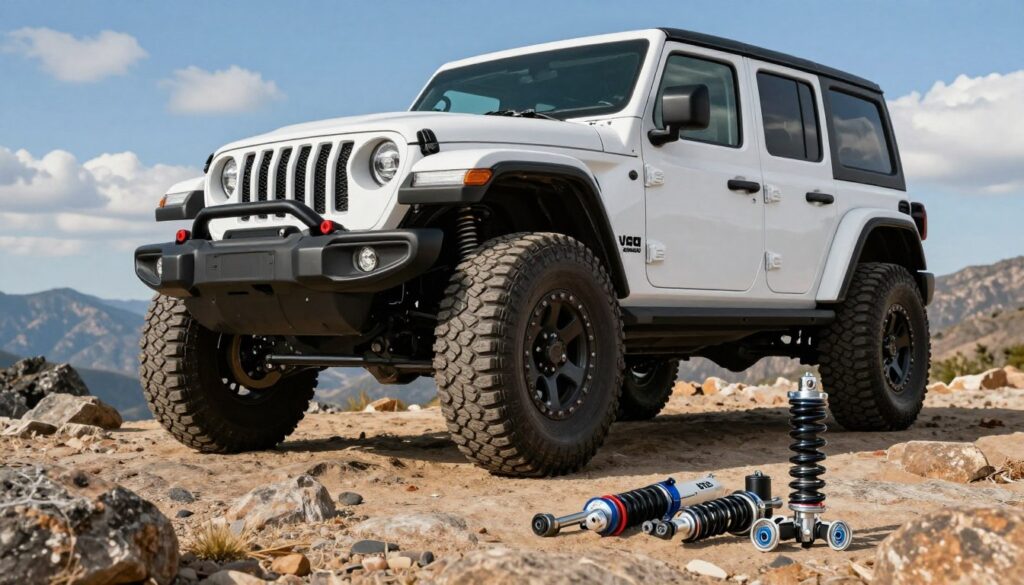
Lift Kit + Shocks Package for a 2.5″ Setup: Rough Country 2.5″ Lift Kit w/ N3 Shocks (2018–2023 JLU)
A matched 2.5-inch package reduces guesswork by aligning springs and damping so the suspension works as a true system.
Who this kit fits: Owners who want a more aggressive stance, added tire clearance, and better trail capability without moving to extreme lift heights.
Why 2.5″ is popular: This lift often balances clearance and daily drivability when springs, shocks, and geometry are matched. TrailRecon testing showed that proper tuning can improve on-road stability and cornering. At the same time, off-road washboard comfort varies with firmness and vehicle load.
Matched kit advantages vs separate parts
- Fewer compatibility mistakes when shock length aligns with the lift and springs.
- More predictable ride and consistent handling front to rear.
- Lower risk of topping or bottoming under full droop or compression.
Buyer checklist: Confirm intended tire size, added weight from bumpers or gear, and whether you want even or slightly raked ride height. These factors affect spring choice and how N3 shocks perform on road and trail.
At this value tier, expect decent build quality that meets common needs. Set realistic expectations compared with premium, rebuildable dampers: bundled kits deliver an efficient path to correct height and usable travel, but they trade some long-term serviceability and extreme performance.
Conclusion
The easiest rule: match shock length to the lift, then choose damping that suits your driving style.
For near-stock setups pick the Rough Country N3 front 0–1.5″ and the N3 rear 1.5–3.5″ for mild lifts. Use the Rough Country 2.5″ kit w/ N3 if you want a matched kit approach. Opt for Fox 2.0 for firmer, performance control on aggressive dirt, and the Falcon SP2 2.1 monotubes when JLU comfort and control matter most.
Remember: correct length and tuning preserve usable travel and keep the vehicle stable. Performance-oriented units deliver superior control but need maintenance; value gear lowers upfront price.
Quick buyer checklist: confirm lift height, intended use and added gear weight, verify front and rear needs, choose shocks-only or a full kit, then verify alignment, torque, and clearance after install.
FAQ
How do I match shock length to my lift height and suspension geometry?
Measure eye-to-eye or stud-to-stud ride height with the vehicle at normal weight, then compare to the shock maker’s fitment chart. Lifted vehicles often need longer shocks or shocks with extended travel to maintain proper shock mounting angles and avoid bind. If you use a spacer or short lift, a conversion or extended upper mount may be required. Always confirm fit with your lift kit manufacturer or the shock brand before buying.
Which trade-offs should I expect between daily-driver comfort and firmer performance tuning?
Softer valving and twin-tube designs favor highway comfort and absorb small bumps well. Firmer valving, larger pistons, or monotube designs give sharper handling and control on aggressive driving or trail work but transmit more road harshness. Choose based on primary use: commuting and errands lean toward comfort; spirited driving or technical off-road use leans toward performance components.
What shock features improve durability on harsh terrain like washboards and rock gardens?
Look for heavy-duty mounting hardware, corrosion-resistant coatings, larger piston diameters, and external reservoirs or internal floating pistons (IFP). Reinforced shafts, improved seals, and proper valving for high-frequency impacts reduce fade and wear. Rebuildable or serviceable shocks extend life and allow valve tuning after heavy use.
How important is matching front and rear valving for ride control and stability?
Very important. Front and rear valving should be coordinated to control pitch, dive, and body roll. Mismatched damping can make the vehicle feel unsettled under braking, acceleration, or trail articulation. Manufacturers usually recommend matched sets or kits tuned for the vehicle and lift height.
Are rebuildable shocks worth the higher initial cost?
Yes for frequent off-roaders or owners who keep the vehicle long term. Rebuildable shocks let you refresh seals, replace worn components, and retune valving, lowering lifetime cost compared with disposable units. They also allow upgrades like reservoir conversions or valving changes as driving needs evolve.
Can I use stock-length shocks after installing a 2.5″ lift kit?
Generally no. A 2.5″ lift usually requires longer shocks or shocks specifically designed for that lift to retain full travel and proper geometry. Using stock-length shocks can reduce articulation, increase binding, and cause premature wear. Confirm with the lift kit instructions and select shocks rated for the lift height.
What does IFP performance mean and how does it affect ride quality?
IFP stands for internal floating piston. It separates oil and gas inside the shock, reducing aeration and improving consistent damping under repeated impacts. Shocks with IFP offer crisper response, better heat management, and more consistent performance on fast trails compared with simple twin-tube units.
How do Fox 2.0 performance shocks compare to typical street-oriented shocks?
Fox 2.0 series uses larger pistons and firmer valving, delivering quicker response, improved control at speed, and better recovery on rough terrain. They often feel firmer on pavement than stock shocks but provide superior control on aggressive trails. Maintenance and rebuild options are available, so long-term ownership can be cost-effective for active users.
If I buy a matched lift kit with shocks, what benefits do I get versus buying shocks separately?
Matched kits are tuned for the kit’s spring rate, lift height, and intended tire size, providing balanced ride quality and geometry. They simplify installation and reduce trial-and-error tuning. Buying shocks separately requires checking compatibility, match valving to springs, and sometimes additional hardware for proper fit.
What should I consider when choosing shocks based on terrain and tire size?
Heavier tires and aggressive tread increase unsprung weight and stress on damping components. For larger tires or rock crawling, choose stronger valving, larger shocks, or external reservoir designs. For mostly smooth trails or highway driving with mild tires, comfort-biased shocks with sufficient travel work well. Adjust valving and gas charge to match tire and terrain demands.
How often should shocks be inspected or serviced on a lifted Jeep?
Inspect shocks at least every 6,000–12,000 miles or after heavy off-road use. Look for leaks, bent shafts, worn mounts, and loss of damping. Service intervals vary by design; rebuildable units may need attention every 30,000–50,000 miles depending on use. Follow manufacturer recommendations for preventative maintenance.
Are monotube designs like Falcon SP2 better for four-door Wrangler Unlimited models?
Monotube shocks offer improved heat dissipation, consistent damping, and faster piston response compared with many twin-tube designs. For heavier four-door models with larger tires or aggressive driving, monotube units such as the Falcon SP2 provide better control and reduced fade. Expect a firmer on-road feel but superior off-road performance and repeatable behavior under stress.
Will upgrading shocks change my vehicle’s alignment or require other suspension changes?
Upgrading shocks alone typically won’t require alignment, but adding a lift or changing spring rates often will. When you alter ride height or geometry, get a professional alignment to ensure proper castor, camber, and toe settings. In some cases, extended brake lines, sway bar links, or track bar adjustments are also necessary.
What price range should I expect between economy and performance shock options?
Entry-level and OEM-replacement shocks are typically the lowest cost and suit casual street use. Mid-range performance shocks add better valving and durability at a higher price. High-end monotube or reservoir-equipped units cost more up front but offer rebuildability and superior performance. Balance budget against intended use and long-term value.