
Quick checks can keep your ignition system reliable and prevent roadside failures. This short guide explains key steps for owners who want clear, practical diagnostics. The Ignition Control Module acts as the electronic switch that triggers the ignition coil and controls when the spark fires.
Correct timing ensures the engine runs smoothly. A healthy system must supply enough voltage to jump the gap at the spark plugs and ignite the fuel-air mix.
Follow this guide to spot faults early and protect fuel efficiency. For deeper reading, see our upcoming post on the official website.
Key Takeaways
- Learning basic checks helps preserve ignition performance.
- The Ignition Control Module times coil firing for accurate spark.
- Voltage must bridge the spark plug gap for combustion.
- Use a 12-volt light with a multimeter for clear diagnostics.
Understanding the Role of the Ignition System
The ignition system coordinates many parts to deliver a spark at precisely the right time. It is a network that manages timing so the engine starts and runs efficiently.
The ignition coil converts 12-volt battery power into the high voltage needed for each spark. That energy travels through plug wires, the rotor and distributor cap, then reaches the spark plugs.
Every rotor position and cap contact must align with the firing sequence. When the rotor is off or contacts are worn, the spark can land at the wrong time and the engine will misfire.
- The ignition coil sends voltage to the spark plugs across the gap.
- Distributor parts and the rotor must stay synchronized for proper timing.
- Failure often shows as a rough idle or uneven engine rhythm.
Regular inspection of the cap, rotor, and spark plugs prevents misfires that can harm other expensive parts. This post explains how each component works together so you can spot issues early.
Essential Safety Measures and Preparation
Before touching any wiring, secure the vehicle and shut off the ignition to cut risk of sparks.
Vehicle Preparation
Park the vehicle on level ground and place the ignition key in the off position. Always disconnect the negative battery terminal first to prevent shock or short circuits.
Wear safety glasses and gloves when working near the engine. Inspect wiring and parts for visible damage, such as breaks, chafing, or burnt marks, and replace any compromised wire or cap before testing.
- Keep your repair manual handy for correct resistance specs and wiring diagrams.
- Use a 12-volt test light with insulated handles when you need a quick power check.
- Ensure moving components are secure before you crank engine parts for any check.
Tool Calibration
Use a quality digital multimeter and set the meter to the correct ohms range before measuring resistance. Proper calibration gives accurate readings for both resistance and voltage checks.
Start by checking for a solid ground connection; a poor ground skews all readings. When testing any part or wiring, probe connections carefully and note the reading on the display.
Final check: confirm your meter shows expected values on a known source, then proceed with testing. Accurate setup keeps you safe and protects other parts of the ignition system.
How to Test a Distributor With a Multimeter
Inspect the distributor cap and rotor for cracks, carbon tracking, or loose contacts before any electrical testing.
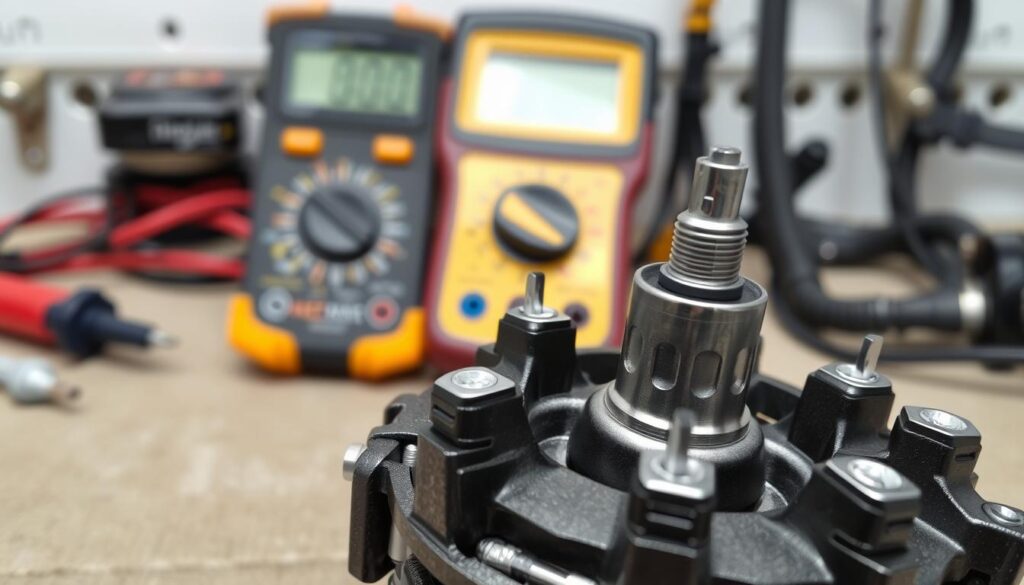
Set your meter to measure voltage and ohms. For an open circuit check, connect the positive lead of the meter to the negative side of the coil and the negative lead to a good ground.
Have a helper crank engine parts while you watch the meter. Battery voltage can fall from about 12.5V to near 9.9V during cranking; this fluctuation is often normal for the ignition system.
Quick checks:
- Ensure the rotor alignment; misalignment can mimic a major problem.
- Probe the distributor terminals with the multimeter to confirm current flow.
- If the ignition coil shows no voltage during crank, trace wiring and inspect for broken wires or bad grounds.
- Use a 12-volt test light to verify spark plug wire power; an infinite meter reading means an open circuit in the cap or wires.
Note: Some ignitor assemblies, like the Aldon automotive ignitor, need model-specific procedures. Always check your vehicle repair manual for the correct resistance and testing information before replacing parts.
Analyzing Ignition Control Module Performance
Start your ICM check by locating the module; some vehicles place it inside the distributor housing, while others mount it on the engine or firewall.
Locating the Module
Find the module first so you can follow the wiring and spot worn parts. Inspect the rotor and distributor cap for wear that can disrupt the signal to the ignition coil.
Measuring Voltage Supply
Use your multimeter at the power input wire and probe the terminal while the key is on. A steady battery voltage at the input means the module receives power.
If no current appears at the terminals during this reading, the module often needs replacement. Also check the ground connection; a bad ground can mimic a failed module.
Checking Resistance Levels
Measure resistance across the module terminals in ohms. Compare readings to specs in your repair manual.
- Normal reading: specified ohms per manufacturer.
- Open circuit: infinite reading suggests a failed terminal or wiring break.
- Low or erratic resistance: suspect internal failure or poor ground.
Pro tip: Ensure the ignition coil and related wires are firmly connected before replacing parts. If the module is the source of the problem, Flagship One offers reliable replacement parts and guidance.
For related faults that affect spark plugs, see this short guide on bad spark plugs.
Evaluating Ignition Coil Resistance
A precise resistance check helps narrow down whether the coil or wiring causes misfires.
Why it matters: Evaluating the coil resistance is a critical step when an engine misfires or stalls. A broken winding often shows as an infinite reading on your multimeter, which points to internal failure.
Testing primary and secondary windings
For the primary winding, place one meter lead on the positive terminal and the other on the negative terminal of the ignition coil. Record the ohms reading and compare it with the manufacturer spec on our website.
To test the secondary winding, put one lead on the coil output tower and the other on the positive terminal. A very high or infinite reading means the secondary is open and the coil needs replacement.
- Check the spark plug gap; an incorrect gap strains the coil.
- Inspect the rotor and cap for carbon tracking that can divert spark to the wrong terminal.
- Ensure a good ground before taking readings; poor ground skews results.
Troubleshooting Common Ignition System Failures
Begin by confirming that all wiring and terminals look clean and secure. A quick visual check often shows worn plug wires, corroded connections, or a loose ground that kills spark.
Next, verify power at the coil during crank. Use a multimeter or a 12-volt test light while someone cranks the engine to confirm voltage reaches the input. If voltage is absent, trace the ignition switch and main wiring for a bad connection.
Inspect the distributor cap and rotor for carbon tracking or wear. A faulty rotor or cap causes intermittent misfires that mimic coil or plug failures.
- Start visually: check wires, terminals and grounds.
- Measure power: confirm battery voltage at the coil during crank engine phase.
- Replace wear items: worn spark plugs and ignition wires are low-cost fixes that restore reliable spark.
Document all readings and observations in a notebook. If a persistent no-start or odd resistance reading appears, consider professional replacement parts and guided diagnostics.
Conclusion
Simple diagnostic steps often stop small faults from becoming big repairs.
Follow the procedure here and you can find faulty coils, failing control modules, or worn rotor parts early. Use proper tools and disconnect the negative battery before any work near high voltage.
Keep routine maintenance on spark plugs, wires and the cap. Small replacements now prevent costly failures later.
If a problem feels complex or readings remain unclear, seek help from a qualified mechanic. For more guides and parts information, visit our official website for the latest expert advice and resources.
FAQ
What basic checks confirm distributor cap and rotor condition?
Inspect the cap for cracks, carbon tracks, or corrosion on the terminals. Remove the rotor and look for wear, burns, or looseness. Clean contacts with electrical cleaner and replace the cap or rotor if you see pitting or burned spots. Always check spark plug wires and boots for cracks or arcing marks when you replace distributor parts.
Can a bad ignition control module mimic distributor failure?
Yes. A failing ignition control module often causes intermittent spark, misfires, or no-start conditions similar to distributor issues. Verify module voltage supply, ground, and signal wires using a meter. If readings fall outside manufacturer specifications, swap or bench-test the module per service manual guidance.
What voltages should be present at the coil primary and secondary?
With key on, expect battery voltage at the coil primary feed (roughly 12 volts). Secondary output is high voltage routed through the distributor to spark plugs; you cannot measure it directly with a standard multimeter. Use a proper ignition tester or an oscilloscope for secondary waveform analysis. Never connect a regular voltmeter across the high-voltage output while cranking.
How do I check coil resistance correctly?
Measure primary resistance between the coil’s positive and negative terminals with the coil disconnected; typical values range from 0.2 to 3 ohms for many modern coils. Measure secondary resistance between the high-voltage terminal and either primary terminal; values often range from 5k to 15k ohms. Compare readings to the vehicle’s service specs and replace the coil if out of range.
Is it safe to crank the engine while probing distributor terminals?
No. Probing live high-voltage circuits while cranking risks shock and damage to the meter. Use back-probing on low-voltage signal wires and secure all tools. If you must observe crank signals, use insulated test leads and follow the vehicle manufacturer’s safety procedures.
What resistance values indicate worn spark plug wires or boots?
Typical spark plug wire resistance is roughly 1k to 15k ohms per foot depending on wire type. Very high or open-circuit readings indicate a break; very low readings with visible damage can still leak spark and should be replaced. Also check for resistance changes when flexing the wire, which reveals internal breaks.
How can I isolate a misfire to the distributor versus spark plugs?
Swap spark plugs between cylinders and recheck for misfire patterns. If the misfire follows the plug, the plug or wire is at fault. If the issue follows the cylinder regardless of plug, inspect the distributor cap, rotor, ignition coil, and control module. Use a timing light and scan tool for misfire codes to refine diagnosis.
When should the distributor cap or rotor always be replaced rather than cleaned?
Replace when you find cracks, severe corrosion, deep pitting, or carbon tracking. Also replace if the rotor shows melted plastic, heavy wear, or if the cap’s spring contacts have lost tension. For vehicles with high mileage, preventative replacement during tune-ups reduces repeat failures.
What wiring checks reveal intermittent distributor problems?
Inspect harnesses for chafing, loose connectors, or corrosion. Wiggle test while monitoring voltage and continuity with a meter to reveal intermittent opens. Check grounds for low resistance to chassis and engine. Replace or repair brittle wiring and poor connectors to restore reliable signals.
Can improper spark plug gap cause distributor-related symptoms?
Yes. Too wide or too narrow gaps raise coil stress, cause misfires, and can create arcing inside the distributor cap. Use a feeler gauge and set gaps to factory specs. Replace worn plugs rather than trying to re-gap excessively eroded electrodes.
What role does timing play in distributor-related troubleshooting?
Incorrect ignition timing causes poor running, pinging, or hard starts that might seem like distributor failure. Verify mechanical and vacuum advance systems, correct timing with a timing light, and ensure the distributor is secured at the proper index to avoid drift under load.
How often should ignition components be inspected or replaced?
Follow the vehicle maintenance schedule, but inspect cap, rotor, wires, and coil every 30,000 miles or during each major tune-up. Replace spark plugs per manufacturer intervals, and replace worn distributor parts during routine services to prevent roadside failures.
What tools besides a multimeter are useful for ignition diagnostics?
A timing light, spark tester, ignition scope or oscilloscope, dielectric grease, contact cleaner, and a good set of insulated hand tools help. A scan tool that reads misfire counts and live data speeds diagnosis. Quality replacement caps, rotors, and OEM coils improve reliability.
Where can I find manufacturer specifications for resistance and voltage values?
Consult the vehicle’s factory service manual or reputable repair databases like Mitchell1, AlldataDIY, or Haynes. OEM part packaging and coil labels sometimes list specs. Use manufacturer figures as the final reference when interpreting meter readings.