
Upgrade your ride with the right audio setup and feel how crisp, deep low end transforms every drive. Many factory units lack the power and response needed for true low-frequency impact, so choosing aftermarket options matters.
Our team tested numerous models across trucks and compact vehicles to compare frequency response, RMS watts, sensitivity, and mounting ease. We focused on systems that reduce distortion at high volumes and deliver tight, punchy bass without muddying vocals.
Key Takeaways
- Aftermarket upgrades often outperform stock units in power and clarity.
- Check RMS watts and frequency response before buying.
- Proper mounting and wiring improve bass and reduce distortion.
- Our experts tested various models for long-term performance.
- Call 1.866.961.7781 for tailored advice and mobile support.
- Match speaker size and amplifier to your vehicle for best results.
Understanding the Best Car Speakers for Bass in 2026
A well-matched speaker setup delivers cleaner lows and clearer mids in everyday driving. Choosing components that suit your listening tastes and vehicle acoustics makes the biggest difference in overall sound quality.
Replace weak factory units with high-performance options to improve bass impact and reduce distortion at higher volumes. Look for models with a wide frequency response and good RMS ratings to ensure consistent power handling.
- Match size and mounting to your vehicle. Use a reliable speaker size guide to confirm fit before purchase.
- Test options in your car when possible; cabin acoustics change frequency response and sensitivity.
- Prioritize models with stable power handling and low distortion to keep playback tight at higher volumes.
Essential Factors for Powerful Bass Performance
Getting solid bass starts with choosing components rated for continuous power and wide low-frequency response. RMS ratings tell you how much continuous power a speaker or subwoofer can take without thermal distortion. Look for models that match the amplifier’s continuous output, not just peak numbers.
Frequency response matters. A range that covers 20Hz to 200Hz gives modern systems the deep extension and punch most listeners want. Check published frequency response and real-world measurements when possible.
Mounting depth and fitment affect sound quality and installation ease. Measure door panels and rear decks to confirm speaker size and mounting depth before buying. Loose mounts cause rattles and muddy playback.
- RMS power indicates continuous watts—critical for long-term reliability.
- 20Hz–200Hz is the target frequency range for impactful low end.
- Amplifier pairing is essential; high-performance systems need robust amps to reach rated RMS.
Evaluating Coaxial Speaker Options
Choosing coaxial speakers often trades complex installs for a compact, all-in-one upgrade. These units integrate tweeters and woofers to improve low-end impact and midrange clarity without a separate component system.
JBL GTO939 Features
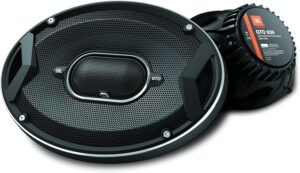
The JBL GTO939 (on Amazon) uses a unique design to boost sound quality and give tighter bass. It pairs solid power handling with clear mids, making it a strong option for vehicles that need full-range output from a single speaker.
JBL GX602 Performance
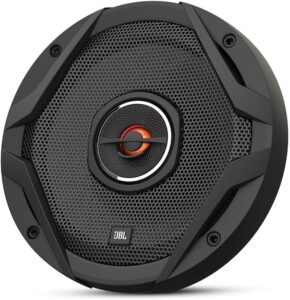
The JBL GX602 (on Amazon) delivers reliable performance and high sensitivity, so you can get good audio even with a factory head unit. Its stable watts rms handling helps reduce distortion at higher volume levels.
Pioneer TS-A6990F Capabilities
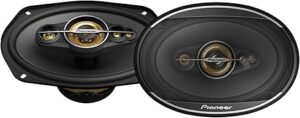
The Pioneer TS-A6990F 6×9” 5-way model (on Amazon) offers robust power handling and a wide frequency response. It excels when you want loud music without losing definition, but confirm mounting depth before purchase to avoid interference with window mechanisms.
- All-in-one coaxial systems simplify upgrades and save space.
- Each pair view product listed handles at least 100 watts RMS for consistent performance.
- Always check fit and mounting depth—use our guide to check speaker fitment for vehicle-specific measures.
High Performance Subwoofer Selections
For drivers who want tight low end and minimal distortion, high-performance subs are the most impactful upgrade. These units supply the power and excursion needed to reproduce low frequencies that you can both hear and feel.
Skar Audio DDX-12 D4 Overview
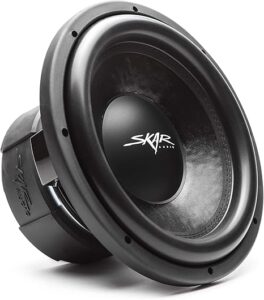
The Skar Audio DDX-12 D4 12″ subwoofer (on Amazon) is engineered for deep, room-shaking bass. Its stiff cone and robust voice coil let it handle heavy power and deliver controlled response at low frequencies.
BOSS Audio NX694 Highlights
BOSS Audio NX694 speakers (on Amazon) offer rugged build quality and consistent, high-performance sound. They pair well with a dedicated amplifier to maintain clean output during long drives.
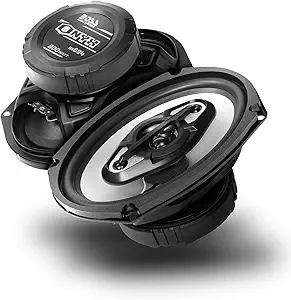
- Integration tip: Adding the Boss Audio Systems CH6530 or Kicker 43CSC674 can boost overall bass output and system balance.
- Buyer insight: The Car Audio Association reports 40% of buyers prioritize solid bass, so choose subs rated for the RMS you plan to run.
- Installation: Always verify mounting depth and enclosure needs so the subwoofer performs optimally in your vehicle.
Component Speaker Systems for Audiophiles
A true high-fidelity upgrade uses separate tweeters and woofers to render music with accuracy and depth. Component systems give tighter staging and allow each driver to focus on its assigned range.
Hertz MPK 165.3 Precision
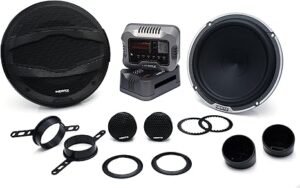
The Hertz MPK 165.3 Precision component system is built for listeners who demand top-tier sound quality. Premium materials and careful design help preserve detail across lows and highs.
This system separates the tweeter and woofer to improve placement and imaging inside your vehicle. It handles 100 watts RMS, giving enough power to deliver punchy bass and crisp highs without strain.
- Accurate audio: tight frequency response and low distortion.
- Professional mounting: recommended to optimize crossover and driver alignment.
- Durable build: designed for reliable long-term performance in serious car audio builds.
Investing in a component set like the Hertz MPK 165.3 (on Amazon) elevates how your music sounds and how it connects to the cabin. For audiophiles, this is a clear step up in clarity and control.
Analyzing Power Handling and Sensitivity
Knowing how much continuous power a speaker can handle helps you avoid blown drivers and keeps music clean.
Power handling refers to the maximum watts a speaker can sustain without damage. Sensitivity measures how efficiently a speaker converts that power into audible volume. Together they shape system performance and overall sound quality.
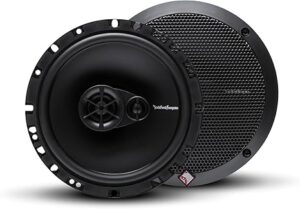
The Rockford Fosgate R165X3 (on Amazon) balances power handling and sensitivity well. That makes it a solid match in many car audio setups.
Rockville RV68.2C speakers are built to deliver steady performance. They keep music clear even when you push levels higher.
- Match RMS ratings of speaker and amplifier to avoid distortion and damage.
- High sensitivity models need less watts to reach the same volume, ideal for lower-power systems.
- Check mounting depth and frequency response when you view product specs to ensure fit and tone.
Matching Speakers to Your Vehicle Acoustics
The interior of your vehicle dramatically alters how a speaker system sounds once installed. Seats, glass, and trim reflect and absorb frequencies. That changes perceived sound quality and bass response.
Professional installers at Mickey Shorr Mobile Electronics tune each system to the cabin. They adjust placement, time alignment, and equalization to match the vehicle’s acoustic profile. This preserves clarity and reduces unwanted resonance.
Proper speaker placement creates a balanced soundstage so music feels forward and natural. Poor placement often muddies mids and kills transient performance. Take time to test mounting locations when possible.
- Account for reflections: adjust EQ to tame peaks from glass and hard surfaces.
- Optimize placement: aim speakers and tweeters to improve imaging and vocal clarity.
- Match power and RMS: pair amps and drivers to protect handling and ensure clean output.
The Role of Enclosures in Bass Quality
How you house a sub affects both loudness and accuracy; enclosure choice is as important as the driver itself. A well-designed box controls cone movement and improves overall sound quality in your vehicle.
Sealed Enclosure Benefits
Sealed boxes deliver tight, accurate bass that stays controlled at all volumes. They absorb back wave energy and reduce unwanted resonance.
This makes them ideal when clarity matters more than sheer output. Audiophiles often prefer sealed builds for deep, punchy lows and better transient handling.
Ported Box Advantages
Ported designs add a vent to increase output around the box tuning frequency. That gives louder, more noticeable bass with less amplifier watts.
They suit listeners who want powerful impact in limited space. However, ported enclosures can trade some precision for extra boom, so match the box to the sub’s rms and handling specs.
- Enclosure design controls how the speakers move air and shape bass response.
- Prevent air leaks with solid build techniques to avoid distortion and loss of impact.
- Follow manufacturer recommendations—many subwoofers perform best in a specific enclosure type.
Professional Installation Tips for Maximum Output
Professional wiring and careful mounting unlock a system’s true loudness and clarity. Proper installation preserves sound quality and protects components. Many issues stem from loose connections or poor grounding.
Wiring and Mounting Best Practices
Follow a solid power and ground plan. Use quality cable and secure terminals so your amplifier delivers steady watts without noise or dropouts. Check fuse placement and wire gauge against the amp’s rating to match power handling.
Mount drivers firmly to prevent vibration. Loose mounts cause rattles that harm overall sound and blur low-end response. Use foam baffles or gasket tape where needed to seal and isolate panels.
- Keep signal and power wires separate to avoid interference.
- Set amplifier gain and crossover carefully to avoid distortion.
- If unsure, trust a pro like Mickey Shorr Mobile Electronics to tune the system.
Professional installs fix common errors—remember the Consumer Electronics Association found 40% of users report dissatisfaction due to installation mistakes. A correct setup ensures your music retains clarity and impact.
Avoiding Common Audio Upgrade Mistakes
A successful audio upgrade begins with a quick audit of your vehicle’s electrical and mounting limits. Check amplifier compatibility and RMS ratings so your new speakers match existing watts and power handling. Mismatched components lead to blown drivers or weak output.
Measure mounting depth before you buy. Many installs fail because a speaker won’t fit the door or rear deck. Confirm fitment for your exact model to avoid trimming or costly returns.
Don’t chase volume at the expense of sound quality. Loud setups that lack balance often muddy vocals and transient response. Prioritize clarity and the way music feels in the cabin.
Secure wiring and hardware. Loose terminals, poor ground, and unsecured panels cause rattles and intermittent audio that ruin listening sessions. Use proper gauge wire and good connectors.
- Verify RMS and amplifier match to protect drivers and get clean output.
- Confirm fitment and mounting depth for your specific vehicle before purchase.
- Plan upgrades and consult a pro when unsure to save time and money.

Conclusion
Upgrading your vehicle’s sound setup can turn routine drives into richer listening sessions. A focused car audio plan improves clarity so your music feels more present and engaging.
Focus on power handling and measured frequency response to get tight, reliable low end. Match amplifier watts to speaker ratings and set gains carefully to preserve detail and avoid distortion.
Choose quality components that suit cabin size and listening taste. Proper mounting and clean wiring keep system response steady and protect parts. Visit a professional installer to tune your system and enjoy true bass impact and lasting performance in your car.
FAQ
How do RMS power ratings affect bass output?
RMS power shows continuous wattage a speaker can handle. Matching a speaker’s RMS to your amplifier prevents distortion and protects voice coils. For stronger, controlled bass, choose speakers and an amp with similar RMS figures rather than relying on peak wattage numbers.
What frequency response range is ideal for deep bass?
Look for speakers or subs that extend low—typically down to 20–40 Hz—for impactful bass. Coaxials that reach into the low 50s can still sound full when paired with a subwoofer. Pay attention to both low-end extension and how product specs list frequency response to ensure coverage of the range you want.
Can coaxial speakers deliver powerful bass without a subwoofer?
Coaxial models like the JBL GTO or Pioneer TS series can produce satisfying bass at moderate volumes, but they won’t match a dedicated subwoofer’s low-frequency extension and output. For room-shaking low end, add a properly powered subwoofer and use crossovers to blend systems smoothly.
How important is speaker sensitivity for loudness and bass impact?
Sensitivity measures efficiency—higher sensitivity needs less amp power to reach a given volume. For bass-heavy listening, higher sensitivity helps, but power handling and enclosure or vehicle acoustic factors also determine perceived bass. Balance sensitivity with RMS handling when selecting speakers.
Should I use sealed or ported enclosures for bass quality?
Sealed boxes deliver tighter, more accurate bass and better transient response, ideal for music with fast dynamics. Ported enclosures produce higher output at the tuned frequency, giving more boom and efficiency. Choose sealed for precision, ported for louder low end.
How do mounting depth and speaker size affect fitment and sound?
Mounting depth dictates which speakers will physically fit your vehicle. Shallow-mount designs help in tight spaces but may trade off cone excursion. Always measure speaker locations and compare mounting depth and cutout sizes. Proper fit prevents airflow issues that can degrade bass.
What wiring and amplifier setup yields the best bass performance?
Use quality gauge power and ground wiring, fuse the power line near the battery, and run short speaker leads where possible. Match amplifier RMS to speaker RMS for stability. Configure crossovers: low-pass for subs, high-pass for mids, and use accurate gains so the amp isn’t clipping at high volumes.
How does vehicle acoustics influence speaker selection?
Vehicle size, cabin materials, and seating layout change bass response. Small cars often need differently tuned enclosures or DSP correction to avoid boominess. Use measurements or a professional install to tune equalization and time alignment for balanced bass across listening positions.
Are component speaker systems worth the extra cost for bass quality?
Component systems like Hertz MPK 165.3 separate midwoofers, tweeters, and crossovers for clearer imaging and lower distortion. They improve midbass clarity and staging, which benefits overall bass perception. If you want audiophile-level detail, components are a worthwhile investment.
How much amplifier power do I need for a 100 watts RMS speaker pair?
For a pair rated at 100 watts RMS each, a mono or two-channel amp that can deliver 50–150% of that RMS per channel is a safe range. Aim for an amp that provides clean power without clipping—around 150–200 watts per channel gives headroom and maintains low distortion at higher volumes.
What common upgrade mistakes reduce bass performance?
Typical errors include underpowering speakers, using too-small enclosures, poor wiring, and neglecting crossovers or tuning. Avoid relying solely on peak wattage specs, mismatching amplifier and speaker RMS, and installing subs without proper enclosure volume or tuning.
How do I reduce distortion when pushing bass hard?
Prevent distortion by supplying adequate clean power, using proper gain staging, and keeping amplifier temperatures down with ventilation. Use high-quality source material and avoid excessive equalization boosts at low frequencies. If distortion persists, check speaker excursion limits and ensure the enclosure or mounting is secure.