
Owners of the ram 1500 often face dashboard alerts during routine driving. These notices can signal routine service needs or flag an engine fault that needs attention.
Understanding why a message appears helps you decide whether the fix is simple or needs a pro. Many experts advise checking warranty status before any change that might affect coverage.
A quick service reset fixed minor alerts in older models, but modern vehicles may need a deeper diagnostic scan. If you read posts or ask a local dealer, be ready with clear vehicle information and the exact message showing on the display.
Use trusted sources for advice, such as a detailed fault code list found at this guide on fault codes. That step saves time and reduces the chance of needless repairs.
Key Takeaways
- Dashboard alerts often protect your truck from long-term damage.
- Check warranty before making changes that might affect coverage.
- Simple resets work for minor issues; modern systems may need diagnostics.
- Have model details and the exact message when seeking help from a dealer.
- Use reputable guides and expert advice before acting.
Understanding Dashboard Messages in Your Ram 1500
Persistent dash lights usually mean the truck’s control module recorded trouble codes that explain why a lamp is on. A single service light can trigger several messages across different models, and that can confuse many owners.
When a brake light stays illuminated, gather basic vehicle information. Check if the issue seems electrical or mechanical before attempting any change. Refer to the owner’s manual for exact codes and meanings.
Modern vehicles use sensors that watch engine and brake systems. If a service light appears, the computer often logs a code that points technicians in the right direction.
- Know whether the light is a brake light or a check engine lamp.
- Record any displayed codes and the time the light first appeared.
- Contact experts if codes are unclear or multiple lights remain on.
How to Clear Stored Messages Dodge Ram 1500 via Battery Reset
Removing battery power for a short period will force the vehicle computer to restart. This method can clear temporary service and engine messages in many Ram 1500 models when no mechanical fault exists.
The Negative Cable Method
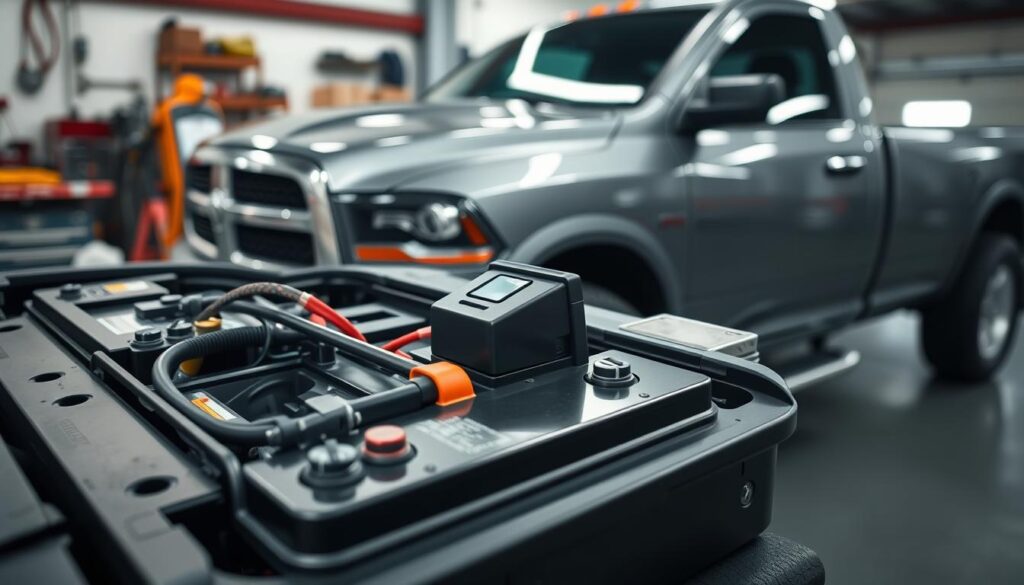
First, park on level ground and turn off the truck. Wear gloves and eye protection, then disconnect the negative cable from the battery terminal.
Leave the negative cable fully detached for at least 10–15 minutes. This ensures the battery and computer lose residual power and may clear a stubborn brake light or other dashboard lights.
Allowing the Computer to Cycle
After the wait, reconnect the cable and tighten the terminal. Let the computer cycle for about 20 minutes while the ignition is off, then start the engine and observe the dash.
If the service light or engine message returns, the computer is detecting a persistent issue that needs further inspection. Handle the cable with care to avoid sparks and protect sensitive electronics.
- Tip: If a brake light stays on after reset, seek diagnostics; a real fault may exist.
- Safety: Always follow battery precautions and consult a manual for your vehicle.
Identifying Underlying Mechanical Issues
Persistent dashboard warnings often mean a mechanical fault needs inspection rather than a simple reset.
Recognizing faulty components begins with recorded codes. A failing coolant pump was replaced at the dealership eight months ago after a long-standing service light appeared. That repair stopped the message until another related issue emerged.
Recognizing Faulty Components
Use a professional-grade scanner for precise codes. Technicians rely on a scanner to read the exact code and target the correct part. Many truck models show the same warning when a sensor fails.
- If an engine or service light returns after a reset, suspect a physical component that needs replacement.
- Sensors can trigger a brake light or engine warning quickly; a scanner pinpoints which sensor or code is at fault.
- Do not ignore a recurring light—left unchecked, issues can cause severe engine damage over time.
When to Seek Professional Assistance
Persistent dash lights that resist resets often mean a trained technician should inspect the vehicle. If you spend more than one day chasing the same engine or service warning, call your local dealer or a certified shop.
Dealers and certified experts have access to advanced scanners and factory software. These tools read complex codes that basic home devices can miss. That accuracy helps identify whether a simple sensor failed or a serious engine component needs repair.
Choosing professional service also protects your warranty. If the underlying issue involves critical parts, a DIY attempt could cause more damage and void coverage. Experts can prevent repeat messages appearing the next day.
- Contact a dealer after one full day of unsuccessful troubleshooting.
- Let technicians use a high-end scanner to read precise codes.
- Get professional service when a brake light or engine warning affects safety.
Conclusion
Finish by weighing simple resets against professional checks, based on the pattern of warnings you saw.
Clearing minor service lights often saves time and gets a truck back on the road. If a brake light or engine message returns, treat that as a clear sign the vehicle needs deeper diagnostics.
Record any codes and check warranty status before making a major change. If questions remain, consult certified experts or your local dealer for precise information about your ram 1500 models.
Summary: Manage small fixes at home, but rely on pros when warnings persist. This approach protects engine health and keeps your trucks running reliably.
FAQ
What causes persistent dashboard messages and lights on a Ram 1500?
Persistent alerts often stem from a sensed fault in systems like the brake, engine, or battery. Sensors and the vehicle computer store codes when they detect irregular readings. Low battery voltage, a loose negative cable, worn brake components, or a real engine issue can trigger repeat warnings. Using an OBD-II scanner reveals stored fault codes and points to the underlying problem.
Can disconnecting the negative cable erase the message?
Yes, removing the negative battery cable for several minutes can force the vehicle computer to reset and clear some stored notifications. This method erases temporary codes and clears the instrument cluster, but it does not fix mechanical faults. If the root issue remains, the message will likely return after a drive cycle or once sensors detect the condition again.
How long should I wait with the battery disconnected?
Wait about 10–30 minutes after disconnecting the negative cable to allow capacitors to discharge and the computer to reset. Some owners recommend 15 minutes as a practical middle ground. Reconnect the cable securely and start the truck; the system will run through a brief initialization.
What does allowing the computer to cycle mean?
Allowing the computer to cycle means leaving the truck off with the battery disconnected so onboard modules lose residual power and restart fresh. After reconnecting the battery, drive through a few ignition cycles and normal operating conditions so the ECU can relearn parameters and confirm whether a fault persists.
Will resetting the system affect saved settings or radio presets?
Yes. A battery disconnect reset clears stored settings such as radio presets, clock, and some convenience features. Modern Ram trucks may also require radio security codes or re-pairing of Bluetooth devices. Note this before using the negative cable method.
How can I tell if a message indicates a serious mechanical problem?
Messages tied to the engine, brake system, or battery should be treated seriously. If a message accompanies unusual noise, loss of power, or brake feel changes, stop driving and inspect or get service. Use a diagnostic scanner for concrete codes; persistent fault codes typically mean parts need attention, not just a reset.
Is an OBD-II scanner necessary for diagnosis?
An OBD-II scanner is highly useful. It reads stored and pending codes, clears them, and shows live data like battery voltage and sensor readings. Scanners range from basic code readers to advanced tools used by dealers and independent shops. Reading codes prevents unnecessary parts replacement and speeds accurate repairs.
When should I visit a dealer or professional mechanic?
Seek professional help if a message returns after a reset, if codes point to ABS, airbag, or engine issues, or if you lack tools or confidence to diagnose electrical and brake systems. Warranty-covered vehicles may be better served at a dealer. Certified technicians can run comprehensive diagnostics and perform safe repairs.
Can replacing the battery resolve recurring messages?
Yes, a weak or failing battery often causes voltage-related warnings and odd stored messages. If voltage checks show below-spec readings or the battery is old, replacement can stop recurring alerts. After installing a new battery, verify connections and clear codes if needed; then monitor whether messages return.
Are there risks when clearing stored fault codes myself?
Clearing codes without fixing the underlying problem can mask needed repairs and create unsafe conditions. Also, some emissions-related monitors need to complete drive cycles after a reset to pass inspections. Use code clearing as part of diagnosis, not as a permanent fix. When in doubt, consult a qualified technician.