
Stop-start systems shut an engine off when a car is stopped and restart it as the driver moves. U.S. drivers notice this at red lights, drive-thru lines, and in stop-and-go commuting. The feature aims to save fuel and cut emissions.
This article centers on one clear question: does the extra cycling shorten component life? We will use test data from AAA and engineering notes summarized by Green Car Reports to give an evidence-based answer.
Concerns split into two buckets: mechanical wear — parts like the starter, ring gear, and lubrication — and electrical strain — battery, alternator, and accessories. Modern designs treat the system as core tech, with upgraded starter components and control logic that limit unnecessary cycles.
What “wear” means here is lower part life, more frequent service, or drivability issues. Real-world patterns matter: city driving creates many short stops, but systems often skip restarts under certain conditions.
Key Takeaways
- Stop-start systems pause the engine to save fuel during idle periods.
- Industry testing and upgrades suggest most modern cars handle extra cycles well.
- Mechanical and electrical impacts are the two main concern areas.
- “Wear” means shorter life, higher service needs, or drivability limits.
- Driving style influences how often the system activates in real life.
- Later sections use AAA tests and engineering details to answer the question clearly.
What auto start/stop technology does in real-world driving
Stop-start technology uses simple inputs to pause the engine when it makes sense. The vehicle’s control unit checks speed, pedal position, and safety limits before cutting fuel and ignition.
How the system detects a stop and brings the engine back
Sensors tell the ECU the car is still. With the brake depressed or clutch engaged, the unit will shut the engine off. Restarts usually happen when a driver lifts a foot off the brake, presses the accelerator, or engages the clutch.
What stays powered while the engine is off
Lighting, wipers, audio, and often HVAC remain active. That electrical load influences how long the engine can stay off before the control decides to restart.
Why off-time is usually short in traffic
The system keeps off periods to comfort and battery limits. In normal traffic, off time often runs about 45–90 seconds before a restart. Behavior varies by calibration, engine type, and ambient conditions, so some cars feel nearly seamless while others are more noticeable.
- Adaptive control avoids stops that hurt comfort or reliability.
- Accessory draw and cabin needs prompt quicker restarts in dense traffic.
- Later sections cover starter design, battery management, and oil protection that address common concerns.
Why automakers added stop-start systems in the first place
Manufacturers added idle-stop technology mainly to cut wasted fuel in city traffic. The core goal was simple: reduce fuel burned while the engine does no useful work at idle, especially in heavy traffic.
Fuel economy gains show up most in urban driving. AAA testing reported roughly a 5%–7% improvement in many real-world scenarios. That benchmark gives drivers a realistic expectation for fuel consumption benefits in stop-and-go conditions.
Cutting idling also lowers emissions where people breathe them—at intersections, sidewalks, and school zones. Less idling means fewer concentrated tailpipe pollutants near roadways.
Why do some U.S. tests show only a bit of gain? Certain test cycles, like the historic EPA city sequence, underrepresent frequent short stops. Mazda executives have noted improvements can look marginal on that specific cycle—about 0.1 mpg in some cases.
Small per-trip savings still add up over a car’s life, especially for urban drivers. Both gasoline and diesel calibration differences influence how smooth and noticeable the system feels in different vehicles.
- Target: reduce wasted consumption while idling in city traffic.
- Realistic gains: AAA’s 5%–7% benchmark in heavy traffic.
- Benefits vary by commute mix and test method.
Does Auto Start/Stop Wear Out Starter? Debunking Myths and Explaining Impacts
Short answer: industry experience says no in most cases, because makers use a different approach than a conventional key-crank design.
What people mean by starter wear is specific: brush erosion, bearing fatigue, solenoid contact pitting, or pinion and ring-gear engagement damage. If those fail, drivers might notice slow cranking, unusual noise, or inability to restart the engine.
Automakers build stop-start systems to handle far higher cycle counts. That means the starter motor and related parts are designed withstand repeated cycles as normal duty, not occasional abuse.
Contrast a single key-start each drive with dozens of restarts in urban traffic. Engineering specs change when frequent restarts are expected: materials, engagement timing, and control logic are all uprated.
- Durability comes from mechanical upgrades and smarter controls.
- “Premature” means failures well before typical vehicle life, not just earlier than classic designs.
- The next section looks inside the motor changes that enable this longevity.
Inside the starter motor upgrades that make stop-start durable
Modern starters get targeted hardware and software changes that let frequent restarts feel invisible.

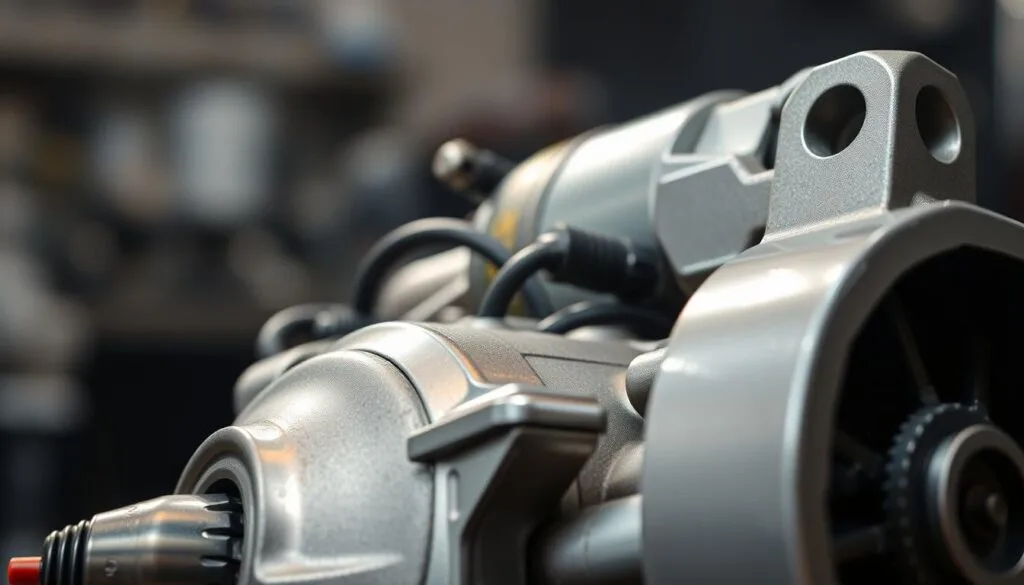
Optimized gear ratio
Engineers revise the relationship between the starter-drive pinion and the flywheel ring gear so the unit delivers required torque at lower RPM.
Lower RPM and coast-down
Lower spin speeds mean a shorter coast-down after the engine fires. That matters because most brush wear happens during that spin-down phase.
Brush and bearing upgrades
Brush formulations now use carbon/copper mixes to resist abrasion across many cycles.
Needle bearings replace oil-impregnated bushings to cut friction and improve durability under repeated duty.
Solenoid, sensing, and control
Modern solenoids decouple mechanical engagement from electrical switching, reducing contact stress and current spikes.
Cylinder position sensing lets the ECU time injection and spark for faster, smoother restarts while preserving electrical reserve for accessories.
- Result: targeted gear, bearing, brush, and control upgrades extend life of the motor and the broader transmission-related components.
- For signs of a failing unit, see common burnout starter motor symptoms.
Myth: stop-start uses more fuel than letting the engine idle
Some drivers claim restarting the engine uses more fuel than leaving it idling. That idea sounds plausible: a restart is an energetic event, while idling seems like low, steady use.
What AAA testing found about fuel economy improvement
AAA testing showed the technology improved fuel economy by roughly 5%–7% in many real-world drives. Over a week of commuting, that can cut fuel use noticeably when traffic causes frequent stops.
When savings are most noticeable in stop-and-go traffic
The break-even idea is simple: idling burns fuel continuously; a restart is brief. In dense urban traffic, repeated short idles add up fast, so shutting the engine usually saves more fuel than the cost of restarting.
- Savings show up in heavy congestion, long red lights, and stop-start city commutes.
- On open highways with few stops, gains are small because idle time is rare.
- Drivers rarely feel savings each trip, but reduced idle minutes add up over months.
Bottom line: the feature is not perfect everywhere, but testing and real commutes confirm clear, cumulative fuel reductions in the driving conditions where idling is common.
Myth: stop-start systems damage your engine and lubrication
A common concern is that repeated restarts chill lubrication and stress moving parts. Manufacturers address this directly with temperature and pressure logic before the feature ever engages.
Why the feature typically waits for operating temperature before activating
The control unit checks coolant and oil temperature before allowing a shutdown. That means the engine reaches normal operating range so oil films form correctly.
How systems protect oil pressure and prevent damaging cool-down
Designs hold oil in galleries and keep pressure long enough that a one-minute stop rarely drains lubrication from bearings. If oil temperature or pressure drops, the system will restart engine proactively.

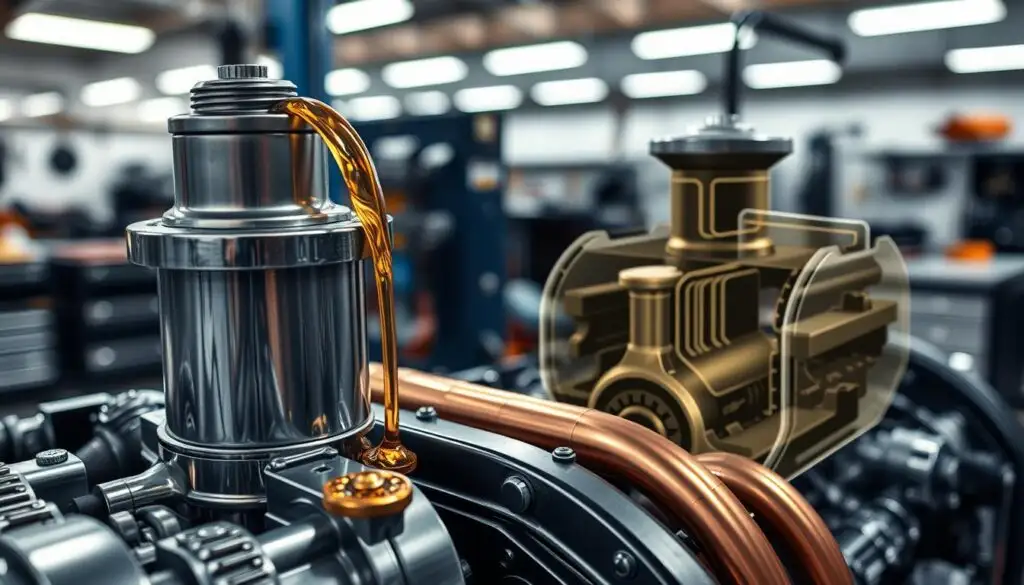
What frequent restarts can mean for components like ring gear and flywheel
More cycles mean more engagements at the ring gear and flywheel interface. Automakers supply stronger parts so routine cycling is within expected life. In short, these components are built to designed withstand repeated starts.
What sources say about turbos, soot control, and modern bearing durability
Turbos in normal operation are not harmed, and precise engine management limits soot buildup in diesel and gasoline intake paths. Modern bearings use improved materials and dry-lubricant coatings to reduce wear.
Bottom line: frequent cycling is real, but properly calibrated systems and uprated components mean the feature itself is unlikely to harm engines. Watch for warning lights, odd noises at restart, or missed maintenance—those are real reasons to get service.
Myth: stop-start will kill your battery or overwork the alternator
A common worry is that frequent restarts will drain the battery and overload the alternator. The truth is the entire electrical package is designed to handle the load, not left to chance.
Why these vehicles use more robust batteries and battery management
Batteries in these cars are beefed up. Automakers fit higher-capacity units or absorbent glass mat cells. Some models add a secondary battery dedicated to restart duty.
The vehicle control constantly monitors state of charge. That logic helps balance cabin needs with restart reserve.
How the car decides not to shut off if charge is too low
If the computer detects low charge, the feature simply won’t cut the engine. The system favors a reliable restart over saving a minute of fuel.
Starter, alternator, and electrical load with accessories running
Upgraded starter and solenoid designs cut inrush current, so each restart draws less peak power. The alternator may shift charging strategy after many cycles to top the battery safely.
- Lights, climate, and audio remain powered and shape restart timing.
- Higher demand does not mean instant failure; the package is engineered together.
- Battery care matters: test regularly and fit the correct replacement spec.
Conclusion
Real-world data and component upgrades together explain why most drivers see savings without reliability trade-offs.
Bottom line: modern cars limit engine-off time to roughly 45–90 seconds, keep accessories powered, and use control logic that protects oil and temperature. AAA testing shows about a 5%–7% gain in fuel economy for many commutes.
Manufacturers design starter motors, gear ratios, brushes, bearings, solenoids, and ECU sensing for frequent cycles. Battery management will block a shutdown if charge is too low. That means the package works as an integrated system rather than stressing parts unexpectedly.
For owners: fit the correct battery spec, keep routine service, and get checks for unusual noise or warnings. If you drive mainly in city traffic and value reduced emissions and fuel savings, this feature is generally a net positive for your car.
FAQ
What does stop-start technology do in real-world driving?
The system shuts the engine off when the vehicle is stopped—typically at lights or in traffic—and restarts it automatically when you lift your foot from the brake or press the accelerator. It reduces idling time to save fuel and cut tailpipe emissions, especially in city driving with frequent stops.
How does the system detect a stop and restart the engine?
Sensors monitor brake pedal position, vehicle speed, transmission state, and engine conditions. When preset criteria are met—car stopped, transmission in drive or neutral, and battery and engine temperature within range—the control unit commands a restart sequence using fast ignition timing and starter engagement.
What typically stays powered while the engine is off?
Essential electronics remain active: climate control ventilation, infotainment memory, lighting, and safety systems. The battery and management system prioritize critical loads so comfort features may be limited to avoid draining charge before restart.
Why is off-time usually limited in traffic?
Systems aim for quick restarts to match traffic flow and driver expectations. Long off-periods risk battery drain, cabin discomfort, and delayed responses. Controls therefore allow only short shuts between restarts and bypass the feature when conditions aren’t suitable.
Why did automakers add this technology?
Manufacturers added it to improve urban fuel economy and to meet tighter emissions regulations. By cutting idle fuel burn and local emissions, cars achieve better city-cycle numbers and lower roadside pollution exposure.
How much fuel economy improvement can drivers expect in city conditions?
Gains vary, but typical reductions in urban fuel consumption range from a few percent up to around 10–12% in heavy stop-and-go traffic. Results depend on driving patterns, vehicle size, and test methodology used.
How does reducing engine idling lower tailpipe emissions near roadways?
Shutting off combustion eliminates exhaust during stops, reducing local NOx, CO, and particulate emissions. Fewer idling minutes mean lower aggregate emissions near intersections and congested streets.
Why do benefits sometimes look smaller in U.S. test cycles?
Some standardized cycles include highway or steady-speed segments where stop-start offers little benefit. Tests that underrepresent urban congestion make the feature’s payoff seem smaller than in real-world city driving.
Is the short industry answer that the feature doesn’t prematurely fail the starter?
Yes. Automakers design stop-start systems expecting many more cycles than a conventional starter application. Revised starter assemblies, batteries, and control logic make premature starter failure uncommon when the system is used as intended.
What does “starter wear” mean in a stop-start vehicle?
Wear refers to mechanical and electrical fatigue: pinion and ring gear teeth, brushes, bearings, and solenoid contacts. Stop-start systems minimize stress per event and use materials and designs rated for high cycle counts to prevent accelerated degradation.
How do gear ratios change to support durability?
Engineers often optimize starter pinion and flywheel ring gear ratios to reduce engagement stress and lower required torque. This spreads load more favorably and reduces tooth impact forces during frequent engagements.
How does lower RPM at restart help component life?
Restarting at reduced crank speed cuts coast-down time and limits brush arcing and friction. Lower RPM reduces instantaneous loads on bearings and gears, extending service life under frequent cycling.
What brush materials are used for higher restart cycles?
Manufacturers use harder-wearing carbon or composite brush formulations and improved commutator surfaces to reduce erosion and maintain consistent electrical contact over many thousands of restarts.
Why use needle bearings or oil-impregnated bushings?
Needle bearings offer lower friction and better load distribution for rotating components, while oil-impregnated bushings provide continuous lubrication. Both options increase longevity compared with simple plain bearings in high-cycle applications.
How does solenoid design differ for stop-start systems?
Upgraded solenoids separate the heavy mechanical engagement from the electrical switching to reduce contact wear. Faster, more reliable engagement mechanisms cut engagement time and mechanical shock during starts.
How do systems achieve faster restarts using cylinder position sensing and ECU control?
The ECU reads crank or cam position and times fuel and ignition events so combustion resumes on the optimal cylinder stroke. That coordinated control reduces spin time and delivers near-instant restarts with less load on the starter.
Does stop-start ever use more fuel than idling?
In most stop-and-go conditions, it saves fuel. Tests by AAA and other organizations show net fuel economy improvements in city driving. However, on very short stops or in extreme climates where HVAC runs heavily, benefits shrink and the system may disable to avoid net loss.
When are savings most noticeable?
Savings appear best in dense urban commuting with frequent red lights and traffic jams. Long highway cruises offer no advantage, so the technology’s value concentrates in city patterns.
Can frequent restarts harm engine lubrication or components?
Modern systems typically wait until oil pressure and engine temperature reach safe ranges before allowing shutoff. Controls also prevent restart sequences that might occur when lubrication is inadequate. Proper design limits oil starvation and related wear.
What can frequent restarts mean for ring gear and flywheel?
If a starter were poorly matched, repeated impacts could nick ring gear teeth. In production systems, hardened gear profiles and controlled engagement timing reduce impact forces, keeping gear wear within normal limits.
How do turbos, soot control, and modern bearing durability factor in?
Turbochargers and particulate filters are engineered to tolerate typical stop-start duty. Manufacturers account for soot regeneration cycles and bearing loads; when systems operate within specifications, long-term damage is unlikely.
Will stop-start kill the battery or overwork the alternator?
Vehicles with this feature use more robust batteries—often AGM, EFB, or specially rated lead‑acid types—and dedicated battery management. Alternators and charging strategies also adapt to provide sufficient reserve for frequent restarts.
How does the car decide not to shut off if charge is too low?
Battery sensors monitor state of charge and health. The control unit inhibits shutoff when charge is insufficient, when accessory load is high, or when starting conditions would risk a failed restart.
What electrical load considerations matter when accessories run?
Heavy loads from HVAC, heated seats, or infotainment can prevent engine shutoff to protect battery life and ensure immediate power. The system balances driver comfort with available charge and restart reliability.