
This intro frames a buying question for U.S. drivers who want to know if extra connectivity makes sense when choosing a 2026 bmw model.
Connected functionality links car, phone, and cloud so daily trips feel smoother. The core bmw connected drive system ties in navigation, remote app access, over‑the‑air updates, and safety services.
We’ll separate what comes with a new vehicle from what becomes a paid add‑on over time. That helps readers judge value based on commute habits, road‑trip frequency, and how much they want a cabin that runs without a phone.
Later sections compare this suite to Digital Premium and map features to cost. Expect a clear “what you get / what you might pay for / who should buy” layout so buyers can pick options that match real life.
Key Takeaways
- Understand which services are standard and which require subscriptions.
- Value depends on travel habits and desire for seamless app integration.
- Navigation, voice, and safety features drive most of the practical benefit.
- Digital Premium adds entertainment and enhanced native features.
- Compatibility varies by model; match features to your car and routine.
BMW ConnectedDrive in 2026: What It Is and What You Actually Get
A clear view of what comes built-in versus what becomes a subscription helps buyers judge real ownership value.
Connected functionality links the in-car infotainment system, the My BMW app on your smartphone, and cloud services over an embedded data connection.
The platform is organized around three practical pillars so you can judge features by use.
Three pillars to evaluate
- Digital Services: navigation, remote functions, personalization and map information delivered via the car’s data link.
- Driver Assistance Services: safety and assist features that rely on platform software and live updates.
- BMW Connected app ecosystem: apps and account-driven extensions that extend in-car capabilities to your phone.
How it works day to day
The vehicle uses an embedded 4G SIM for consistent connectivity rather than depending only on a paired smartphone. That keeps key services available across drivers and when phones are off.
Over-the-air updates deliver feature improvements and fixes without a dealer visit, though availability can vary by hardware and region.
The My BMW app acts as your remote hub for status, locks, charging info, and remote climate control—making information and control easy from outside the car.
Practical value note: if you want infotainment and services that “just work” with minimal phone steps, this built-in system will matter more during ownership. Many features begin as trials and may convert to paid subscriptions, so renewals shape long-term value.
Core Features That Shape the In-Car Experience
This section breaks down the core in-car systems that shape daily use and overall comfort.
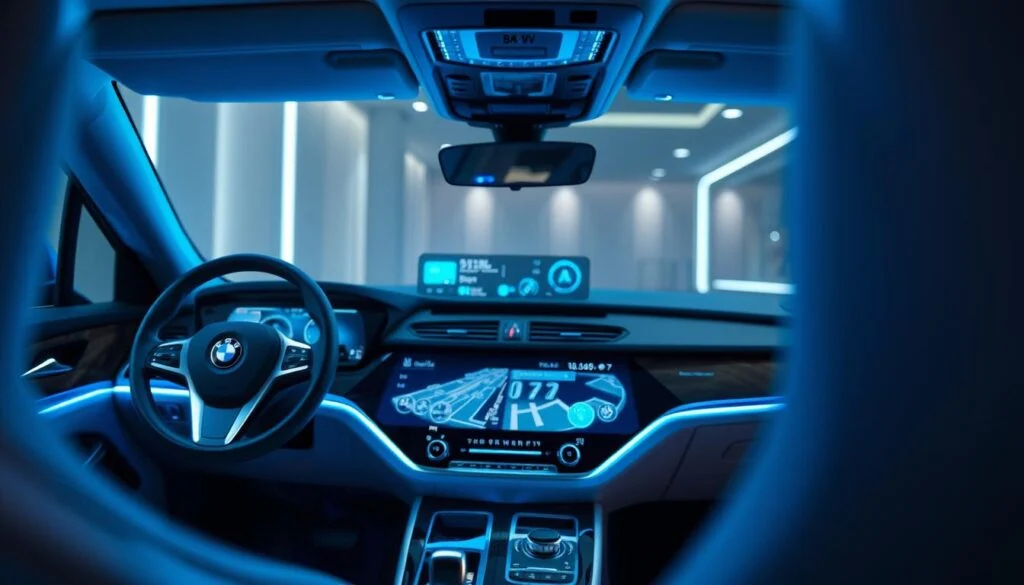
iDrive 9 and the 14.9-inch curved display
iDrive 9 paired with the 14.9-inch curved display becomes a true command center. The large screen makes switching between media, navigation, and vehicle menus feel seamless rather than clumsy.

Maps and real-time road information
BMW Maps uses live information to improve routing and re-routes around traffic. That means faster trips and fewer surprises for regular commuters.
Intelligent personal assistant and voice control
The intelligent personal assistant accepts natural voice requests for navigation, music, and cabin settings. Drivers keep hands on the wheel and eyes on the road while making changes with simple speech.
Remote services via the My BMW app
The bmw app allows remote vehicle checks, service scheduling, and pre-conditioning the cabin. You can warm or cool seats and set temperature before walking outside.
Personalization for multiple drivers
Profiles save seat, mirror, and app preferences so each driver gets a familiar cabin. Routines and saved presets reduce repeated setup steps and make day-to-day driving more predictable.
Note: Feature availability varies by model and trim, so confirm what your specific configuration supports.
BMW Digital Premium vs BMW ConnectedDrive: What’s Different and What’s Included
Here we sort baseline telematics from the extra multimedia and navigation features sold as an option.
Connected platform covers built-in online services, remote app access, OTA updates, and basic map data. It keeps core functions running without a phone and forms the system’s foundation.
Digital Premium acts as an add-on package that unlocks native video and music streaming, in-car games, and expanded map data on the 14.9-inch curved screen.
When upgraded features beat smartphone mirroring
Digital Premium gives a consistent, BMW-native interface so navigation, entertainment, and assistant replies appear in predictable places. That reduces app switching compared with using a smartphone.
- Entertainment: native streaming and games for waiting time.
- Navigation: richer BMW Maps data and assistant responses on one screen.
- Convenience: pairs well with Digital Key Plus for a phone-stays-in-pocket cabin.
Purchase terms vary by model; confirm whether upgrades are a one-time package or a subscription so ownership surprises stay minimal.
Is BMW Connected Drive 2026 Worth the Cost for U.S. Drivers?
Deciding if extra telematics pay off comes down to how you use your vehicle each week. Match feature sets to your commute, highway time, family trips, and whether multiple people share one vehicle.

Value checkpoints for commuters
Time matters: smoother navigation and faster re-routing cut minutes on repeated routes.
Voice-first controls reduce taps and distraction, which helps in heavy traffic and tight schedules.
Value checkpoints for road trips and families
Native entertainment and offline comforts make stops and charging breaks easier.
Remote app checks and pre-conditioning save time before long departures and keep kids calmer on longer drives.
Value checkpoints for tech-forward owners
Consistent interface across services feels polished, and OTA updates keep systems current deeper into ownership.
Owners who want a native experience, not just mirroring, will find the package more compelling.
Potential deal-breakers
- Subscription fatigue: ongoing fees add up and can reduce net value.
- Feature overlap with Apple CarPlay/Android Auto makes some services redundant.
- Hardware compatibility: not every package works on every trim or older systems.
Decision framework: keep core connected services if you rely on BMW Maps and app remote functions weekly. Opt for digital premium when native entertainment and enhanced navigation will be used often rather than occasionally.
Safety and Driver Assistance: Where Connected Services Matter Most
Safety often proves the clearest reason to keep subscription services active. Entertainment can feel optional, but features that prevent crashes or speed help after an incident deliver clear, measurable value.
Driver assistance highlights on modern platforms include active blind spot detection, lane alerts, forward-collision warning with automated emergency braking, and available adaptive cruise control.
Key system highlights
- Blind spot monitoring: alerts drivers to unseen vehicles during lane changes.
- Lane alerts: warn on drift and support safer highway travel.
- Forward-collision and AEB: provide automatic braking to reduce impact risk.
- Adaptive cruise control: helps maintain distance and reduce stress on long trips.
Connected services keep these safety systems current and deliver fresh information to drivers. Over‑the‑air updates refine detection logic and improve alerts without a dealer visit.
Emergency support and peace of mind
Emergency SOS and roadside assistance add real reassurance for long-distance driving or late-night trips. When an incident occurs, fast notification and help coordination can matter more than any entertainment feature.
Buyer checklist: confirm which assistance features are standard vs optional and whether any require an active subscription in your market. Remember, driver assistance supports attentive driving—it is not autonomy.
Bottom line: if safety tech tops your priorities, keeping core safety-related services active is often a rational, cost‑effective choice even if you skip premium media options.
Conclusion
Final verdict: in 2026, bmw connected drive makes the most sense for drivers who rely on integrated navigation, remote app tools, and safety services each week. If you use these features often, the platform improves daily trips and keeps systems current.
Connected drive is the foundation; digital premium is the upgrade for native streaming, games, and richer map data on the curved display. Choose the add-on only if you will use those native media features regularly.
Practical next steps: check which services come with your specific 2026 bmw build, note trial end dates, and confirm whether upgrades are subscriptions or one-time purchases. Match options to commuting habits, family needs, and how much you value a phone-free cabin.
FAQ
What does the 2026 connectivity suite include and how do I access it?
The package bundles the in-car infotainment system, the My BMW smartphone app, and a built-in cellular modem for online services. Owners use the curved display and voice assistant inside the cabin, while the app offers remote locking, climate preconditioning, and vehicle status. Over-the-air updates keep software current so features evolve without dealer visits.
Which core features shape daily use of the system?
The main elements are the iDrive interface with the 14.9-inch curved screen, cloud-based navigation with live traffic, an expanded voice assistant, and remote services via the mobile app. Personal driver profiles save seating, climate, and infotainment preferences. Native streaming and app-based entertainment extend options beyond smartphone mirroring.
How does the native premium layer differ from standard connectivity?
The premium tier adds native media streaming, more advanced navigation tools, and in-car apps that run without connecting a phone. It aims to provide a seamless, integrated cabin experience with fewer interruptions from phone notifications and cleaner media playback directly through the vehicle.
Can the system replace Apple CarPlay and Android Auto?
For many users the native experience is a viable alternative, particularly for navigation, voice control, and streaming. However, CarPlay and Android Auto still excel at mirroring favorite apps and direct smartphone integration, so some drivers prefer to keep both available.
What safety and driver assistance services are tied into the platform?
The suite supports features like blind spot monitoring, lane departure alerts, and adaptive cruise control when the vehicle has the necessary hardware. Emergency call and roadside assistance functions use the embedded connection to improve response times and peace of mind.
How do updates and new features arrive over time?
Manufacturers deliver periodic over-the-air updates that add features, refine algorithms, and patch security issues. Owners receive notifications through the display and the My BMW app, enabling installation at convenient times without dealer visits.
Is the subscription model optional, and what are common pain points?
Core remote functions typically work without ongoing fees, but advanced navigation, streaming, and app services often require a subscription. Drivers frequently cite subscription fatigue, overlapping functionality with smartphones, and the need to confirm hardware compatibility as common frustrations.
How does the voice assistant perform for hands-free control?
The intelligent personal assistant handles navigation destinations, media selection, and cabin settings reliably in quiet environments. Its performance varies with road noise and accents, but continuous updates have improved natural-language understanding and context awareness.
Will the system support multiple driver profiles and personalization?
Yes. It stores individual profiles for seating, mirrors, climate, and infotainment preferences. Profiles can trigger routines like preferred navigation routing or media sources, making shared vehicles more convenient.
How useful are remote features during long trips and family travel?
Remote controls let drivers pre-condition the cabin, check charging or fuel status, and schedule services. Built-in streaming and in-car apps keep passengers entertained during stops. Live traffic and charging-station routing help plan efficient longer journeys.
What hardware requirements limit some advanced functions?
Certain driver assistance and autonomous features require specific sensors, radar, and cameras. Vehicles lacking optional hardware won’t gain full functionality through software alone, so owners should verify equipment before subscribing to premium services.
How secure is the data and connection used by the system?
Automakers use encryption and secure servers to protect personal and vehicle data. Still, users should follow best practices: keep software updated, use strong account passwords, and review privacy settings in the app to control data sharing.
Does remote keyless and digital key functionality work without a phone?
Digital key systems often rely on compatible smartphones, but some models support a physical key or secondary devices. Newer digital-key standards allow phone-free access via passive entry when hardware supports it.
Are in-car apps and streaming available offline?
Most streaming services require a network connection, though some apps permit offline caching of playlists or downloaded maps. The built-in modem and Wi‑Fi hotspot can bridge gaps, but continuous connectivity improves the experience.
How does the system help reduce time spent on the road?
Real-time routing, traffic-aware navigation, and predictive arrival estimations shorten delays. Voice-first controls let drivers keep attention on the road, reducing the need to manipulate the display while driving.