
This short guide explains oil capacity context, how to pick the right oil type, and practical maintenance steps for U.S. drivers working on a 2004 chevrolet silverado with the 5.3L V8. It sets clear expectations so owners can avoid common service mistakes and protect engine life.
Note: Exact fill volume can change with model configuration and whether you replace the oil filter. General sources often list a typical Chevy V8 range of about 5–6.5 quarts, but the owner’s manual is the final authority.
This article focuses on the correct process, confirmation points, and safety steps for a Silverado 1500. You’ll find concise definitions of terms such as oil capacity, viscosity grade, “with filter,” and dipstick reading so procedures stay easy to follow.
Structure preview: capacity and type guidance first, then component locations and safety, step-by-step oil change and top-off procedures, and finally warning signs and takeaways. Measure carefully, re-check levels after filling, and watch for leaks so your vehicle stays reliable.
Key Takeaways
- Verify exact fill volume in the owner’s manual before topping off.
- Replacing the filter changes the total fill amount; measure with the dipstick.
- Use the correct viscosity and quality to protect engine life.
- Follow safe procedures: cool engine, secure vehicle, and dispose of used fluid properly.
- Regular checks for leaks and level drops extend service intervals and reliability.
2004 Chevy Silverado 5.3 Oil Capacity and Oil Type Guide
Quick summary: Below is a concise look at fill volumes for the 5.3L V8 with a new filter, plus how to pick the correct oil type for your truck.
Oil capacity for the 5.3L V8 when replacing the oil filter
Most routine services replace the oil filter, so use the “with filter” fill amount as your working figure. Typical Chevy V8 ranges run about 5–6.5 quarts, but confirm the exact number in theowner’s manualor service sticker. For a quick reference, see this fill amounts reference.
Why “with filter” vs “without filter” changes the amount you add
A new filter starts empty. Once installed it fills, so the dipstick will read low unless you add the extra volume to compensate.
Recommended viscosity grades and oil type choices
Possible options listed by manuals include0W-20, 0W-30, 5W-20, 5W-30,and10W-30. First match the viscosity the manual specifies, then choose conventional, blend, or full synthetic based on driving habits and climate. Synthetic holds up longer and may allow longer intervals; conventional is fine when you change regularly.
- Use the with-filter figure for routine changes.
- Pick viscosity per the manual, then decide on synthetic vs conventional.
- Choose a quality oil filter and ensure the gasket seats correctly.
What You’ll Need and Where Everything Is Located on a Silverado 1500
A clear plan and the proper tools cut mistakes; locate the drain plug, filter, fill cap, and dipstick before lifting the truck.
Basic supplies:
- Correct engine oil and the matching oil filter for your Chevrolet Silverado 1500.
- Drain pan, funnel, gloves, rags, and a filter wrench.
- Socket set or wrench for the drain plug and a jack with jack stands if you need extra clearance.
Where key components sit
Video shows the drain plug under the engine oil pan; the drain plug is accessed from beneath the truck. The oil filter usually sits on the engine face or lower block depending on model year and engine layout.
The oil fill cap and dipstick are in the engine bay. Confirm the exact location visually since placement can vary by year and trim.
Safety basics and stuck-filter prep
Park on a level surface and let the engine cool for an accurate dipstick reading and safer handling. If you raise the truck, use jack stands and follow safe jacking procedures.
Wear eye protection—fluids like coolant or brake fluid can drip unexpectedly. Keep a filter wrench ready and plan a backup method for a stuck filter.
Next: Start the job by checking the initial level and clearing access to the drain and filter to avoid the most common DIY mistakes.

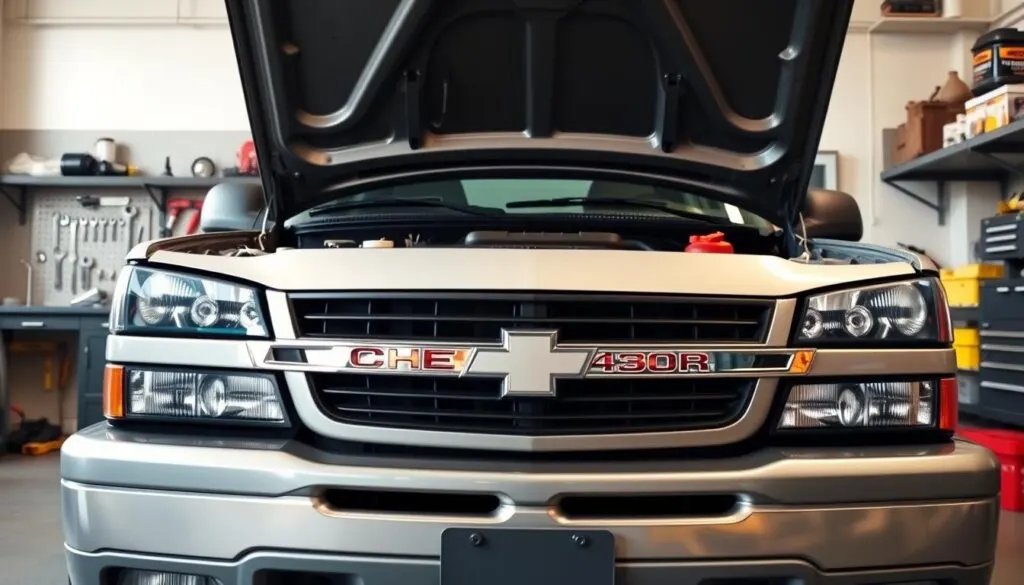
How to Change and Top Off Oil on a 2004 Chevrolet Silverado 1500 5.3
Start by confirming the current engine fluid level. Park the truck on a level surface, let the engine cool, pull the dipstick, wipe it clean, reinsert, then read the marks. This gives you the baseline before any drain or refill.
Drain and inspect
Place a drain pan under the plug, loosen the drain plug carefully, and let the oil exit fully. Inspect the plug and pan area for seepage or damaged threads before reinstalling.
Filter removal and stuck-filter tips
Remove the old oil filter and check that the old gasket came away with it. Lightly coat the new gasket with oil, then thread the new filter on by hand until snug.
If the filter is stuck, wrap an old belt around it for extra grip. If that fails, use a proper oil filter wrench sized to the filter.
Refill, start, and recheck
Add measured amounts of oil, pause to let it settle, and check the dipstick. After the first start, shut the engine, wait a few minutes, recheck level, and inspect for leaks at the filter and drain plug.
- Topping off: If the dipstick reads near the minimum mark, adding about one quart often returns the level to safe range.
- Warning: A low oil pressure light is urgent — shut off the engine and seek repair.
Decision point: Minor top-offs or a loose plug can be DIY. Persistent leaks, repeated low levels, or a pressure light needs professional repair.
Conclusion
Use simple, repeatable checks to protect the engine and avoid costly repairs.
Confirm the exact fill volume and viscosity in the owner’s manual before you start. Replace the filter during routine service and recheck the level after the first start to ensure correct fill.
Measure, don’t guess: add oil slowly, check the dipstick between pours, and avoid overfilling. Small, steady steps keep the engine safe and reduce the chance of a premature repair.
If the low oil pressure light comes on, stop driving immediately and shut the engine off. That light signals a pressure problem, not a routine warning.
Finally, keep a spare quart of the correct oil in your truck, record brand and viscosity, and perform periodic checks over the years to protect your silverado 1500 and keep the car reliable.
FAQ
What is the engine oil capacity for a 5.3L V8 when replacing the oil filter?
With the filter replaced, the 5.3L V8 in the 1500 requires about 6 quarts of engine lubricant. Always check the owner’s manual or the oil fill cap label for the exact spec, and use the dipstick to confirm level after filling.
Why does the amount change when you replace the filter versus not replacing it?
The filter holds roughly a half to three-quarters of a quart of fluid. Installing a new filter increases total system volume, so you must add that extra amount to reach the full mark on the dipstick. Omitting the filter change means less oil is needed to hit the correct level.
Which viscosity grades should I confirm in the owner’s manual for this truck?
Check the manual for recommended SAE viscosities. Common options for this generation include 5W-30 and 10W-30 depending on ambient temperatures and engine wear. Follow the manufacturer’s chart for best cold-start performance and protection.
Should I use synthetic or conventional oil for the 1500 with a 5.3L engine?
Full synthetic provides better heat resistance, longer life, and improved protection for modern engines. Conventional oils work fine if you follow shorter intervals and the vehicle’s original service schedule. Consider synthetic blends as a middle ground.
Where are the drain plug, oil filter, oil fill cap, and dipstick located on a 1500?
The drain plug sits on the oil pan beneath the engine. The spin-on filter is usually accessible from under the truck or from the engine bay depending on the pack. The fill cap and dipstick are on top of the valve cover/lifelong area—look for a marked cap labeled for engine oil and a yellow-handled dipstick.
What safety basics should I follow before changing the oil?
Park on a level surface, engage the parking brake, and let the engine cool. If you lift the truck, use jack stands—not just a jack. Wear eye protection and gloves, and place a drain pan under the plug to catch used lubricant.
How do I verify the oil level correctly before starting a change?
Warm the engine to normal operating temperature, then shut it off and wait a few minutes for oil to drain to the pan. Park on level ground, remove the dipstick, wipe it clean, reinsert fully, then withdraw to read the level between the marks.
What steps should I take when draining old oil and inspecting the drain plug area?
Remove the drain plug with the proper socket, let oil flow into a catch pan, and inspect the plug and pan for metal shavings or heavy sludge. Clean the magnet on the plug if present and replace the crush washer or gasket if damaged to prevent leaks.
How do I remove and replace the oil filter, and what if it’s stuck?
Use an oil-filter wrench and turn counterclockwise; prepare for residual oil to spill. If it’s stuck, apply penetrating oil and wait, then try again with a band-type or cap-style wrench. When installing the new filter, lubricate the rubber gasket with fresh oil and hand-tighten per the filter’s instructions.
How much oil should I add when refilling, and how do I recheck the dipstick?
Add most of the required amount, leave some out, and start the engine briefly to circulate oil. Shut off, wait a few minutes, then check the dipstick. Add small increments until the level rests at the full mark—do not overfill.
What checks should I perform after the first start following a service?
Inspect under the truck for leaks at the drain plug and filter. Recheck the dipstick level after the engine reaches operating temperature. Verify the oil pressure light is off and that no warning lamps remain illuminated.
When should I add oil between scheduled changes and how much can I add from dipstick marks?
If the dipstick reads low, add small amounts—about a quarter to half quart at a time—then recheck. Adding too much at once can lead to overfill. Frequent low readings may indicate a leak or burning oil; diagnose the cause rather than simply topping off.
What is the difference between a low oil level light and a low oil pressure warning, and when should I stop driving?
A low oil level means the sump lacks sufficient fluid; low oil pressure indicates poor circulation. If either light illuminates while driving, stop as soon as it’s safe. Driving with low level or low pressure risks severe engine damage.
What common causes make the engine run low on oil?
Typical reasons include external leaks at the pan, gasket or seal failures, oil consumption due to worn rings or valve guides, and improper filter installation with a leaking gasket. Regular inspections and following service intervals help prevent these issues.